Japan has one of the world's most mature digital-printing markets, but dedicated vertical wall printers are still a relatively specialized equipment category.
That creates an unusual buying situation.
A Japanese business can choose a premium system with a local distributor and domestic demonstrations, or import a professional wall printer directly from an overseas manufacturer at a much lower initial cost.
The important point is that “Japanese printing technology” and “a wall printer sold in Japan” are not the same thing.
Many professional wall printers use Japanese Epson or Ricoh printhead technology while the machine itself is manufactured in Germany, China, the United States, or another country.
For buyers looking for a wall printer for high-quality commercial murals, the questions that matter most are:
How stable is the motion system? Which exact printhead does it use? Can it print white ink? How well does it maintain printhead-to-wall distance? Is UV curing properly integrated? Can it run on Japanese power? And who helps when the machine needs service?
This guide looks at 10 real wall-printer brands worth researching for the Japanese market in 2026. They are not all Japanese manufacturers, and this is not an official sales ranking. Instead, the list focuses on dedicated direct-to-wall printing systems that make sense for businesses prioritizing high-quality output.
Top 10 Wall Printer Brands Worth Considering in Japan
Brand | Japan Relevance | Quality Strength | Support Model | Best For |
|---|---|---|---|---|
wallPen | Japanese distributor and local demonstrations | Premium engineering and stable UV output | Japan-local + manufacturer | Premium Japanese buyers |
WallPrintBox | Factory-direct shipment to international buyers | Epson I1600/I3200 options, strong price-performance | Remote factory support | Startups and commercial mural businesses |
Tanyu | Japanese-language website and global support | Dedicated wall-printer engineering | Factory-direct remote support | Buyers wanting mature direct-import option |
DXonJet | Japanese-language resources | Epson I3200, strong motion and ink-system focus | Factory support + lifetime technical help | Quality-focused technical buyers |
Printava | Global shipping/support | Broad quality and production model range | Factory-direct engineer support | Growing mural businesses |
The Wall Printer (TWP) | Premium import option | Epson platform and mature commercial ecosystem | U.S.-based lifetime support | High-budget operators |
AntPrint | International factory-direct option | I1600/I3200, white ink and flexible configurations | Remote factory support | Wall + floor / multi-application businesses |
Faith | Global industrial printer manufacturer | Epson I1600/I3200 configurations | 2-year warranty + remote support | Commercial equipment buyers |
Perfect Laser | Long-standing export manufacturer | Wide dedicated wall-printer lineup | Factory-direct support | Buyers wanting broad model choice |
Friankor | International direct purchase | Modular wall and wall/floor systems | Factory support | Mobile operators and startups |
For Japanese buyers, however, these brands do not offer the same ownership experience.
Some have a genuine Japanese sales route.
Others should be treated as direct-import equipment.
That distinction matters almost as much as the specification sheet.
1. wallPen — Best Premium Wall Printer With a Real Japan Presence
wallPen is the strongest choice on this list when local Japanese market presence is a priority.
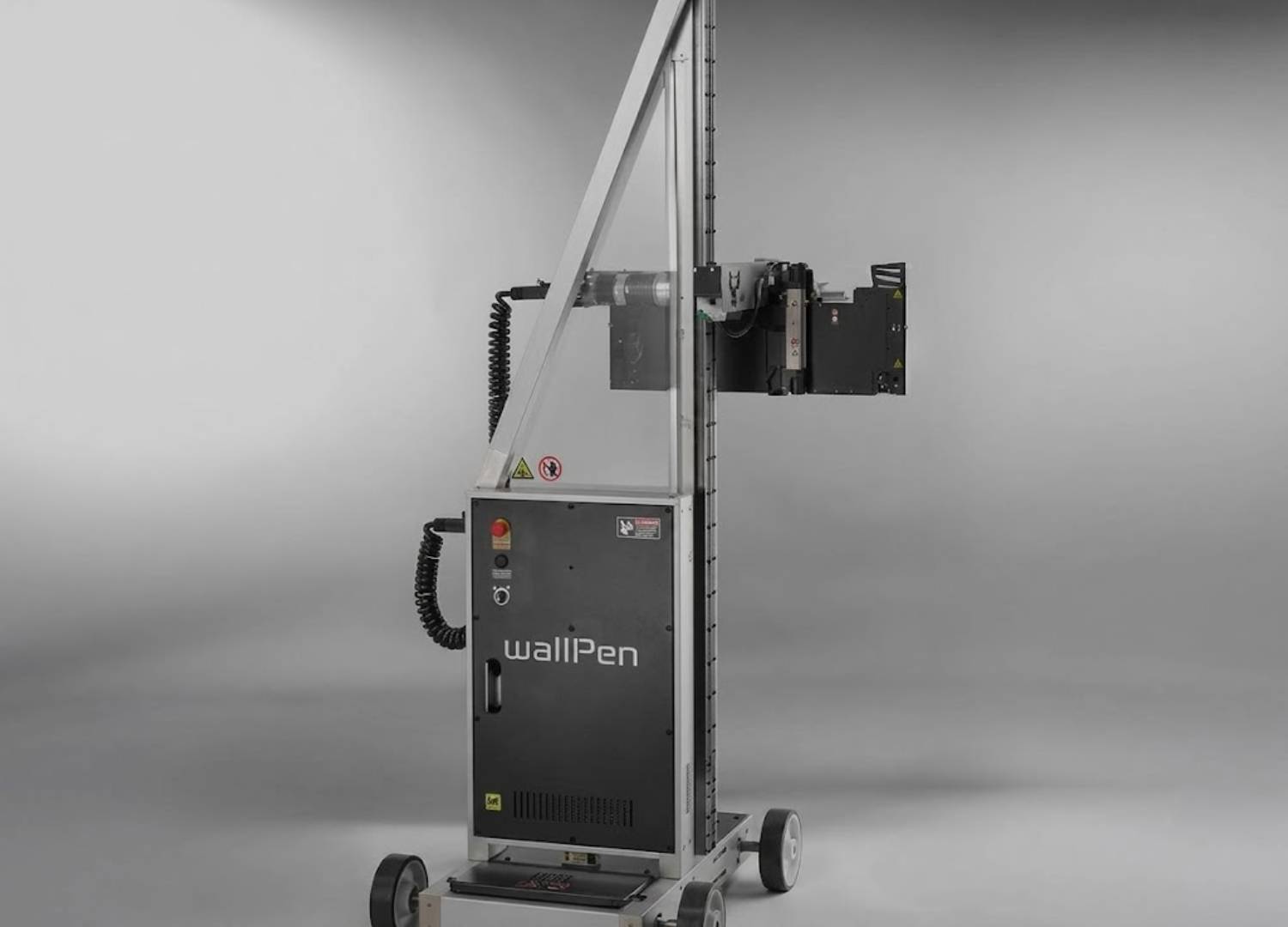
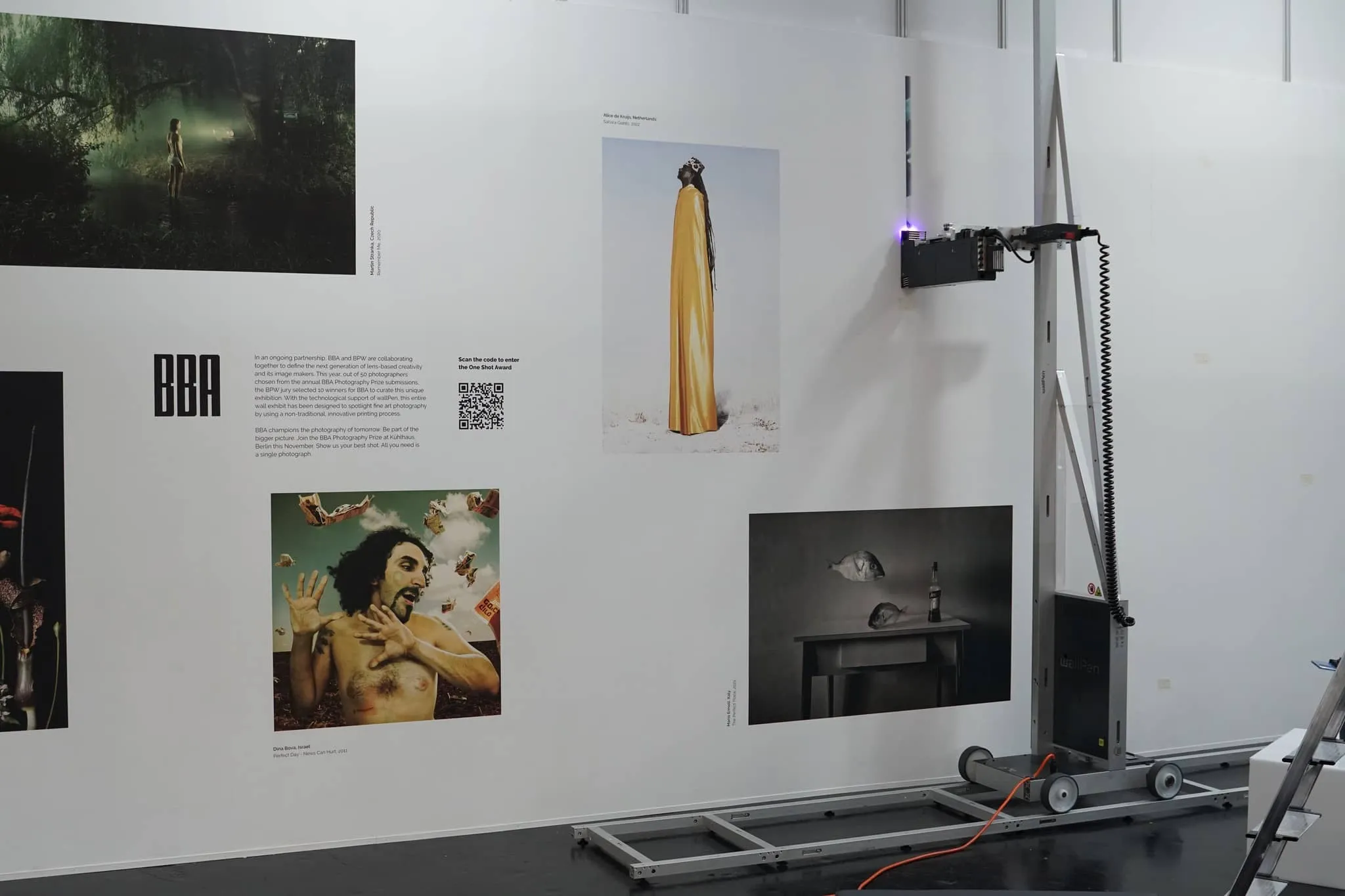
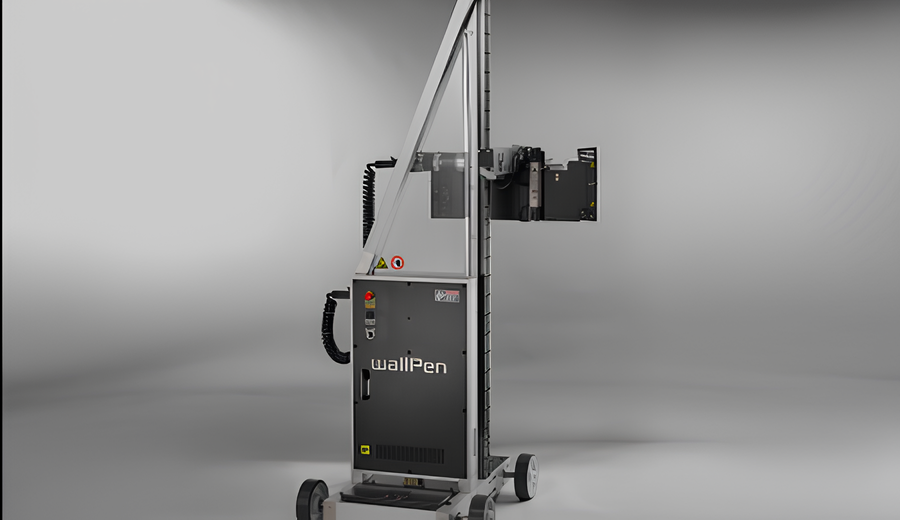
The German-developed wallPen E2 is actively promoted in Japan by Selcam. It was demonstrated at Digital Printing Expo 2026 Osaka and at Japan Home Show & Building Show, where the machine printed directly onto existing walls using CMYK + white UV ink. Selcam describes the system as capable of printing up to around 3.5–4 meters high depending on configuration, with effectively unlimited horizontal mural length. It also runs from a Japanese household 100V supply.
That last point matters.
Imported industrial equipment may support 100–240V, but a system already being demonstrated and sold in Japan removes another layer of installation uncertainty.
Selcam also reports that wallPen has already been used in Japan, including work connected with the Czech Pavilion at Expo 2025 Osaka.
The trade-off is price. wallPen sits firmly in the premium category.
Best for: Hotels, luxury retail, architectural interiors, professional decorators and established companies that value Japanese sales access and premium engineering more than minimum equipment cost.
2. WallPrintBox — Best Balance of Print Quality and Investment
WallPrintBox takes a very different route.
It is not a Japanese-built printer and should not be presented as one. Instead, it offers factory-direct wall printers using Japanese Epson printhead platforms at a much lower capital level than wallPen.
The current product range starts with the GP200I Starter using a single Epson I1600U, while the GP200X Flagship uses dual Epson I3200U printheads. Current published speeds range from approximately 6–8 m²/h on the starter configuration to 12–24 m²/h on the flagship configuration, depending on model and print mode.
Published FOB pricing currently runs around $5,500–$12,500, depending on configuration.
For a Japanese startup, that creates a very different investment calculation from a premium European machine.
WallPrintBox also packages its machines around a Business-in-a-Box concept: printer, software, ink, spare parts, training, marketing resources and ROI tools are bundled around the equipment. The company currently states that it ships single machines internationally and provides a 12-month parts warranty plus five-year spare-parts availability.
That makes a factory wall printer for Japan particularly attractive for buyers who are comfortable with online training and remote technical assistance.
Best for: First-time operators, sign companies, interior businesses and commercial mural studios that want Epson-based hardware without premium European pricing.
Main limitation: Support is primarily remote rather than a Japanese technician arriving on site.

3. Tanyu — Best Established Factory-Direct Alternative
Tanyu is worth considering because wall printing is its core business rather than a minor product category.
The manufacturer now operates a Japanese-language website, which is useful for research even though buyers should still confirm what level of Japanese-language technical support is available after purchase.
Tanyu states that its wall printers are designed and manufactured in-house, that all machines are tested before shipment, and that its products are used across more than 30 countries. The company also describes a dedicated international after-sales team and reports more than 1,000 machines sold.
For a Japanese buyer willing to import directly, Tanyu represents a middle path between unknown marketplace equipment and a very expensive locally distributed premium system.
Its Japanese materials also explain wall-printer applications on surfaces such as brick, glass and painted plasterboard and emphasize UV curing for seamless direct-to-wall murals.
Best for: Printing companies and entrepreneurs comfortable with direct import but wanting a manufacturer focused specifically on wall printers.
4. DXonJet — Best for Buyers Prioritizing Engineering and Print Stability
DXonJet is another serious factory-direct option and, like Tanyu, provides Japanese-language information.
Its current VPJet4.0 uses an Epson I3200 U1 HD printhead, CMYK + white UV ink, automated wall-distance sensing and a dedicated vertical-printing operating system. Published specifications list printing speeds up to around 5 m²/h and maximum vertical output up to approximately 4.5 meters.
DXonJet places considerable emphasis on the parts that actually affect high-quality output: chassis stability, ink-flow control, automatic maintenance, ICC profile support and wall-distance sensing.
That is more meaningful than simply advertising an extreme DPI number.
The company also provides remote training, an optional three-day factory training program, warranty coverage that can be extended up to 36 months and lifetime technical assistance.
However, its current distributor page does not list a Japanese distributor. Japanese buyers should therefore treat it as a direct-import purchase unless the supplier confirms a newer local arrangement.
Best for: Technical buyers who prioritize print stability and machine engineering and are comfortable working directly with an overseas manufacturer.
5. Printava — Best for Businesses Planning to Scale
Printava structures its wall-printer range around business stages rather than selling one machine to every customer.
Its P600 Pro targets first-time businesses, while the P800 Pro adds wall-and-floor capability and the P1000 Ultra targets larger premium projects. Current published P600 specifications include approximately 3–15 m²/h available print speeds depending on mode, up to 4 m printing height and Epson DX10 or I1600 options.
Printava states that it serves buyers in more than 40 countries and provides engineer-led technical support, installation guidance, training and parts assistance.
This makes it interesting for businesses that expect their workload to grow.
A small Tokyo mural studio may start with straightforward walls, while a commercial contractor may later want floor graphics, exhibition installations or larger premium murals.
Best for: Growing décor companies and printing businesses that want a clear upgrade path.
6. The Wall Printer — Best Premium U.S. Alternative
The Wall Printer, or TWP, is an American premium option.
Its current Pro Series uses an Epson I3200 printhead with CMYK + white UV ink and is built around a complete commercial support package. The company currently advertises packages from around $29,995 and emphasizes in-person training, lifetime U.S.-based technical support, marketing resources and business tools.
That makes TWP one of the stronger global brands from an ownership-support perspective.
The problem for a Japanese buyer is geography.
Its strongest support advantage is based around its Wilmington, North Carolina operation. I did not find a confirmed Japan-local TWP service organization in the current public information reviewed.
Therefore, it is best treated as a premium import benchmark rather than a direct substitute for wallPen's Japanese sales route.
Best for: Well-capitalized buyers who place a high value on structured training and business support and are comfortable managing an international purchase.
7. AntPrint — Best for Flexible Wall and Floor Configurations
AntPrint has expanded its current wall-printer lineup into three main series.
The H Series is dedicated to walls, the M Series adds wall-and-floor printing and the E Series integrates a computer into the machine. Current published configurations offer Epson DX10, I1600 and I3200 printheads, roughly 2.5–4 m printing height and listed speeds around 6–12 m²/h.
Its newer UV configurations also support white + color printing, which is important if your business expects to work on dark painted walls, glass, wood, metal or tile rather than only white interior walls.
For a Japanese business offering both interior decoration and event graphics, that flexibility may be useful.
Best for: Commercial decorators and operators that want to expand beyond standard wall murals into floor and multi-surface work.
As with most factory-direct options, confirm Japanese voltage compatibility, shipping, spare-parts logistics and technical-support hours before ordering.
8. Faith — Best for Buyers Wanting an Established Industrial Printing Manufacturer
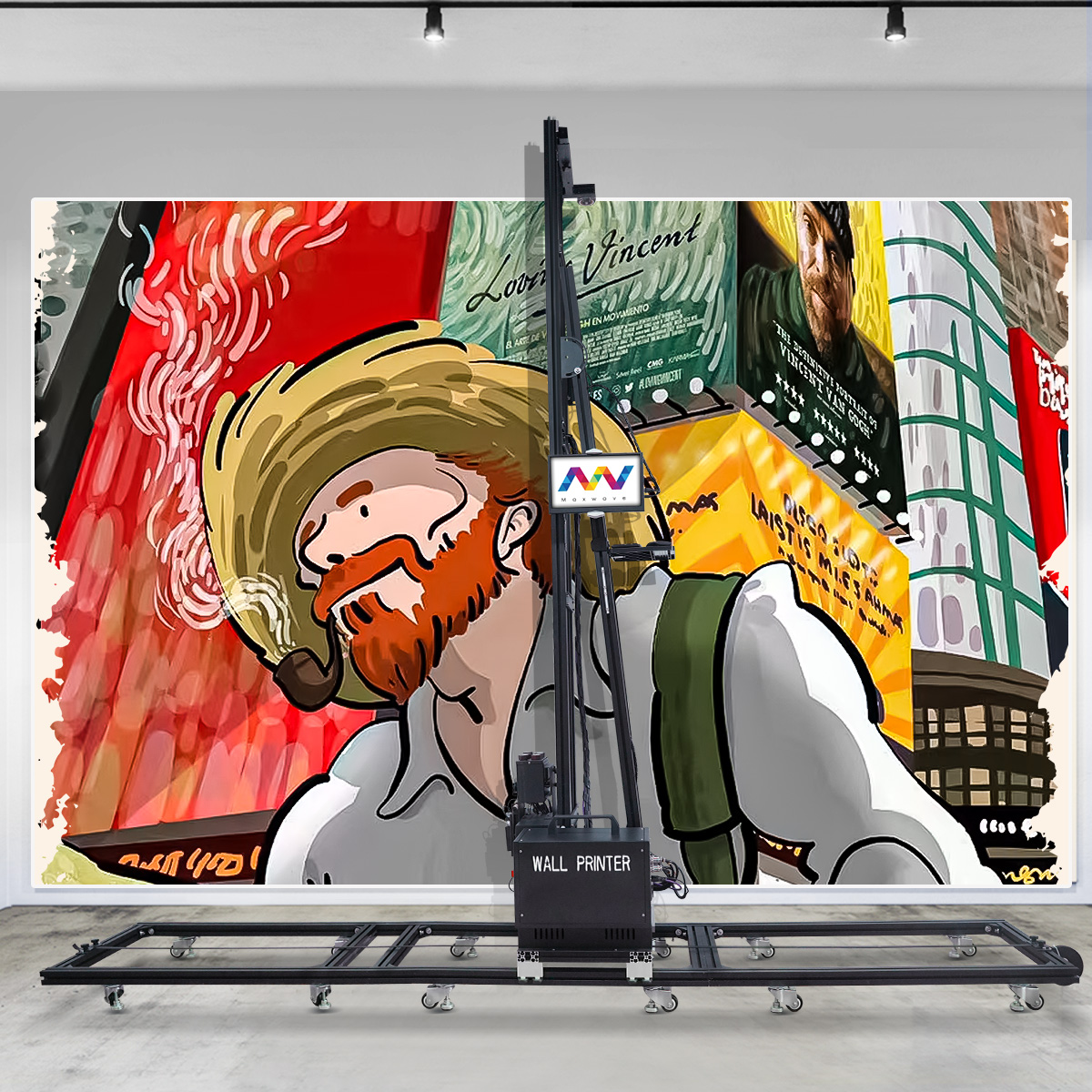
Shenyang Faith Technology is broader than a wall-printer-only company, but unlike several brands in the original shortlist, it now has a documented commercial wall-printer line.
Its KD260-5 industrial wall printer offers Epson I1600/I3200 configurations, and Faith currently states a two-year warranty excluding printheads, along with lifetime technical and after-sales support.
The company also manufactures wall-and-floor integrated systems and other industrial inkjet equipment.
That broader printing background can be an advantage for buyers who value a manufacturer with experience across industrial inkjet systems.
However, I would still place it below the wall-printer specialists for a Japan-focused buyer because there is no comparable Japanese distribution path publicly documented.
Best for: Commercial equipment buyers comfortable with overseas sourcing who want Epson-based industrial hardware.
9. Perfect Laser — Best for a Very Broad Wall Printer Product Range
Perfect Laser has one of the broadest documented dedicated wall-printer catalogs in this group.
Its current range includes portable UV wall printers, wheel-type systems, single- and dual-head machines, wall-and-floor systems and conventional vertical wall printers.
Some configurations support 110V/220V input, automatic wall-distance sensing and Japanese industrial printheads.
That makes the brand worth considering when a buyer needs an unusual configuration rather than a single standardized platform.
However, this is also a brand where I would not rely on headline DPI claims alone.
Several current pages advertise extremely high “painting accuracy” figures. For a serious print-quality comparison, request the exact printhead model, native nozzle resolution, pass mode and a real sample print instead of assuming the highest marketing DPI produces the best mural.
That same rule should be applied to every high-resolution wall printer machine for commercial projects.
Best for: Experienced equipment buyers who want a large choice of configurations and know how to evaluate specifications critically.
10. Friankor — Best for Portability and Wall/Floor Flexibility
Friankor focuses on modular wall-printing systems, particularly the MK01 wall printer and MK02 wall-and-floor platform.
Current published configurations use Epson DX7 or optional I1600 printheads, CMYK + white UV ink, 100–240V power and approximately 2–6 m²/h output.
The MK02 is particularly interesting for operators who want wall and floor functions in one system.
That can make sense for Japanese event companies, commercial decorators and small operators working in spaces where transporting several machines is impractical.
One point requires attention: Friankor currently promotes certified refurbished versions of some MK01/MK02 units alongside its broader product offering. Buyers should confirm whether the quotation is for a new or refurbished machine before comparing price with other brands.
Best for: Mobile mural businesses and buyers who prioritize modular transport and application flexibility.
What Japanese Buyers Should Compare Before Choosing a Wall Printer
For Japan, print quality should be evaluated more carefully than simply comparing the maximum DPI stated in ten brochures.
The first thing to verify is the exact printhead.
Epson I1600 and I3200 platforms appear frequently in modern factory-direct machines, while wallPen uses its own premium system built around industrial printhead architecture. The printhead affects nozzle count, droplet control, ink compatibility, replacement cost and achievable production speed.
The second factor is motion stability.
A wall mural may be several meters wide. Even small mechanical inconsistencies can become visible as banding, poor alignment or color variation across a large image. A quality professional UV wall printer for Japanese businesses therefore needs a stable rail or wheel system, accurate motors and reliable distance sensing—not just a good printhead.
White ink is another major consideration.
CMYK is sufficient for many white painted walls, but CMYK + white dramatically expands the type of work you can sell. Dark walls, colored plaster, wood, glass, tile and metal often benefit from a white underbase.
Then consider the Japanese installation environment.
Japan uses 100V power, and frequency differs between regions. A machine may advertise 100–240V compatibility, but buyers should still request written confirmation for their specific city and configuration before placing an order.
Local support is equally important.
wallPen currently has the clearest documented Japan-market advantage because Selcam demonstrates and promotes the E2 locally.
For overseas brands, ask much more specific questions than “Do you provide after-sales support?”
Ask whether Japanese-language assistance is available, what hours engineers are online, where printheads and control boards ship from, whether remote access is available, what spare parts should be stocked locally and how long critical parts normally take to reach Japan.
Finally, request the same sample from your final three suppliers.
A good test file should include skin tones, fine text, gradients, saturated colors, black areas and white ink if you plan to print dark walls. Ask for the sample on the surface your customers will actually use.
For a hotel business, that may be painted plasterboard.
For retail, it may be concrete, wood or glass.
For exhibition work, it may be temporary panels.
A real sample tells you much more than an advertised 2,880 or 9,600 DPI number.

Which Brand Type Makes the Most Sense for Your Business?
For a premium Japanese interior company, wallPen deserves the first look. Its Japanese sales route, domestic demonstrations, 100V compatibility and existing Japan projects reduce the uncertainty associated with importing specialized equipment.
For a startup, sign company or commercial mural business that wants to control capital cost, WallPrintBox, Tanyu, DXonJet and Printava are more logical comparisons. They provide dedicated direct-to-wall equipment without requiring the same premium investment as a locally distributed German system. WallPrintBox in particular currently positions its Epson I1600/I3200 lineup around $5,500–$12,500 FOB and bundles business-startup resources with the hardware.
For a technical buyer prioritizing machine engineering, DXonJet deserves strong consideration because of its I3200 platform, wall sensing, ICC support and emphasis on dedicated vertical-printing architecture.
For a business that wants wall and floor printing from one supplier, compare AntPrint, Printava and Friankor.
For a large business willing to import a premium U.S. system, TWP provides another benchmark, although the lack of a confirmed Japanese service base means its support advantage is less straightforward in Japan than in North America.
The important thing is not to confuse “Made in Japan” with “high-quality wall printing.”
In fact, many specialist wall-printer manufacturers use Japanese Epson printhead technology inside machines designed elsewhere.
The finished print depends on the whole system: printhead, motion structure, wall sensing, ink delivery, UV curing, RIP/color management and operator skill.
That is the combination you should compare.
Conclusion
The Japanese wall-printer market is not dominated by ten domestic manufacturers. Instead, buyers choose between a small number of locally supported premium systems and a much broader group of specialized international manufacturers.
For buyers who want the strongest current Japanese sales and demonstration path, wallPen is the clearest premium option through Selcam.
For businesses that want to reduce equipment investment while still using modern Epson printhead platforms, WallPrintBox, Tanyu, DXonJet and Printava are more relevant factory-direct alternatives.
AntPrint, Faith, Perfect Laser and Friankor add further choices for businesses prioritizing wall-and-floor capability, model flexibility or different equipment structures.
The best brand ultimately depends on the type of work you plan to sell.
A boutique hotel contractor in Tokyo does not need the same wall printing machine for hotels and retail spaces as a small operator printing children's rooms and cafés.
Before choosing, compare real sample quality, printhead model, white-ink performance, normal production speed, surface tracking, Japanese power compatibility, training, spare parts and the complete delivered cost.
Do not buy the machine with the largest DPI number.
Buy the system that can repeatedly produce the quality your customers will pay for—and that you can keep operating when a part eventually needs service.
If you are comparing a wall printing machine for the Japanese market, send WallPrintBox your city in Japan, target wall materials, typical mural sizes, expected monthly workload and budget. The team can recommend an appropriate Epson I1600 or I3200 configuration, arrange a sample print and provide a delivered quotation so you can compare it directly with locally distributed and other imported wall printers.