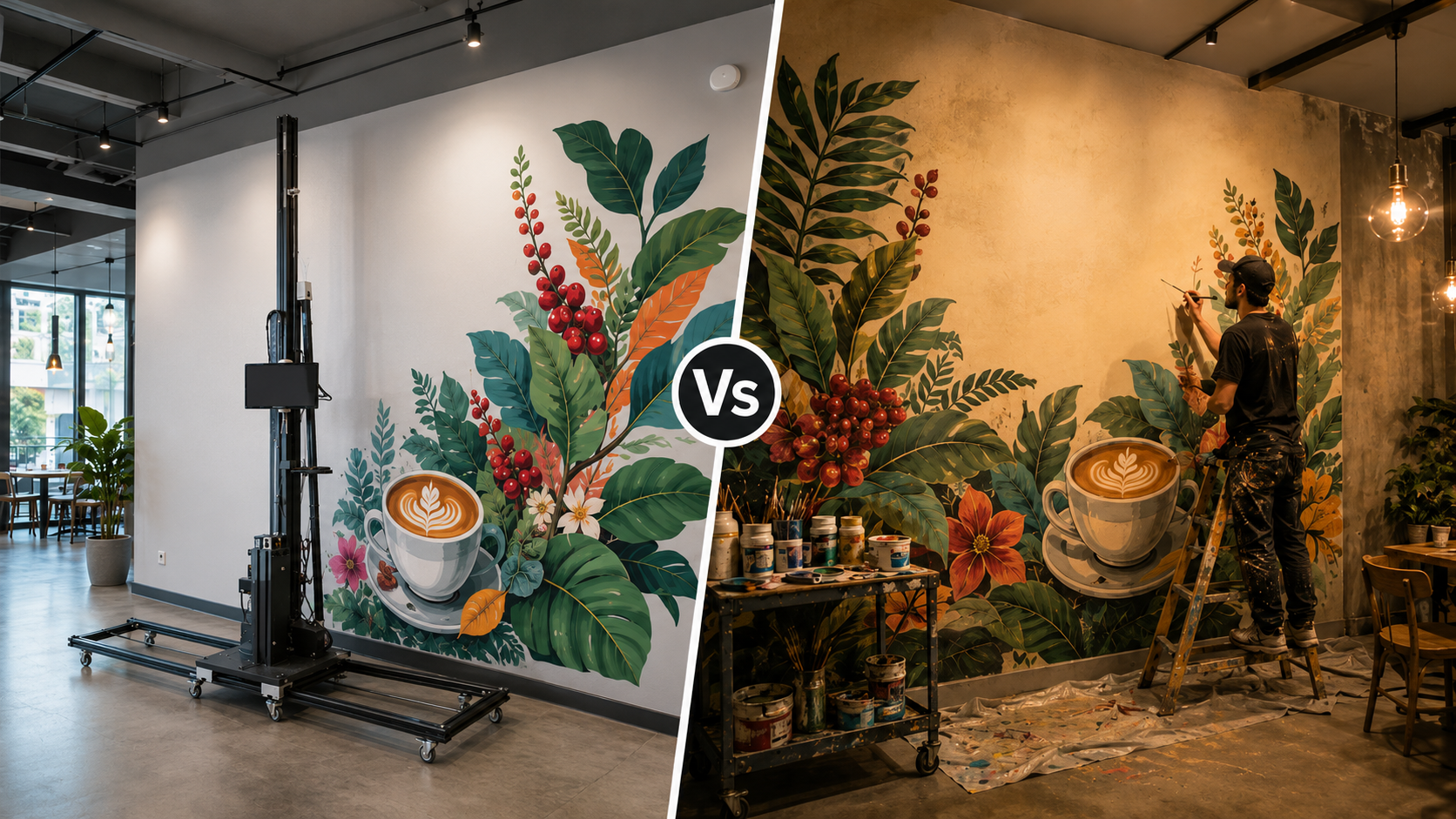
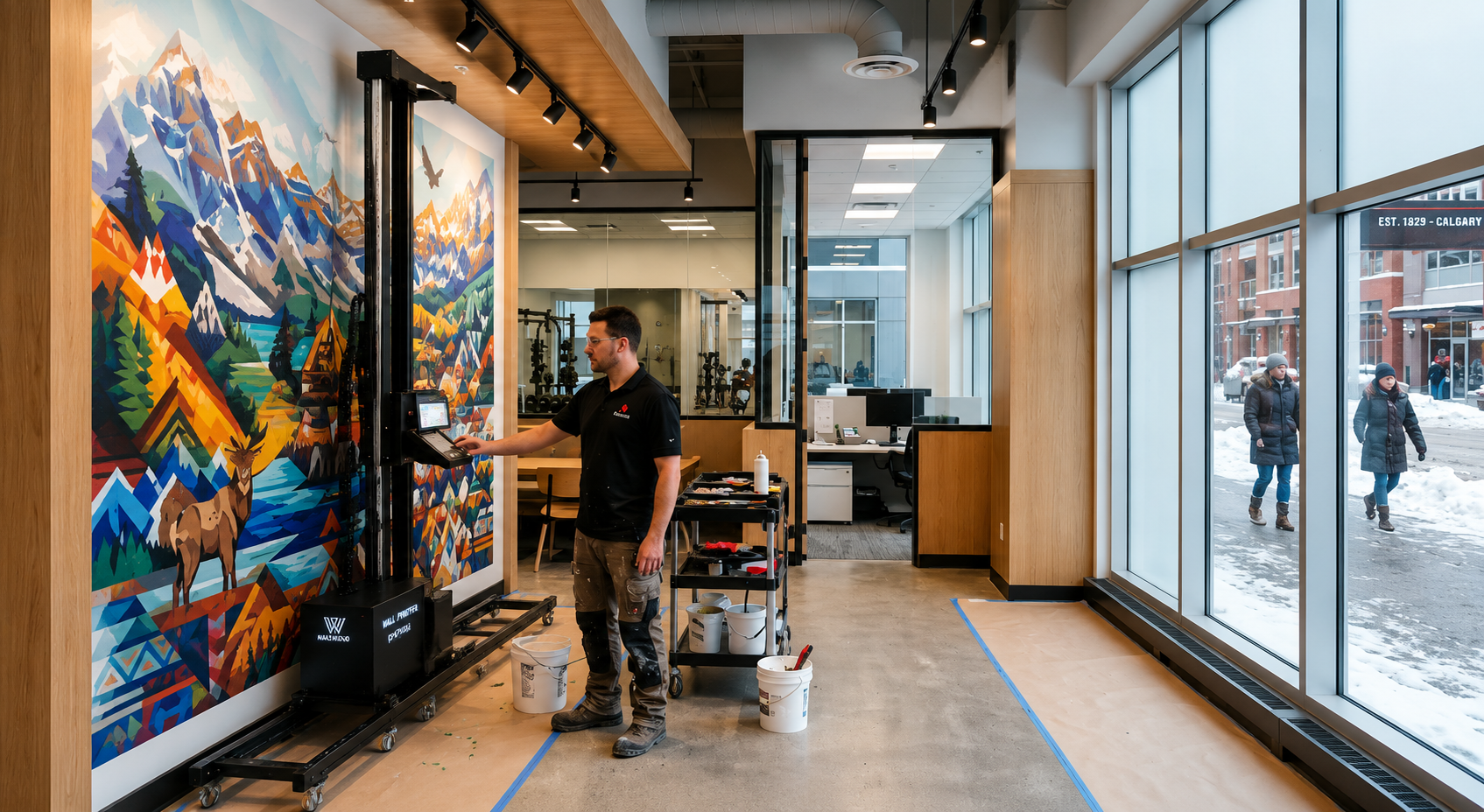
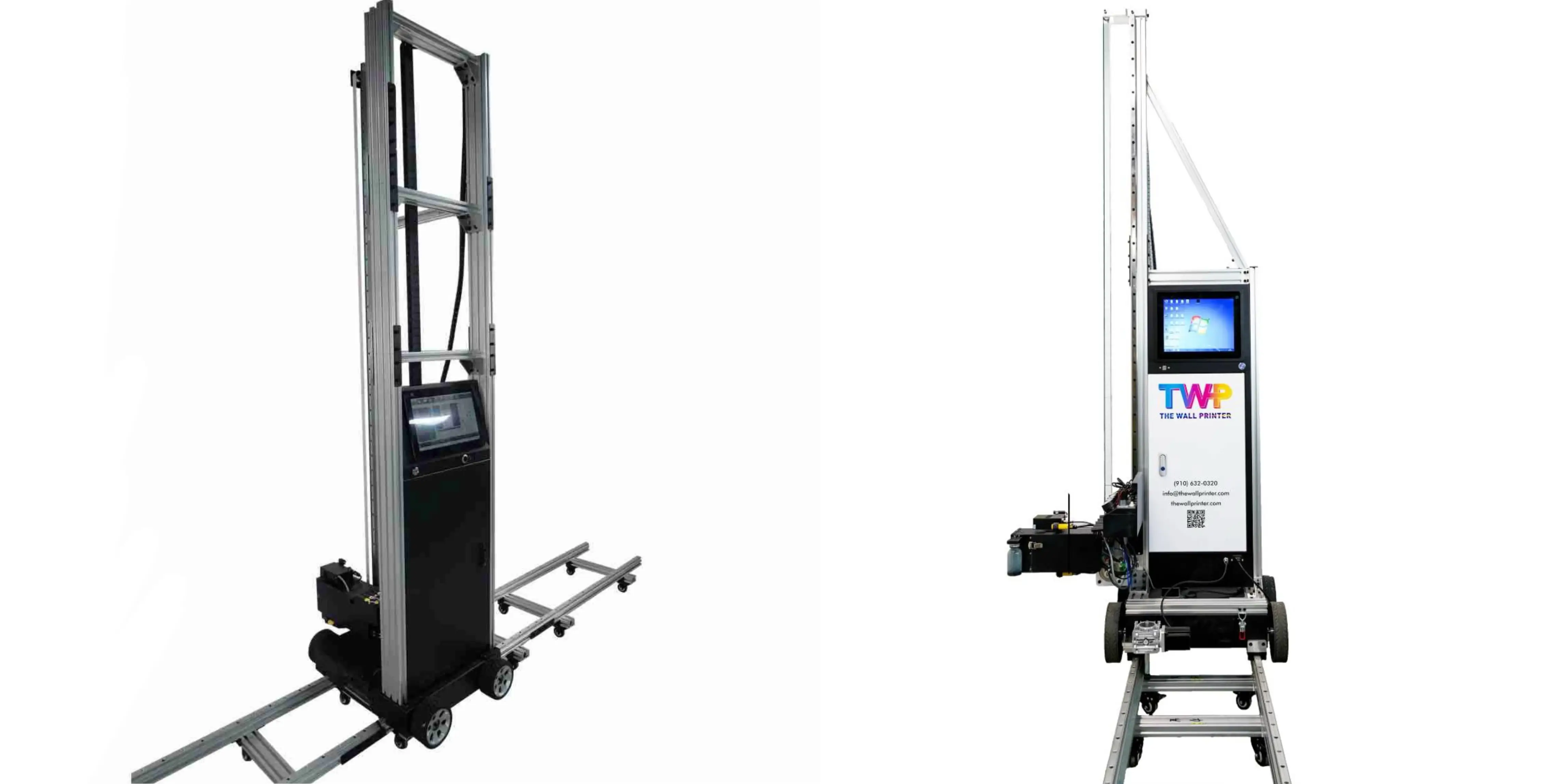
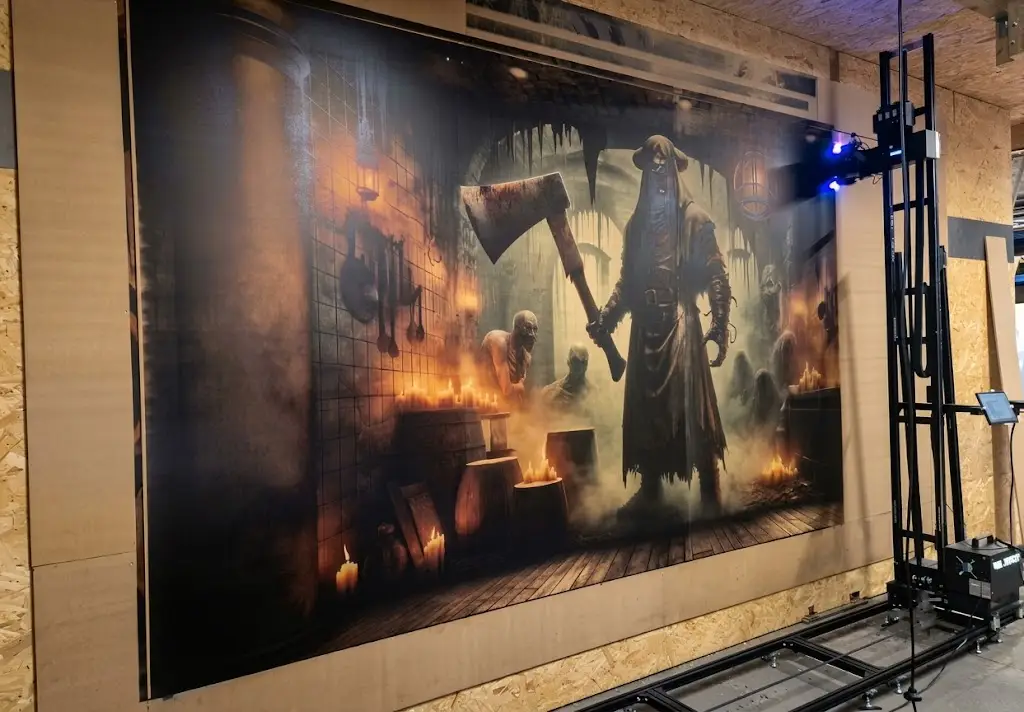
Choosing between a UV wall printer and an inkjet wall printer is not simply a question of print resolution or machine price.
The two systems are designed for different surfaces, environments, and business models. A water-based inkjet wall printer may be sufficient for residential murals on smooth painted walls, while a UV wall printer is usually better suited to commercial projects, dark backgrounds, non-porous materials, and outdoor applications.
For most businesses that want maximum surface compatibility and room to grow, a UV wall printer is the more versatile choice. For operators focused mainly on indoor residential murals and lower startup costs, a water-based inkjet wall printer may be more practical.
Before comparing them, one point needs clarification: a UV wall printer also uses inkjet printing technology. In this guide, “inkjet wall printer” refers specifically to a water-based inkjet wall printer, which is how the term is commonly used in wall printer comparisons.
UV Wall Printer vs Inkjet Wall Printer: Quick Comparison
Comparison Factor | UV Wall Printer | Water-Based Inkjet Wall Printer |
|---|---|---|
Best application | Commercial, residential, outdoor and mixed-material projects | Indoor residential murals |
Suitable surfaces | Painted walls, concrete, brick, wood, glass, metal and tile | Painted drywall, plaster and other absorbent indoor walls |
White ink | Commonly available | Usually unavailable or less practical |
Drying method | Instant UV-LED curing | Air drying and surface absorption |
Outdoor use | Better suited to outdoor projects | Generally unsuitable without additional protection |
Initial investment | Usually higher | Usually lower |
Maintenance | More demanding, especially with white ink | Simpler for basic indoor use |
Business flexibility | High | Limited to a narrower project range |
The main difference is straightforward: UV printers place and cure ink on the surface, while water-based printers depend more heavily on the wall absorbing the ink.
That difference affects almost every buying decision that follows.
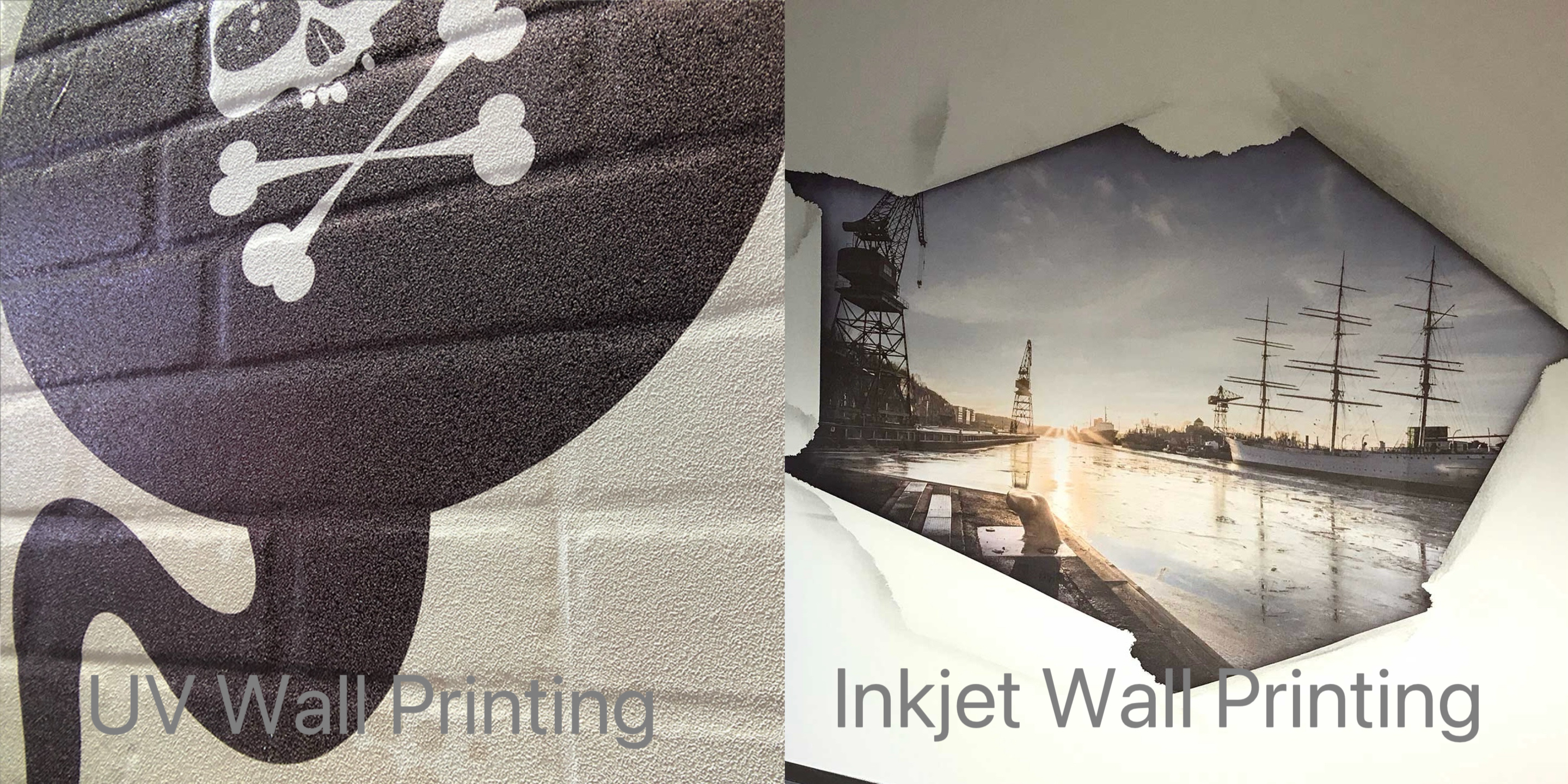
Print Quality: DPI Does Not Tell the Whole Story
Both UV and water-based wall printer machines may advertise resolutions of 1440 dpi, 2880 dpi, or more. These numbers can be useful, but they do not guarantee the same result on a real wall.
Wall printing quality depends on the printhead, ink droplet control, machine stability, color profiles, surface condition, print distance, resolution setting, and number of print passes.
A machine running at maximum advertised DPI may print very slowly. On actual customer projects, operators usually choose a production setting that balances detail, speed, and ink use.
Where UV Wall Printers Perform Better
UV ink is cured immediately after it reaches the surface. This helps reduce ink spreading and can create sharper edges on text, logos, and detailed artwork.
The advantage becomes more noticeable on non-porous or difficult materials. Glass, metal, tile, sealed wood, and dark painted walls do not absorb water-based ink effectively, but UV ink can form a cured layer on the surface.
A UV wall printer with CMYK + White ink can also place a white underbase beneath the image. This prevents dark or transparent backgrounds from reducing color brightness.
For retail branding, restaurant walls, company logos, dark feature walls, and mixed-material decoration, white ink can be more valuable than a higher headline DPI figure.
Where Water-Based Inkjet Printers Perform Well
Inkjet wall printers can produce attractive results on smooth, absorbent interior walls.
On prepared drywall or matte plaster, the ink absorbs slightly into the surface. This can create soft gradients and a natural mural-like appearance that works well in bedrooms, living rooms, cafés, and other interior spaces.
If your entire business focuses on light-colored indoor walls, a water-based inkjet printer may provide sufficient quality without the cost and maintenance requirements of a UV system.
However, the same machine may struggle when a customer requests printing on glass, metal, tile, a dark wall, or a heavily sealed surface.
The most reliable quality test is not a supplier’s sample photo. It is an unedited print test on the material your customers actually use.
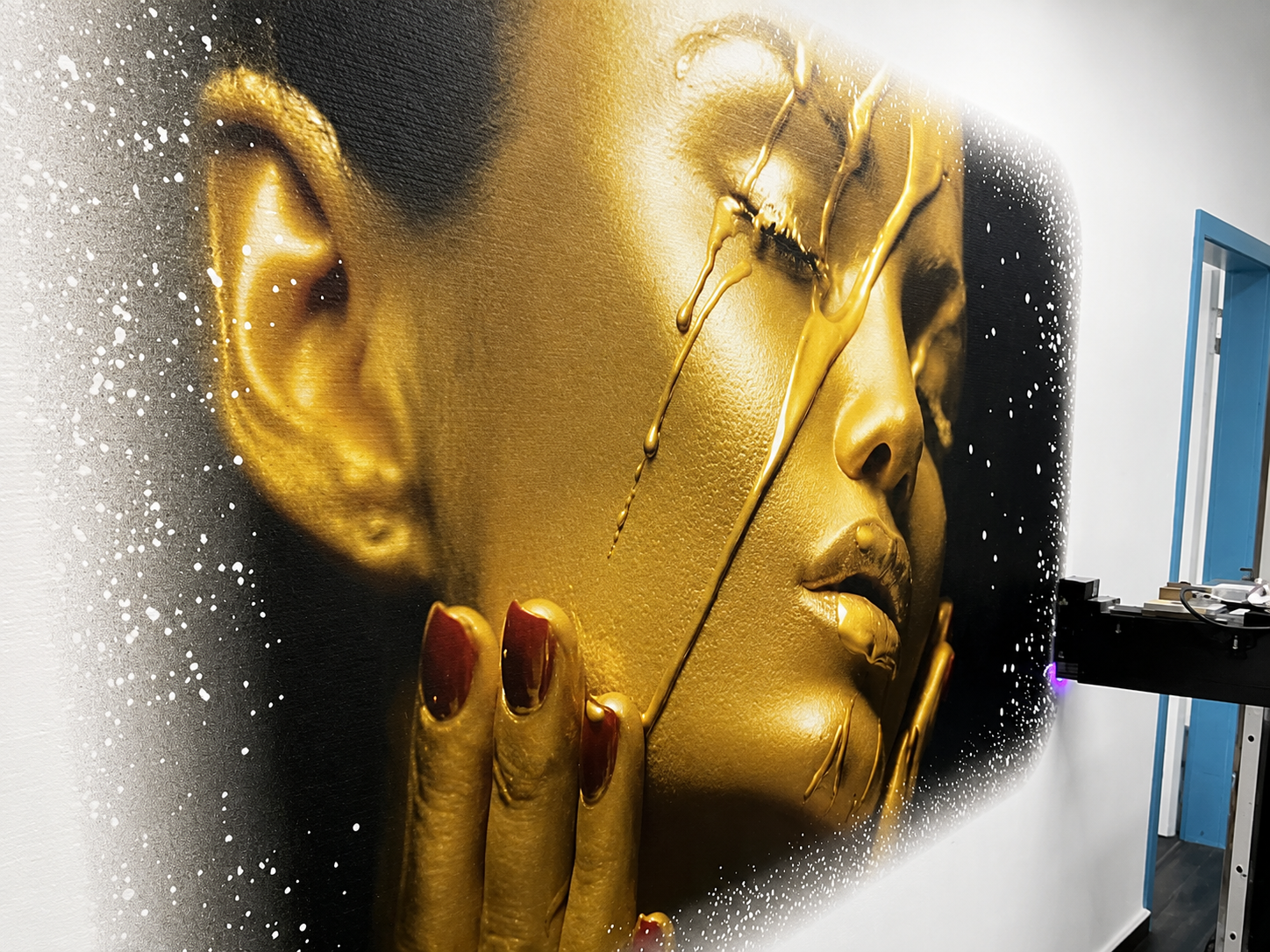
Surface Compatibility: The Biggest Practical Difference
Surface compatibility is often the deciding factor between the two technologies.
UV Wall Printers Support More Materials
UV ink does not rely entirely on absorption. Once cured, it forms a solid printed layer on the material.
With suitable preparation, a UV wall printer can be used on painted walls, concrete, brick, plaster, wood, glass, metal, ceramic tile, PVC, and other architectural surfaces.
This broader compatibility allows one business to serve more customer types. The same printer might be used for a residential mural, a glass logo wall, a restaurant feature wall, and an outdoor concrete project.
Some polished or low-energy materials may still need an adhesion promoter. Buyers should not assume that UV ink will bond permanently to every surface without preparation.
Ask the supplier to test the specific glass, tile, metal coating, wall paint, or exterior material used in your market.
Water-Based Printers Need Absorbent Walls
Water-based ink of Inkjet wall printer works best when the wall can absorb and hold the ink.
Suitable surfaces usually include painted drywall, plaster, putty walls, and other matte indoor finishes. On these materials, the system can produce good results with relatively simple preparation.
Problems begin on sealed or non-porous materials. Glass, polished metal, glossy tile, and coated panels may cause poor adhesion, streaking, or slow drying.
Primers and protective coatings can sometimes expand the application range, but they also add labor, materials, and drying time.
If your customer base extends beyond standard interior walls, a UV wall printer normally provides greater business flexibility.
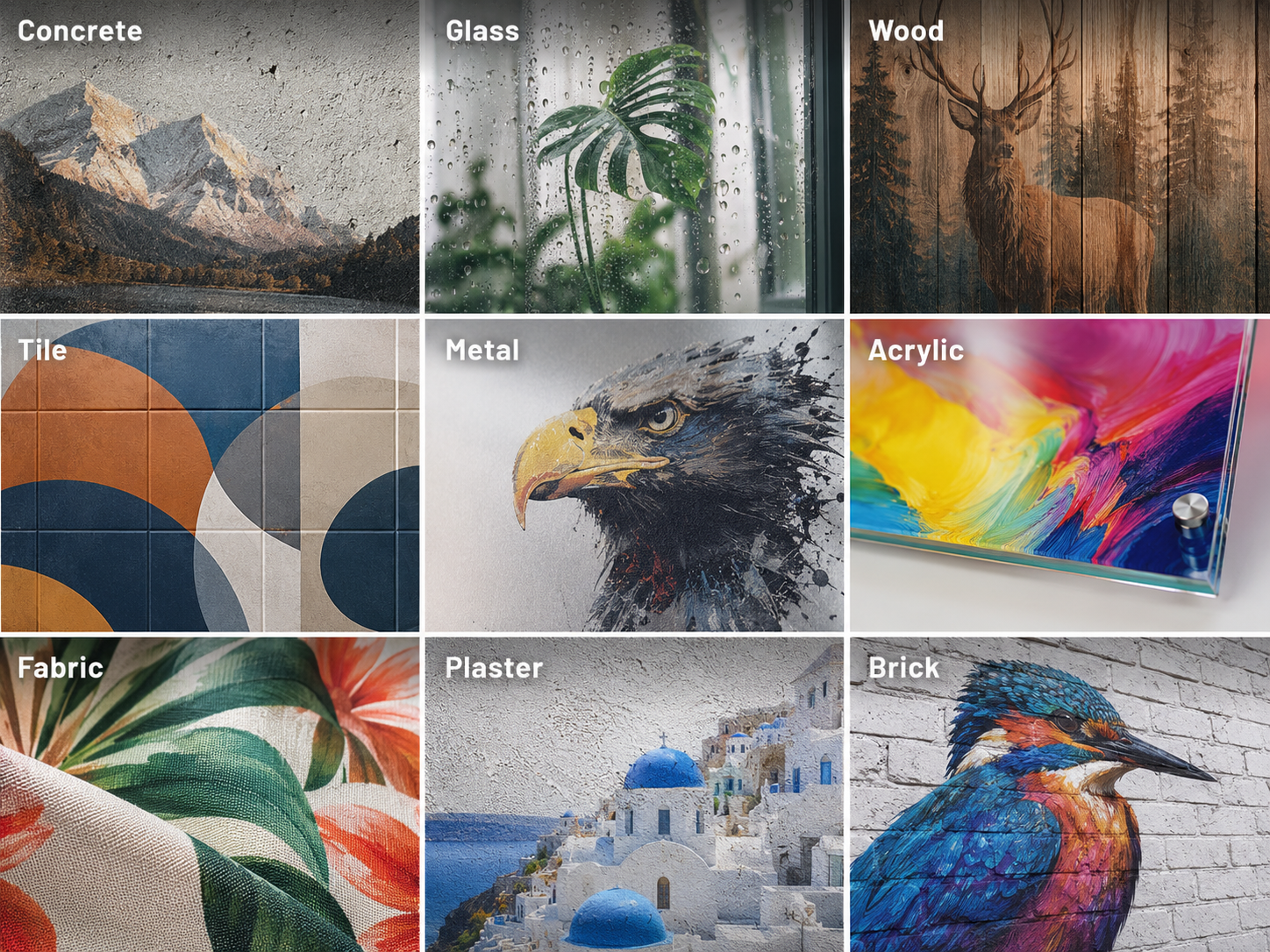
Durability: Indoor Decoration vs Commercial and Outdoor Use
The required lifespan of the mural should influence the machine you choose.
Water-based wall printing can work well for residential decoration, temporary installations, rental properties, seasonal designs, and projects where the wall may be repainted after several years.
UV-cured prints are generally more resistant to moisture, surface contact, routine cleaning, and environmental exposure. This makes them more suitable for restaurants, hotels, retail stores, offices, schools, public spaces, and selected outdoor applications.
However, buyers should be cautious about exact lifespan claims.
A statement such as “lasts ten years” means little without information about the ink, wall material, sunlight exposure, humidity, cleaning chemicals, surface preparation, and protective coating.
Before accepting a durability claim, ask the supplier to explain:
Whether the figure applies indoors or outdoors;
Which wall material was tested;
Whether a primer or protective coating was used;
Whether the result is supported by an ink manufacturer’s test or warranty.
For outdoor projects, UV is usually the safer technology, but the final durability still depends on the complete process—not only the ink type.
Drying Time and Project Handover
UV ink is cured during printing on wall, allowing the surface to become touch-dry almost immediately.
This is useful in commercial spaces where the client wants the area returned to service quickly. Restaurants, stores, offices, and event locations may not be able to wait for a long drying process.
Water-based ink needs time to dry through evaporation and absorption. Drying speed depends on wall porosity, temperature, humidity, ventilation, and image coverage.
On a normal indoor wall, this may not cause a serious problem. On less absorbent surfaces or in humid conditions, however, drying can slow the project and increase the risk of smearing.
If fast handover is important to your customers, UV curing offers a clearer operational advantage.
Cost: Which Wall Printer Is More Economical?
Water-based wall printers usually have a lower initial purchase price and simpler ink systems. This makes them attractive to beginners who want to test demand with a smaller investment.
UV wall printers generally cost more because they may include UV-LED curing lamps, white-ink circulation, additional print channels, distance sensors, and more complex control systems.
But machine price is only one part of the cost.
The real comparison should include wall preparation, primers, protective coatings, ink consumption, printhead maintenance, setup time, labor, transport, and the types of projects the machine can accept.
A water-based system may use less expensive ink, but the business may need additional primer or sealant for certain projects. It may also have to reject jobs involving dark walls, glass, tile, metal, or outdoor surfaces.
A UV machine may cost more to purchase and maintain, but its broader application range can create additional revenue opportunities.
The cheapest machine is not necessarily the machine with the lowest business cost.
For a residential operator completing a limited number of indoor murals, a water-based system may generate a better return.
For a company serving commercial clients and mixed surfaces, the revenue from projects that require UV and white ink may justify the higher investment.
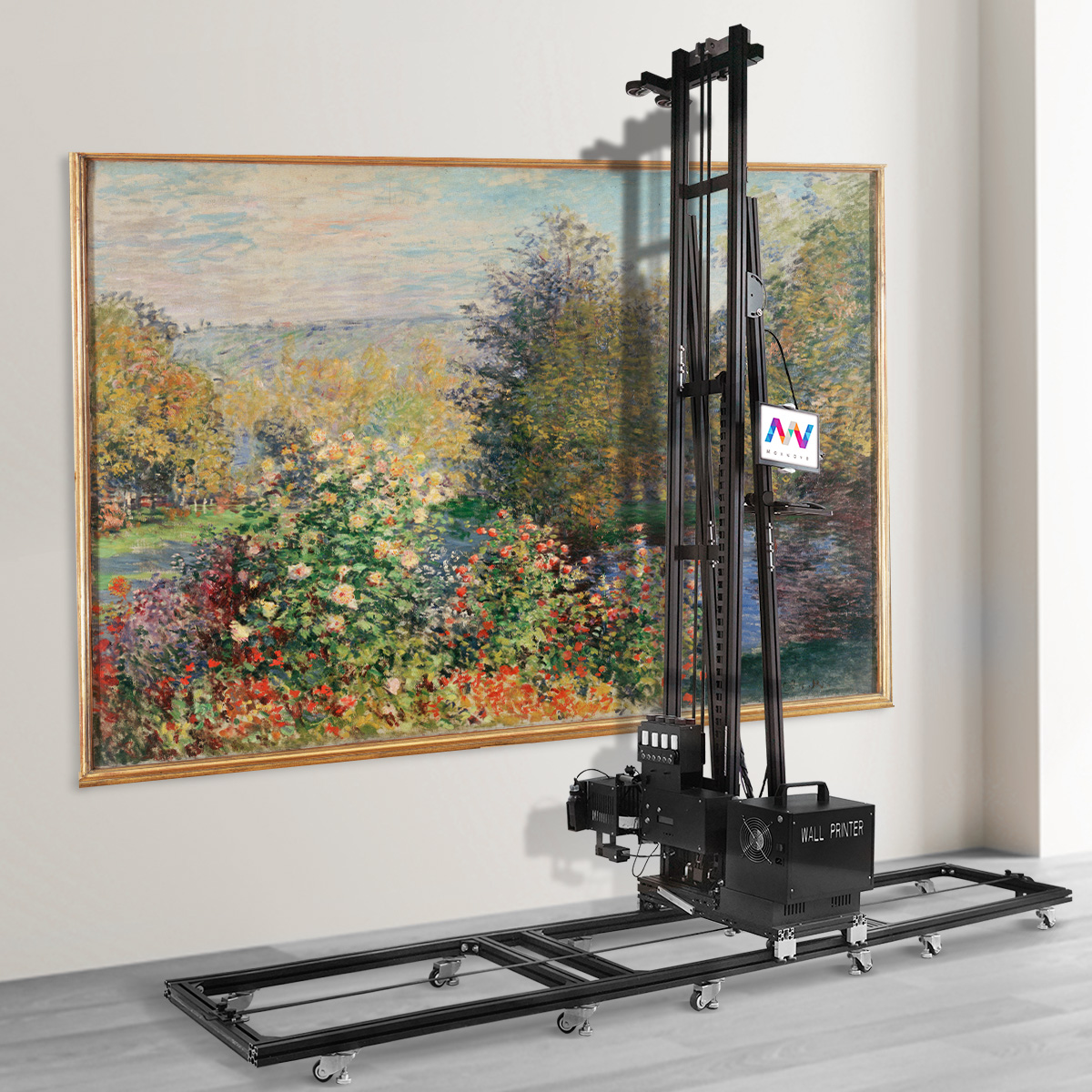
Maintenance and Ease of Operation
Both systems require regular maintenance. Neither should be treated as a maintenance-free printer.
Water-based systems are usually easier for first-time operators because the ink system is simpler and there is no UV curing lamp or white-ink circulation system.
UV systems require more discipline. White pigment can settle if circulation and agitation are neglected. Printheads, capping stations, wipers, ink lines, and UV lamps must be checked according to the manufacturer’s schedule.
A reliable supplier should provide a written maintenance routine covering nozzle checks, printhead cleaning, white-ink circulation, shutdown procedures, and storage during long periods of inactivity.
The business should also keep essential spare parts available. A low-cost wall printing machine can become expensive if a small component causes several weeks of downtime.
Before purchasing, ask the supplier to demonstrate the complete daily startup and shutdown routine. This will give you a more realistic idea of the operator workload than a product brochure.
Which Is Better for Your Wall Printing Business?
The better technology depends on the work you plan to sell.
Choose a Water-Based Inkjet Wall Printer If:
Your business will focus primarily on bedrooms, living rooms, cafés, rental properties, and other indoor spaces with smooth, light-colored walls.
It may also be the better starting point if your budget is limited, your monthly printing volume is low, and you want a simpler workflow while testing the market.
The limitation is that your service range will remain relatively narrow.
Choose a UV Wall Printer If:
You plan to serve restaurants, hotels, offices, retail stores, advertising companies, interior designers, or outdoor mural customers.
UV is also the stronger choice when you need white ink, faster project handover, greater resistance to cleaning and moisture, or the ability to print on concrete, brick, glass, wood, metal, tile, and dark walls.
For a business that expects to grow beyond residential murals, a commercial UV wall printer is usually the more future-proof investment.
What Should You Test Before Buying?
Do not make the decision using specification sheets alone.
Ask both suppliers to print the same image on your most common wall material. The test should use the quality mode you would use for paying customers—not the fastest draft setting.
Request an unedited video showing the wall preparation, machine setup, DPI, pass count, printing time, final close-up details, and adhesion test.
For a UV printer, test white ink on a dark wall and printing on at least one non-porous material. For a water-based machine, test drying, color consistency, and surface absorption on the exact interior paint commonly used in your market.
Also compare effective print height, assembly time, transport size, software workflow, power-loss recovery, training, warranty coverage, spare-parts prices, and technical response time.
A real test on your target surface will reveal more than any advertised resolution, speed, or lifespan figure.
Conclusion
There is no single wall printer machine that is best for every operator.
A water-based inkjet wall printer is a practical choice for indoor residential murals, simple surfaces, lower startup budgets, and businesses that do not need white ink or outdoor capability.
A UV wall printer is better suited to commercial projects, dark walls, mixed materials, faster handover, and businesses that want to serve a wider range of customers.
For most growing wall printing businesses, UV offers the stronger long-term advantage because it reduces surface restrictions and opens more profitable applications.
Before placing an order, request side-by-side sample prints on your most common wall material and calculate the complete cost of delivering the projects you expect to sell.
Not sure whether a UV or water-based wall printer is right for your business? Send us your most common wall materials, typical mural size, and expected monthly workload—we’ll recommend a suitable configuration, arrange a sample print, and provide a complete delivered quotation.