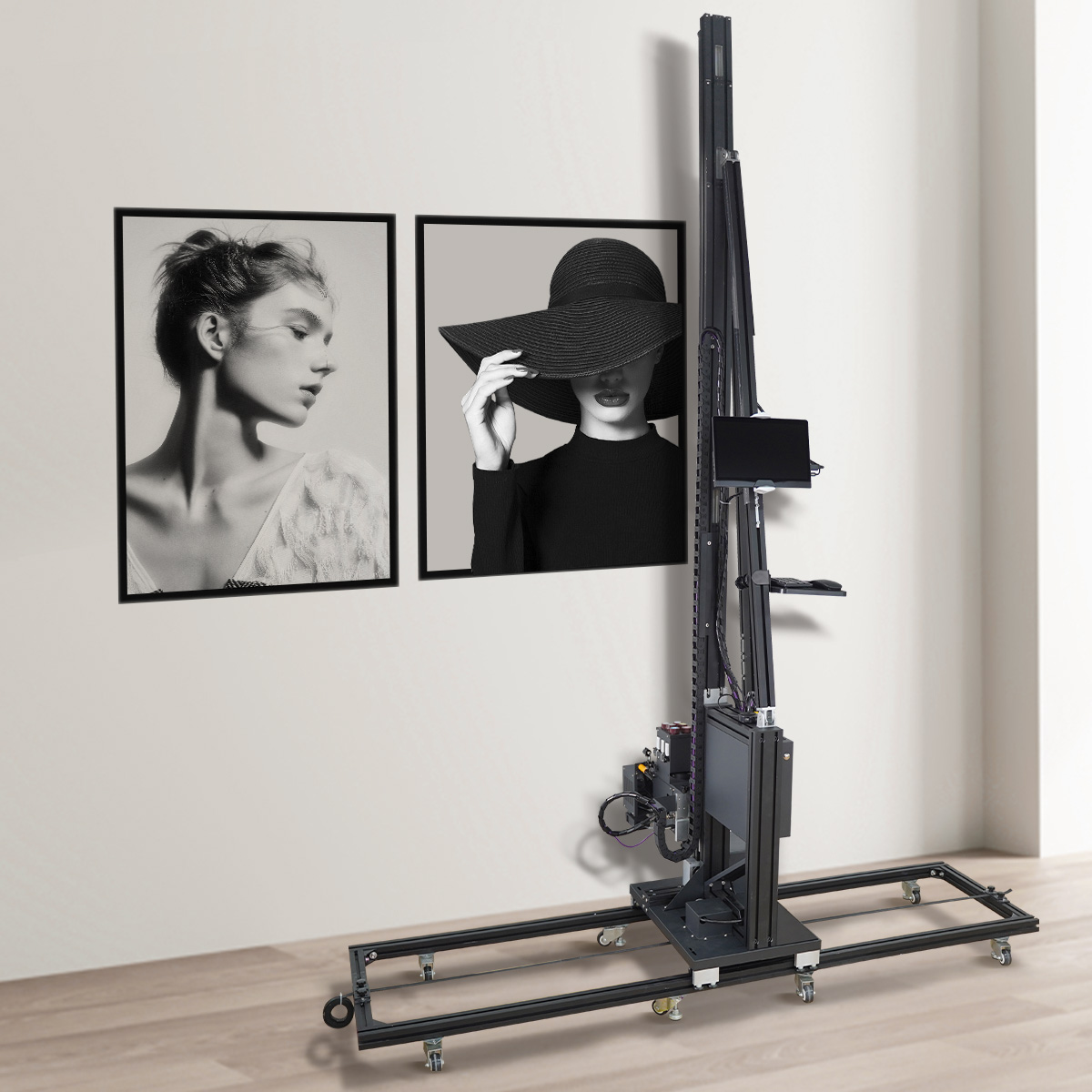
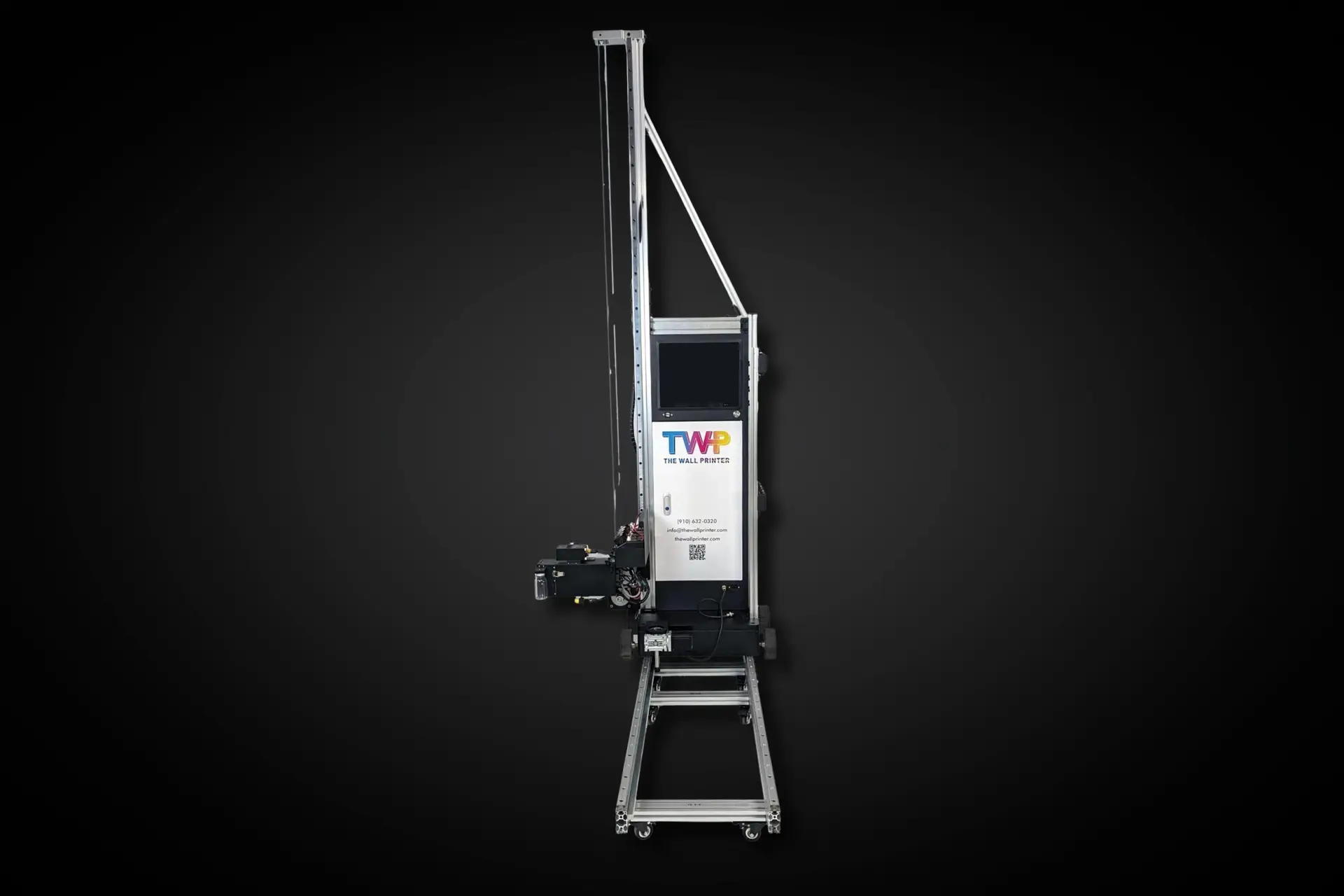
$39,995. That's the sticker price staring back at you on the TWP wall printer's website, and you're probably wondering whether that number makes sense for your business or just drains your bank account.
Most buyers compare specs and marketing copy but forget to run the actual numbers. The real question is whether the printer will pay for itself.
That's exactly what we're breaking down here. We'll dissect the true wall printing machine price (hardware, ink, maintenance, training—the whole picture), compare TWP against 2-3 real alternatives, and walk through actual case studies with hard numbers: daily print volumes, per-job costs, and payback timelines. By the end, you'll have a reusable ROI model to calculate your own break-even point. No guesswork required.
The Real Price of a TWP Wall Printer: Breaking Down the $39,995 Cost
$39,995 is the starting price for a TWP wall printer. Across the lineup, TWP charges:
Tech Series: $39,995
Floor Series: $39,995
Pro Series: $44,995
That's the sticker price. If you're buying through a dealer or turnkey package, expect $25,000–$35,000+ for the base bundle. Add territory rights, training, consumables, and full onboarding, and your real transaction cost lands around $40K–$52K+.
What You Get for That Money
The standard package includes:
Full-color + white ink capability
RIP/software licensing
In-person and virtual training from TWP's Wilmington, NC headquarters
Lifetime remote support
1-year full manufacturer warranty
2880 DPI print resolution
Wi-Fi/USB connectivity and extended rails
TWP includes zero annual software fees. Competitors often charge $2,618+/year just for support subscriptions. TWP bakes lifetime US-based support into the purchase price. Over five years, that's roughly $13,000 in savings you won't see advertised on the spec sheet.
The Costs They Don't Highlight
Budget for these separately:
Shipping, taxes, customs: typically 5–15% of machine price, depending on your location
Onsite installation: often an optional add-on, not included in base pricing
Running the Numbers on Actual Jobs
Ink cost sits around $0.16/ml. A standard 40 sq ft wall mural uses roughly 100ml of ink—about $16 per job in consumables. Time-wise, that same 40 sq ft job takes about 2 hours start to finish.
Your true per-job cost includes materials plus 2 hours of labor time, factored against your hourly rate.
How TWP Stacks Up Against the Market
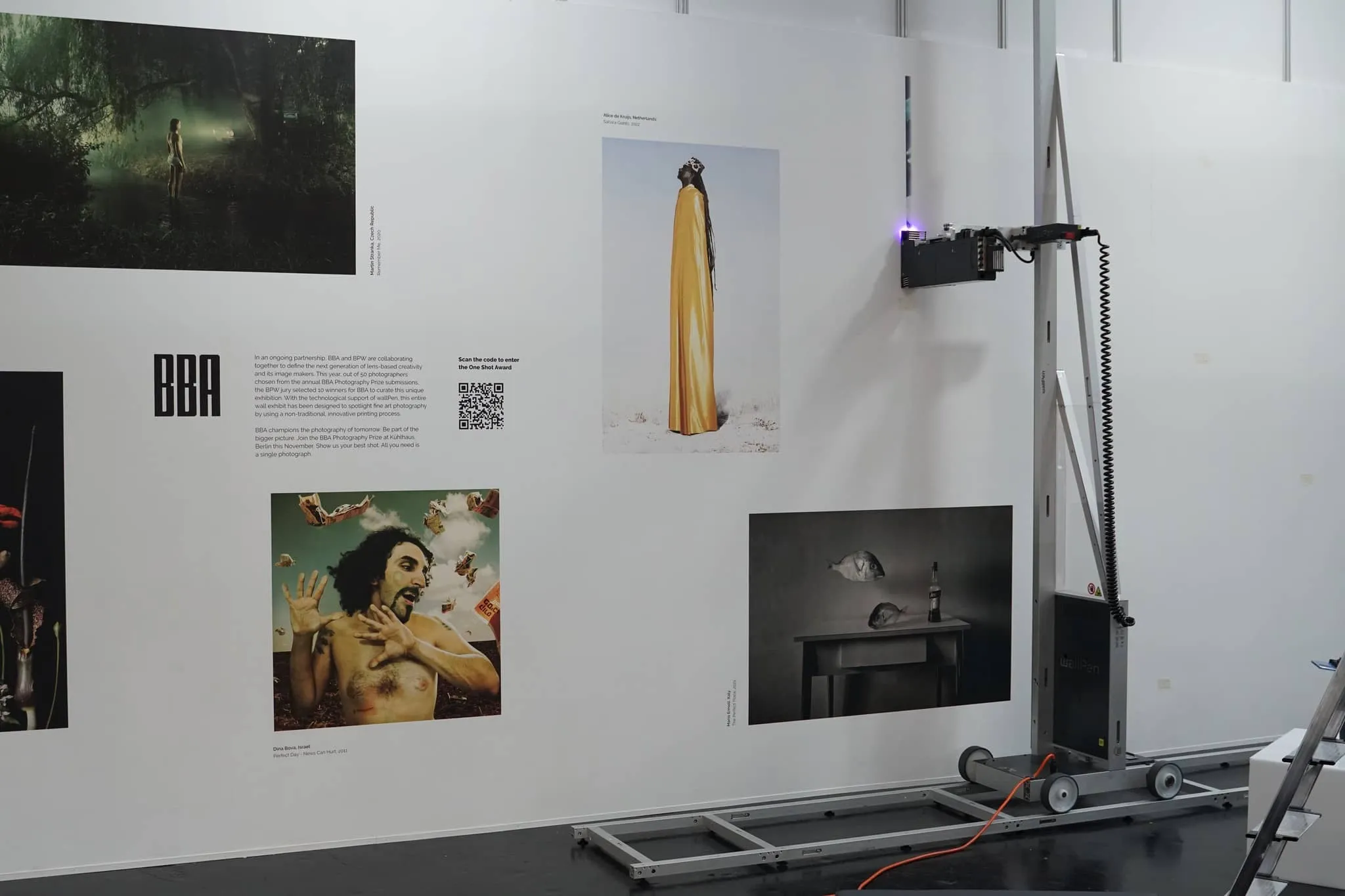
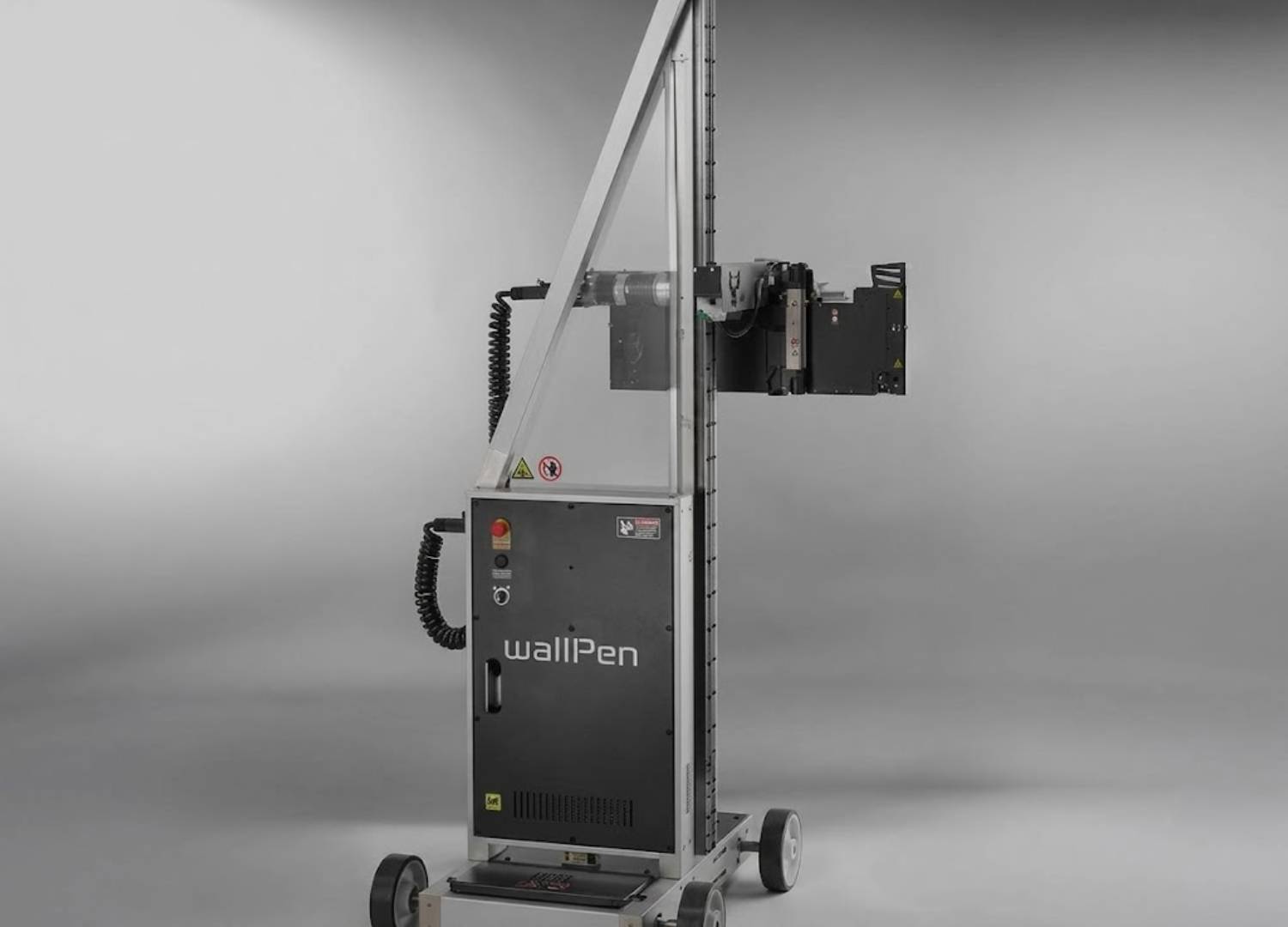
WallPen, a comparable high-end wall printer, is priced at $40,000–$60,000. TWP's $39,995 entry point puts it at the lower end of the premium wall mural printer cost bracket.
You're paying market rate for commercial-grade capability, with fewer hidden recurring costs than most alternatives.
TWP vs Alternative Brands: Price and Value Comparison
The wall printing machine market splits into four price tiers, and each one changes your total cost of ownership in a different way.
Tier | Machine Price | Realistic Startup Cost |
|---|---|---|
TWP (USA) | $39,995–$44,995 | ≈$40k–$50k |
wallPen (Germany) | $40,000–$60,000+ | ≈$50k–$70k+ |
Chinese mid-range (Tanyu, etc.) | $4,000–$12,000 | ≈$10k–$25k |
Ultra-budget generics | $2,000–$6,000 | ≈$7k–$15k |
Wallpen matches TWP on sticker price but nickel-and-dimes you afterward. The training is limited to a set number of hours before they bill you. Support usually requires an annual service contract. Their real advantage is mechanical precision — better linear guides and higher marketing DPI claims. That matters for close-up detail work. Most commercial murals don't need it.
Chinese mid-range brands look tempting on paper. Lower CAPEX, sure. But support windows max out at 3–12 months, warranties don't cover printheads, and you're paying shipping both ways on parts. Quality jumps around between OEMs. Some machines hold up. Others show banding and drift.
Ultra-budget generics are the riskiest play. Vendors disappear. Warranties are vague "board only" promises. You're betting your client's trust on a machine with no support pipeline.
Payback Math Tells the Real Story
Figure $250 net profit per job:
TWP: About 160 jobs to break even, and the training cuts down failed prints from day one
wallPen: 220–260 jobs unless you charge premium rates ($400–$1,000/job)
Chinese mid-range: 40–80 jobs on paper, but downtime often wipes out that advantage in the first year
Ultra-budget: Under 30 jobs in theory — reputational damage isn't in that calculation
Bottom line: TWP gives you better ROI when you include the bundled lifetime support and training. wallPen gives you better mechanical precision. The budget tiers work if you're comfortable being your own repair technician.
How Much Can You Earn with a TWP Wall Printer? ROI Scenarios
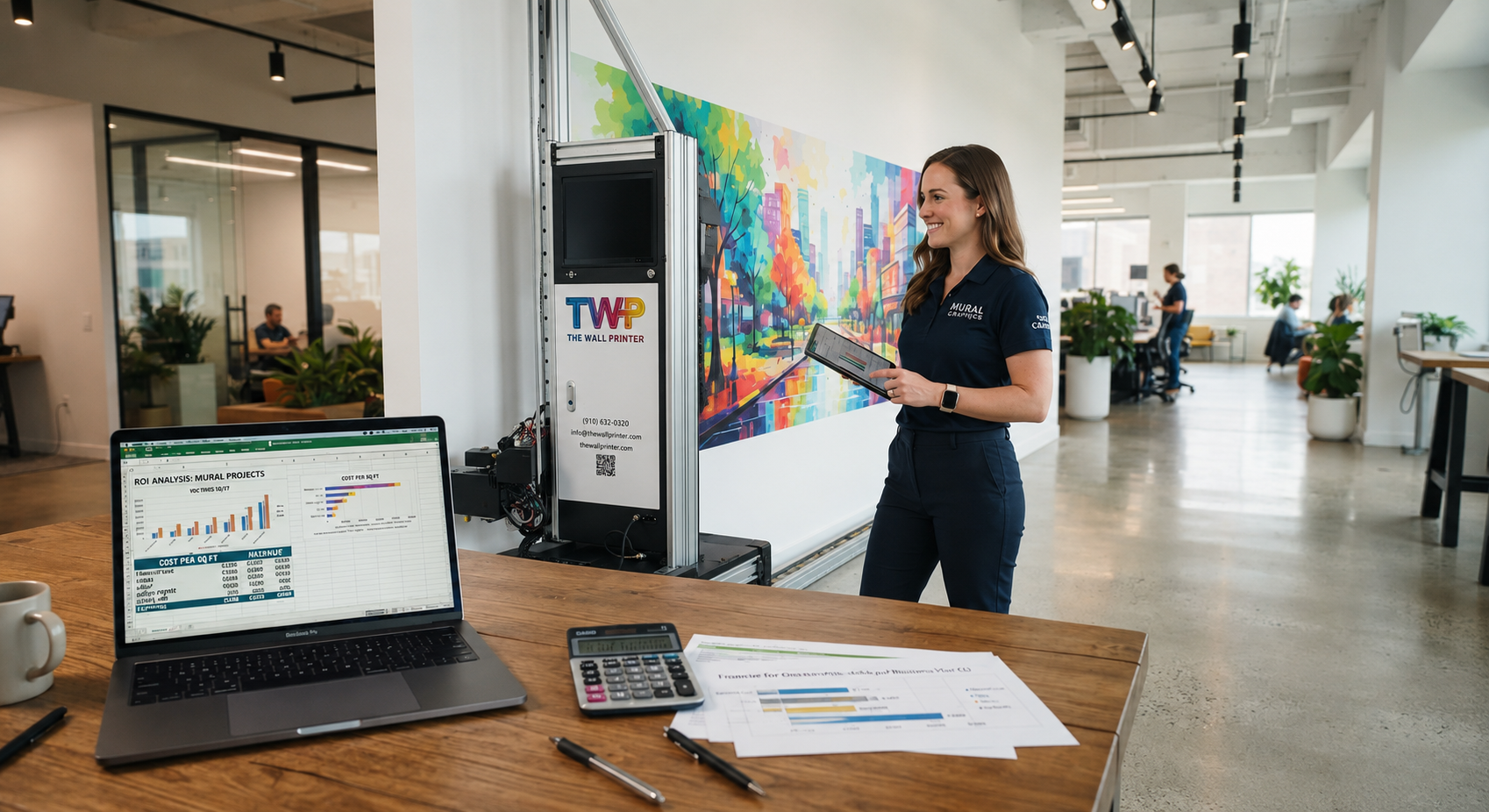
Numbers win arguments. Let's run three realistic scenarios using TWP's own consumable costs (roughly $0.50/ft² for ink) against real-world pricing data from the wall mural printing industry.
Scenario 1: Conservative
Pricing: $15/ft²
Volume: 2 jobs/month, 150 ft² each
Revenue per job: 150 × $15 = $2,250
Consumables per job: 150 × $0.50 = $75
Gross profit per job: $2,175
Monthly gross profit: $4,350
Payback on $35,000 investment: ≈8 months
This is the "playing it safe" model. Lower than average pricing, minimal volume. Even here, you're profitable inside a year.
Scenario 2: Moderate
Pricing: $25/ft² (TWP's own stated average for entrepreneurs)
Volume: 3 jobs/month, 200 ft² each
Revenue per job: $5,000
Consumables per job: $100
Gross profit per job: $4,900
Monthly gross profit: $14,700
Payback: ≈2.4 months
This matches what TWP claims: 500 ft²/month at $25/ft² recoups the investment in under 6 months. Do the math—3,000 ft² over six months clears that bar.
Scenario 3: Optimistic
Pricing: $30/ft²
Volume: 5 jobs/month, 250 ft² each
Revenue per job: $7,500
Consumables per job: $125
Gross profit per job: $7,375
Monthly gross profit: $36,875
Payback: ≈1 month
Aggressive, but not fantasy. TWP's own marketing backs this up: "three jobs a week at $30+/ft² pays off the printer in 22 weeks." Push volume and price, and payback compresses fast.
The Break-Even Table
Assuming $0.50/ft² consumables and a $35,000 machine, here's how much square footage you need to hit zero:
Price/ft² | Profit/ft² | ft² to Break Even |
|---|---|---|
$30 | $29.50 | ≈1,186 ft² |
$25 | $24.50 | ≈1,428 ft² |
$20 | $19.50 | ≈1,795 ft² |
$15 | $14.50 | ≈2,414 ft² |
Find your realistic price point, multiply by your monthly volume, and you'll know your actual break-even date, not the marketing version.
Real User Case Study: How a Commercial Interior Firm Profits with TWP

A mid-sized commercial interior design firm specializing in restaurant and retail feature walls hit a wall (pun intended) with their old business model. They were outsourcing every mural project. That meant slower delivery, thinner margins, and zero control over scheduling. So they bought a TWP printer and brought production in-house. Here's exactly what happened, with real numbers.
The Problem: Outsourcing Was Bleeding Margin
Before TWP, this firm paid outside vendors $10–15 per square foot for mural production. Lead times ran about 3 weeks per job. That's a long wait when a retail client wants their space ready for opening day. Worse, every dollar paid to a vendor was a dollar the firm never saw again.
The Solution: One 200 Sq Ft Job, Broken Down
The firm's bread-and-butter project is a 200 sq ft branded mural or accent wall—the kind restaurants and retail stores request constantly. Here's the math on a single job:
Sell price: 200 ft² × $25/ft² = $5,000 revenue
Variable cost: 200 ft² × $0.50/ft² = $100 in consumables
Gross profit: $4,900 per job
Operator time runs about 4 hours per job, well within a single workday.
Scaling to Monthly Profit
At 3 jobs per month, the numbers stack up fast:
Monthly volume: 600 ft² total
Monthly revenue: $15,000
Monthly variable cost: $300
Monthly gross profit: $14,700
Monthly labor: roughly 12 hours of production time, before install and admin
Payback: 73 Days
On a $35,000 TWP investment, that $14,700/month gross profit translates to a payback period of 2.4 months—about 73 days to fully recoup the machine cost.
Even after reserving 20% overhead for labor, marketing, travel, and coordination, payback still lands under 3 months at the same volume. That's a fast turnaround for a five-figure capital purchase.
Why This Beats Industry Benchmarks
Most interior design firms target 20–30% average profit margins, with top performers hitting 30–40%. A firm layering in-house mural production on top of existing design services can blow past those numbers, provided they keep the printer running consistently. Faster turnaround, better margins, and full control over revisions. That's the real payoff of owning versus outsourcing.
When Is the TWP Wall Printer Worth It? (And When It’s Not)
TWP earns its price tag when you have steady, monetizable demand.
Buy It If You Check These Boxes
You can book 500+ ft² per month. At $20/ft², that's $10,000 in monthly revenue against roughly $250 in ink. Gross margin hits ~97.5%. Payback lands in 4–6 months of steady work, or around 12 months once you factor marketing and downtime.
You're landing 2+ jobs monthly at $15–$30/ft². Two 200 ft² jobs at $25/ft² generates $9,800 in monthly gross profit before labor. That's enough volume to justify commercial wall printer price tags in the $40K–$50K range.
You want zero annual wall printer maintenance cost surprises. TWP bundles lifetime support and a one-year warranty into the sale. Competitors charge $2,618+/year just for subscription access.
You're playing a 3+ year game. Fixed costs like training and onboarding dilute fast when spread across years of consistent print jobs.
Skip It If Any of These Apply
Demand sits under 200 ft²/month. Revenue barely clears $3,900 monthly gross profit, stretching payback toward 2–3 years. Renting or subcontracting beats owning here.
Your budget caps at $10K–$15K. TWP wall printer alternatives like Tanyu or Dxonjet run $5,000–$15,000. They skip North American support, but they fit tighter budgets.
You're still testing market demand. Validate with a $7K–$12K import first. Save the five-figure commitment for once your pipeline is proven.
TWP Total Cost of Ownership: Ink, Maintenance, and Ongoing Expenses
Sticker price is only half the story. The real wall printer machine maintenance cost shows up over three years, not on day one.
The full formula is machine price plus ink, maintenance supplies, support/software, and shipping/tax, all tracked over a three-year window.
Ink and Consumables, By the Numbers
TWP's ink usage runs 6–10 ml/m² at $0.16/ml. That's $0.09–$0.15/ft².
At 200 ft²/month: $18–$30/month in ink
At 1,000 ft²/month: $92–$154/month in ink
Add maintenance supplies—cleaning carts, wiper blades, waste ink bottles—at $50–$100/month. Budget a printhead reserve too. Ricoh G6 heads run $500–$1,200 each, typically replaced every 12–24 months depending on volume.
The 3-Year Reality Check
Low volume (200 ft²/month): roughly $39K–$45K+ total, including shipping/tax
High volume (1,000 ft²/month): roughly $41K–$50K+ total, before major part failures
Compare that to a wallPen-style setup where a $50K+ machine plus $2,618/year support locks you into a minimum $7,854 support burden over three years before ink or parts. TWP's included software and free remote support quietly beat that math.
Conclusion
The TWP wall printer may be a strong investment for businesses with steady demand, premium pricing, and enough monthly volume to support a $40,000+ purchase.
However, buyers should compare more than the machine price. Shipping, labor, maintenance, support, and realistic net profit all affect the true payback period.
For operators seeking a lower-cost commercial solution, WallPrintBox offers a complete wall printing package that combines the printer with setup guidance, training, essential accessories, and ROI planning support.
Before choosing a supplier, compare sample quality, real print speed, included equipment, after-sales service, and total delivered cost.