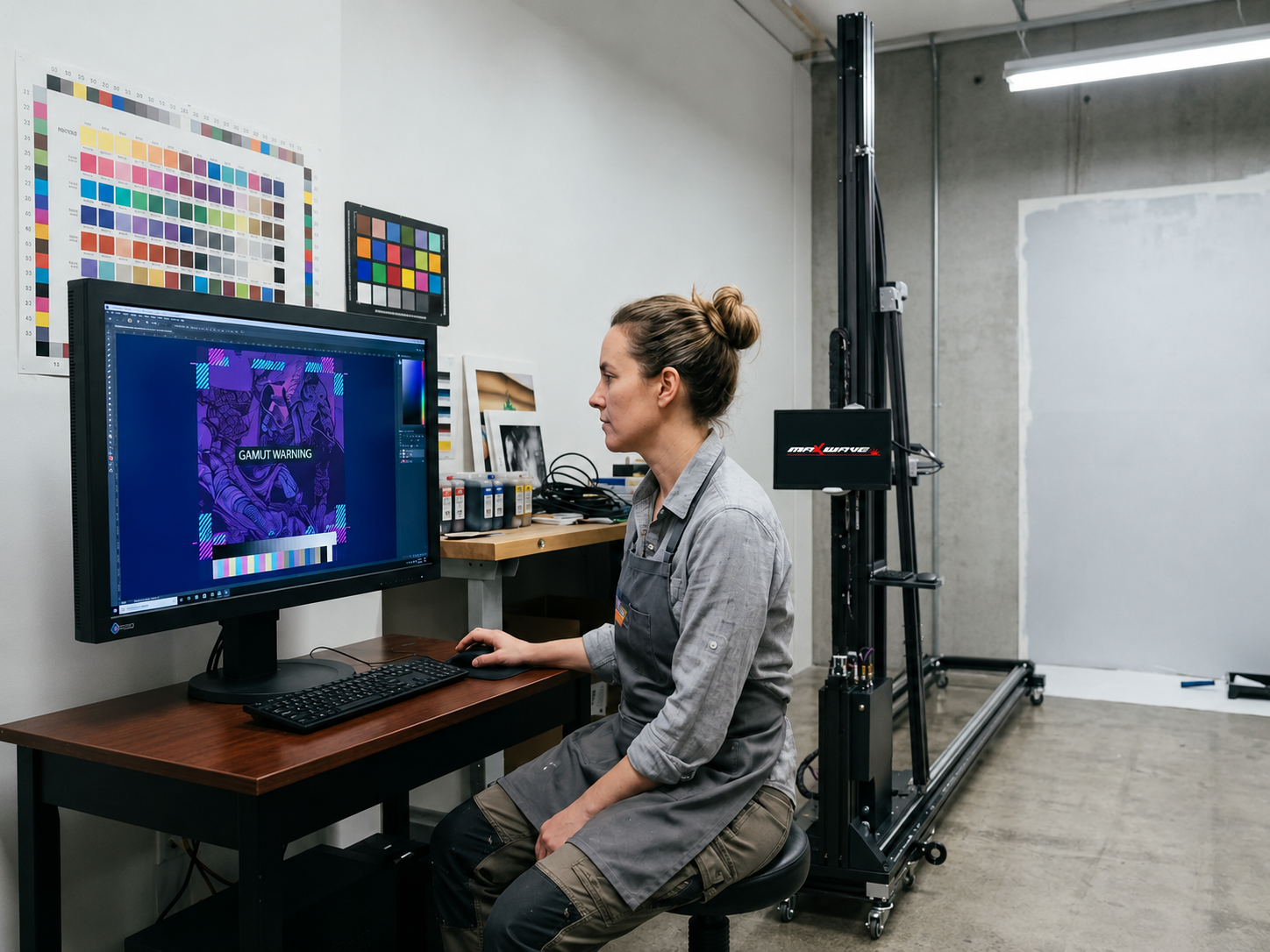
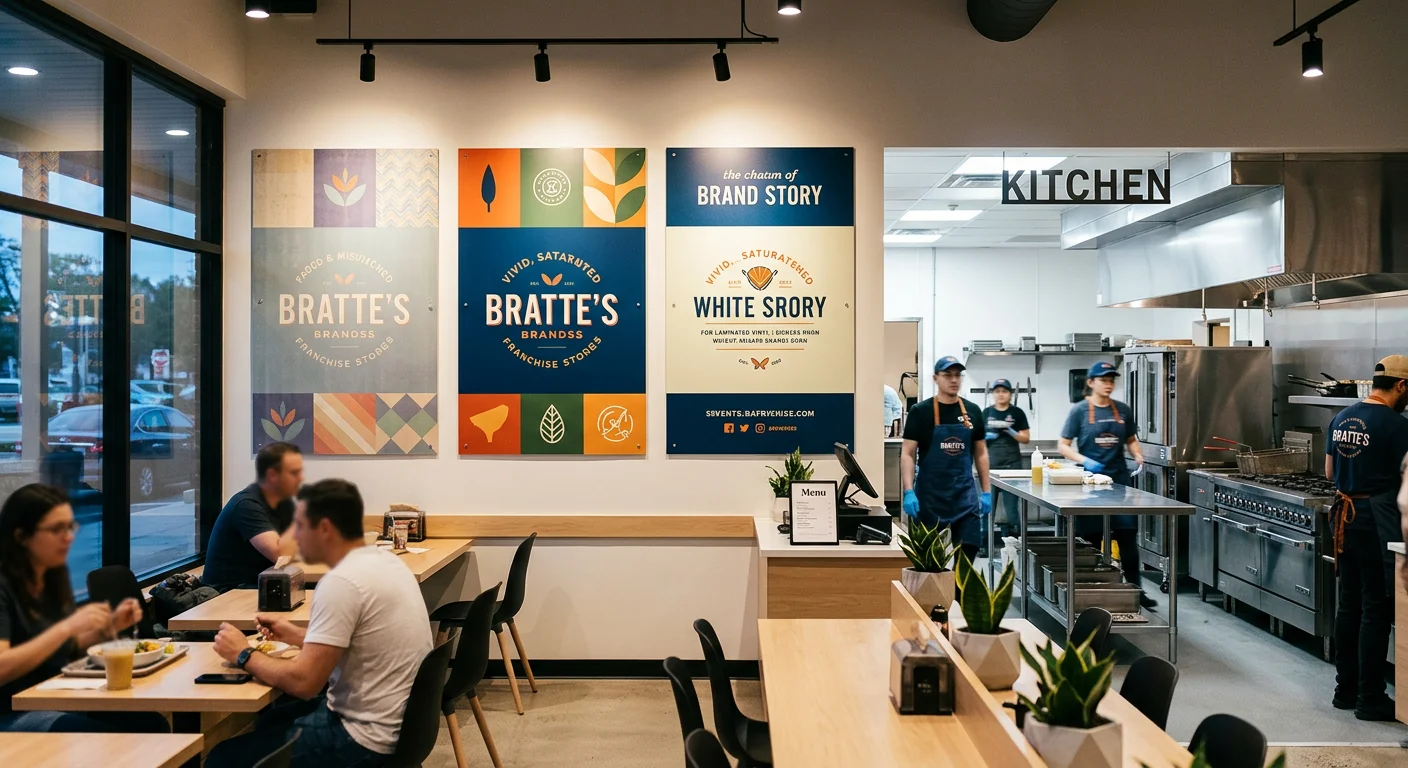
Someone in your city is already charging $800–$2,400 CAD to print a single wall mural. Their equipment paid for itself within six months.
Starting a wall printing business in Canada is profitable. That's not the question. The real question is whether you have the right information — enough to avoid burning $30,000 on mistakes that don't need to happen.
This guide cuts the generic business advice. It goes straight to what matters in the Canadian market:
Real startup cost breakdowns in Canadian dollars
Province-specific registration requirements
How to land your first commercial client
A seasonal operating strategy that keeps revenue flowing — even when a Manitoba winter makes exterior wall printing services a non-starter
By the end, you'll know whether this business fits you. And if it does, you'll have a clear, step-by-step path from zero to your first paying job.
Validating Canadian Market Demand and Climate Realities for Wall Printing
Canada's custom printing market is set to grow from USD $1.29B in 2024 to USD $2.1B by 2030. That's an 8.5% CAGR, pushed forward by digital and high-customization work. Wall printing sits right at the center of that growth.
So what does that mean in real numbers? The Canadian wall-print services market is worth an estimated CAD $40–80M per year. Yet there are only dozens of active operators across the entire country — most concentrated in Toronto, Vancouver, Calgary, and Montreal. Secondary cities like Hamilton, Kelowna, and Moncton? Barely touched.
Who's Paying for This
The demand is real. It already exists across these client segments:
Coffee shops and restaurants — feature walls running 150–600 sq ft, with owners budgeting CAD $2,500–$10,000 for a standout fitout
Gyms and fitness studios — chains like F45 and Orangetheory need consistent branded environments across multiple locations. Direct-to-wall printing beats vinyl on installation time
Corporate offices — tech and professional services tenants set aside 0.5–1.5% of their tenant improvement budget for branded graphics
Airbnb hosts — hosts focused on listing photos spend CAD $1,000–$5,000 per unit on standout design. A themed feature wall is an easy sell
Schools and daycares — wayfinding, murals, donor walls. Education capital projects include artwork line items on a regular basis
The residential side holds real potential too. Basement home theatres, children's nurseries, and high-end condo feature walls bring in CAD $1,000–$12,000 per job. In most mid-size Canadian cities, you'll face little to no local competition.
The Climate Reality Nobody Talks About
This is where many first-time operators make costly mistakes.
Canada's climate does more than affect your schedule. It determines whether your exterior jobs hold up for two years or ten.
The freeze-thaw problem is serious. Prairie provinces and much of Ontario and Quebec see temperatures swing from -30°C to +30°C within the same season. Ink films on unsealed masonry or stucco crack and peel as the surface expands and contracts. Moisture gets behind the printed layer and speeds up failure fast.
The rule is simple: never print on exterior walls below 5°C surface temperature. Frozen or damp substrates? Don't touch them.
UV damage is the summer version of the same problem. Southern Ontario and the Prairies get moderate-to-high UV levels through summer. South-facing exterior murals without UV-stable inks and a protective clear coat show visible fading within 1–3 years. The clear coat is not optional. It's the difference between a professional job with a warranty and a liability.
Region | Viable Outdoor Season | Smart Strategy |
|---|---|---|
Prairie Provinces (AB, SK, MB) | May–September | Interior-first; outdoor jobs require UV clear coat |
Ontario & Quebec | April–October | Mixed indoor/outdoor; winter = 100% interior |
BC Coast (Vancouver) | March–November | Best outdoor window in Canada; moisture prep still critical |
Atlantic Canada | May–September | Short season; prioritize indoor commercial clients year-round |
The bottom line on climate: interior wall printing is your core business in Canada. Exterior work is a seasonal add-on, not the foundation. Operators who build around indoor commercial clients — gyms, restaurants, offices, schools — stay booked all twelve months, no matter what February throws at them.
Exact Startup Cost Breakdown: $15,000 to $50,000 CAD Configurations
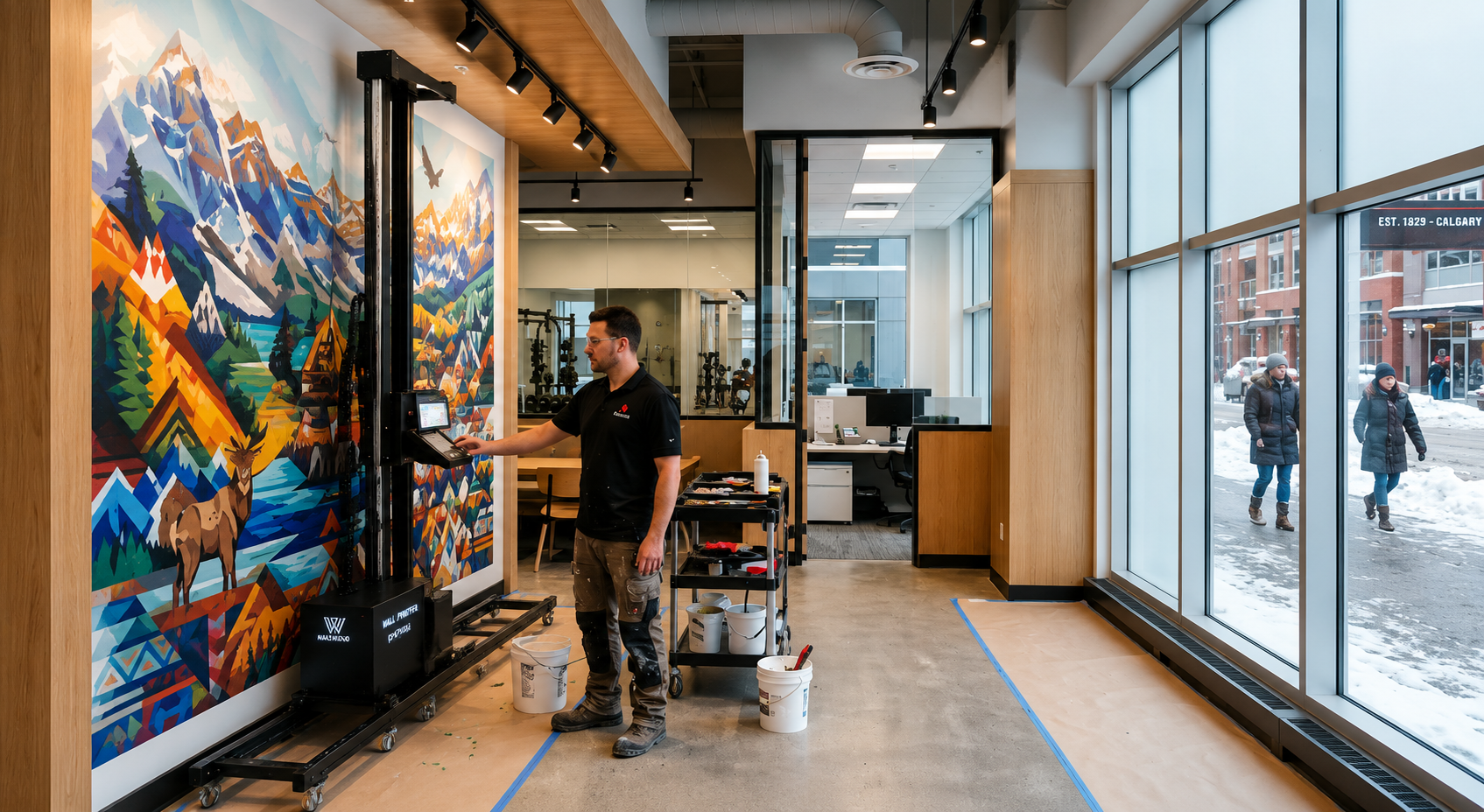
The number that kills most wall printing startups isn't the equipment cost. It's the gap between what they budgeted and what they spent.
Here's the full picture — broken into three configurations, each matched to a real operating scenario in the Canadian market.
Three Configurations, Three Business Models
Configuration | Equipment | Shipping & Duties | Training | Insurance (Yr 1) | Marketing (Yr 1) | Total Range |
|---|---|---|---|---|---|---|
Entry-Level (Solo) | $12,000–$16,000 | $1,500–$2,500 | $500–$800 | $1,000–$1,400 | $800–$1,200 | $15,800–$21,900 |
Professional (Standard) | $22,000–$28,000 | $2,800–$4,000 | $2,000–$3,500 | $1,800–$2,500 | $2,500–$4,000 | $28,300–$39,000 |
Premium (3D/Heavy Commercial) | $35,000–$42,000 | $3,500–$5,500 | $4,000–$6,000 | $3,000–$4,200 | $5,000–$7,500 | $45,200–$52,000+ |
What Each Line Item Really Means
Equipment is your largest single cost — and the one with the most variance. An entry-level vertical wall printer gets you into residential and small commercial jobs. A UV wall printer at the professional tier opens doors to restaurant chains, gyms, and multi-location office clients. The premium 3D wall printing machine targets developers and large commercial contracts. Job values at this tier exceed $10,000 per project.
Shipping, duties, and brokerage catch people off guard. Most wall art printing equipment ships from China. Import duties run 0–7% depending on the HS code classification. Here's the good news: GST/HST paid at the border is fully recoverable through input tax credits on your first filing. It's a cash flow issue, not a permanent cost.
Use CIF terms to a Canadian port — Vancouver or Toronto. Hire a bonded freight forwarder. That one move protects you from demurrage charges. Those charges stack up fast when customs documents have even small errors.
Insurance is non-negotiable. A solo operator needs Commercial General Liability (CGL) at a $1M minimum. That runs $1,000–$1,400 per year. Step onto commercial sites or bring on a helper, and you need to upgrade to $2M CGL plus an equipment floater. Operating on construction sites in Ontario or BC? WCB/WSIB registration is a hard requirement — not optional.
Ongoing Operating Costs to Build Into Your Model
These costs don't show up in your startup budget — but they hit every month:
Ink and consumables: $150–$300 per job, depending on wall size and coverage
Lift or scaffolding rental: $120–$250 per day for high walls or exterior work
UV clear coat: $200–$400 per gallon — keep 2–3 gallons on hand as working stock
Software subscriptions: $50–$150/month covering RIP software, design tools, and CRM
Bookkeeping: $2,400–$3,600/year for cloud accounting plus year-end returns
Add those up across your first twelve months. Then layer in a 15–20% contingency buffer. Your real first-year capital requirement lands between $18,000 on the lean end and $55,000 on the premium end.
That's your real number. Plan for it now — not after the equipment clears customs.
Profit Margins and ROI Calculator Logic for Commercial Wall Printing Services
The math on wall printing is hard to ignore once you run the numbers.
At $25 CAD per square foot — a conservative standard-tier price in most Canadian markets — a single 200 sq ft restaurant feature wall brings in $5,000 in revenue. Your actual cost to produce it? $630–$790, covering ink, labor, and overhead. That puts your gross margin between 60–65% before tax.
Here's how the numbers break down at each pricing tier:
Pricing Tier | Price/sq ft (CAD) | Total Cost/sq ft | Gross Margin |
|---|---|---|---|
Entry bid | $18–$22 | $2.35–$3.95 | ~45–52% |
Standard | $25–$30 | $2.35–$3.95 | ~60–65% |
Premium / urgent | $35–$45 | $2.35–$3.95 | ~70–80% |
What Your Cost Stack Looks Like
Your per-square-foot cost breaks into three layers:
Ink and consumables: $0.35–$0.65 CAD/sq ft
Labor and travel: $1.50–$2.50 CAD/sq ft (3–4 hours per 100–150 sq ft job at $25–$40/hr, all-in rate)
Allocated overhead and depreciation: $0.50–$0.80 CAD/sq ft. This assumes $600–$900/month in fixed costs spread across 300–500 sq ft of volume per month.
Total cost baseline: $2.35–$3.95 CAD/sq ft. That's your calculator default.
For a lean solo operator, fixed overhead covers insurance, bookkeeping, RIP software, and a basic marketing budget. That runs $600–$900 CAD/month in total.
Your Break-Even Is Smaller Than You Think
Using mid-range assumptions — $25 CAD/sq ft pricing, $3.15/sq ft variable cost, $750/month fixed overhead:
Break-even volume = 750 ÷ (25 − 3.15) ≈ 34 sq ft/month
That's pure cash OPEX break-even. Add a realistic owner draw and reinvestment, and your practical target moves to 250–350 sq ft/month. At standard pricing, that translates to $6,250–$8,750 CAD in revenue per month.
The Realistic Ramp-Up Profile
Don't plan your first year at full capacity. Here's what real progression looks like:
Phase | Monthly Volume | Revenue (@ $25/sq ft) | Net Usable Profit |
|---|---|---|---|
Months 1–3 | 100–150 sq ft | $2,500–$3,750 | $500–$1,500 CAD |
Months 4–6 | 300–400 sq ft | $7,500–$10,000 | $2,500–$4,000 CAD |
Months 7–12 | 500–700 sq ft | $12,500–$17,500 | $4,500–$7,500 CAD |
How Fast Does the Equipment Pay for Itself?
At 400 sq ft/month and $25 CAD/sq ft, revenue hits $10,000. Variable costs run $1,260. Fixed overhead takes another $750. That leaves $7,990 gross before tax. Apply a 40–50% effective rate for tax and reinvestment, and you're keeping $3,200–$4,800 CAD/month.
On a $28,000 professional-tier UV wall printer, that puts your payback window at 6–9 months. That lines up with manufacturer ROI models from The Wall Printer, which show payback in under six months at 10 jobs per month.
That's not a speculative projection. It's straight arithmetic.
Provincial Business Registration and GST/HST Compliance (ON, BC, AB, QC)
Get this part wrong and CRA will find you — at the worst possible moment.
Before you print a single wall, you need a legal entity, a tax account, and a clear picture of what each province demands. Here's what that looks like.
Federal vs. Provincial: Which Structure Makes Sense
For a commercial wall printing business, a federal corporation under the Canada Business Corporations Act is the strongest foundation. One federal name. One set of articles. Add extra-provincial registration for each province you operate in.
Why does this matter? Say you're holding $50,000+ in UV wall printer equipment, a vehicle, and scaffolding — and stepping onto commercial job sites. A sole proprietorship puts every one of those assets at risk of personal liability. That's not a risk worth carrying.
Incorporation cost benchmarks (2025–2026):
NUANS name report: ~CAD $30–45
Federal articles filing: ~CAD $200–250 (Corporations Canada online)
Provincial articles (if incorporating at the provincial level instead):
ON: ~CAD $300–360 via ServiceOntario
BC: ~CAD $350–400 (name reservation + incorporation)
AB: ~CAD $275–350 via authorized service providers
QC: ~CAD $350–375 via Registraire des entreprises (French name rules apply)
Total setup cost: under CAD $400 federally. That's the cheapest legal protection you'll ever buy.
GST/HST Registration: Don't Wait for the Threshold
You must register once worldwide taxable revenue crosses CAD $30,000 in any four consecutive calendar quarters. Miss that window and you have 29 days to register before penalties kick in.
Here's the smarter move: register before you hit $30k.
Why? Buy your vertical wall printer machine, pay freight, clear customs, and stock UV inks — you've already spent $20,000+ on taxable inputs. Registering for GST/HST lets you claim Input Tax Credits (ITCs) on every dollar of that:
Wall printer hardware and spare parts
UV inks and consumables
Shipping, freight, and customs brokerage
Marketing, website, and advertising
Software subscriptions (RIP software, CRM, accounting)
Get your Business Number (BN) and GST/HST account (program code RT) using Form RC1 or through CRA's online portal. Five minutes of paperwork recovers thousands in cash.
Filing frequency by revenue:
Annual Taxable Revenue | Required Filing Frequency |
|---|---|
≤ CAD $1.5M | Annual (instalments may apply) |
CAD $1.5M–$6M | Quarterly |
> CAD $6M | Monthly |
Most early-stage operators choose quarterly — it keeps cash flow steady without burying your bookkeeping.
Province-by-Province Breakdown
The tax structure you charge clients is based on where the wall is located — not where your business is registered.
Province | Tax You Charge | Extra Registration Required | Workers' Comp Body |
|---|---|---|---|
ON | HST 13% | None (CRA handles it all) | WSIB — mandatory with any hired worker |
BC | GST 5% + PST 7% | BC PST once BC sales exceed CAD $10,000 | WorkSafeBC |
AB | GST 5% only | None — no provincial sales tax | WCB-Alberta |
QC | GST 5% + QST 9.975% | QST via Revenu Québec | CNESST |
Ontario is the simplest province to operate in. HST is administered at the federal level — one CRA account covers everything. No separate PST system to manage.
British Columbia adds a layer. Your BC client revenue crosses CAD $10,000? Register for BC PST right away. On-site mural printing labour is PST-taxable in BC. Miss this and you're collecting tax you're not remitting — that creates a liability, not just an audit flag.
Alberta is every wall printer's favorite tax environment. GST only. No PST. A $5,000 invoice to a Calgary restaurant client carries just $250 in tax. Clean, simple, no dual-registration headaches.
Quebec is the most complex to manage on the admin side. You're running two separate tax accounts — GST with CRA and QST with Revenu Québec. QC-based operators can file both returns through Revenu Québec, which cuts down the admin load. But the rates stack up: 14.975% combined on your invoice to a Montreal client. Make sure your quotes reflect this — don't absorb it.
One Practical Rule for Cross-Province Jobs
Your Ontario-registered business takes a one-off job in BC below the CAD $10,000 BC sales threshold — you may need to charge 5% GST only, not BC PST. Track that threshold closely. Cross it and PST registration is required.
Get your tax structure right in month one. Setup costs almost nothing. Unwinding a year of incorrect invoicing costs far more.
Commercial Insurance Requirements and Job Site Safety Protocols
Show up to a commercial job site without the right insurance paperwork and you won't be printing anything. You'll be packing your gear back into the van.
Most new operators underestimate this part of the business. Getting your coverage right isn't about ticking a box. It's what separates operators who land corporate clients, mall contracts, and school board jobs from those stuck doing residential work off Kijiji.
Here's what you need.
Your Core Insurance Stack
Commercial General Liability (CGL) is your foundation. For solo residential work, $1M per occurrence is the minimum. Step onto a commercial site — a restaurant fitout, a gym chain, a corporate office — and clients will demand $2M–$3M aggregate. Many mall and institutional clients also require you to name them as an additional insured on your policy, plus include a waiver of subrogation. Get the client's standard vendor insurance rider before you quote. Match or exceed their stated limits.
Your CGL policy needs two endorsements that standard policies often leave out:
Products/completed operations — covers claims after the job is done (a mural peels, damages adjacent finishes)
Contractual liability — covers hold-harmless clauses in client contracts
Miss these and your policy has gaps. Commercial clients will catch it.
Equipment Floater (Inland Marine) is your second must-have. A UV wall printer or 3D wall printing machine is mobile equipment. It travels between sites, sits in staging areas overnight, and gets loaded and unloaded over and over. Your CGL property damage coverage won't protect it in those situations. A contractor's equipment floater does.
Schedule each machine at replacement cost value (RCV), not actual cash value. For a mid-tier professional unit, that means listing it at CAD $55,000–$75,000. A depreciation-based payout won't cover a replacement machine. RCV will.
Practical tip: keep an equipment schedule with each device's serial number, purchase date, and RCV. Attach it to every Certificate of Insurance (COI) package you send to clients.
Professional Liability / E&O matters the moment you start advising clients on design files, substrate selection, or wall prep. Say a client claims your colour recommendations caused a mismatch, or your substrate advice led to adhesion failure. A standard CGL won't cover that. E&O coverage starts at $1M per claim for design and advisory services. Check that your policy covers "technical consulting" and "design services" by name.
Workers' Compensation: Province-Specific and Mandatory
Province | Body | Trigger |
|---|---|---|
Ontario | WSIB | 1+ employee or deemed worker |
BC | WorkSafeBC | 1+ worker on site |
Alberta | WCB-Alberta | 1+ worker hired |
Quebec | CNESST | 1+ employee |
Solo operators can opt in for personal coverage — and should. You get access to wage-loss and medical benefits if you're injured on site.
Large commercial clients and general contractors require a clearance certificate from your provincial WCB/WSIB body before you set foot on their site. Get that certificate. Keep it current. Attach it to every COI package.
Hire subcontractors? Verify they have their own valid board accounts. Some contracts make you financially responsible if they don't.
Job Site Safety: What You Need On-Site
WHMIS 2015 compliance is mandatory. UV inks, solvent cleaners, primers, and clear coats all fall under it. That means:
A Safety Data Sheet (SDS) for every chemical product, kept in an on-site safety binder
GHS-compliant labeling on all containers
Anyone handling these materials needs WHMIS 2015 training before they touch anything
PPE minimums by task:
Task | Required PPE |
|---|---|
Ink handling / mixing | Nitrile gloves, safety glasses |
Primer or clear coat spraying | Half-face respirator (organic vapor cartridges), goggles |
Wall prep / grinding | Safety glasses, dust mask, anti-slip footwear |
High walls / scaffolding | Hard hat, fall arrest harness, high-vis vest |
Working above 3 metres (10 ft)? Fall protection training and certification is required — no exceptions. Scaffolding needs inspection by a competent person before each shift. It must also support four times the maximum intended load.
Before you start any job, run through this checklist:
Moisture test the substrate — go ahead only at <15% moisture content
Confirm surface pH for concrete or masonry — target pH 7–9
Lay down drop sheets to protect flooring, baseboards, and adjacent finishes
Coordinate HVAC shutoff or isolation with building management
Barricade the work zone with cones and signage
Book primer and clear coat application off-hours in occupied commercial spaces
The COI Package That Gets You Approved
A mall, corporate client, or school board asks for your insurance docs. Send them one complete package:
COI showing CGL $1M per occurrence / $2–3M aggregate with additional insured endorsement and waiver of subrogation
Equipment floater schedule showing machines insured to CAD $55–75K RCV
Current WSIB/WorkSafeBC/WCB/CNESST clearance certificate
E&O certificate if the scope includes design advisory services
Operators who have this package ready before a client asks close commercial jobs faster. It shows professionalism before a single wall gets printed.
Validated Local Lead Generation Channels and Expected Conversion Rates
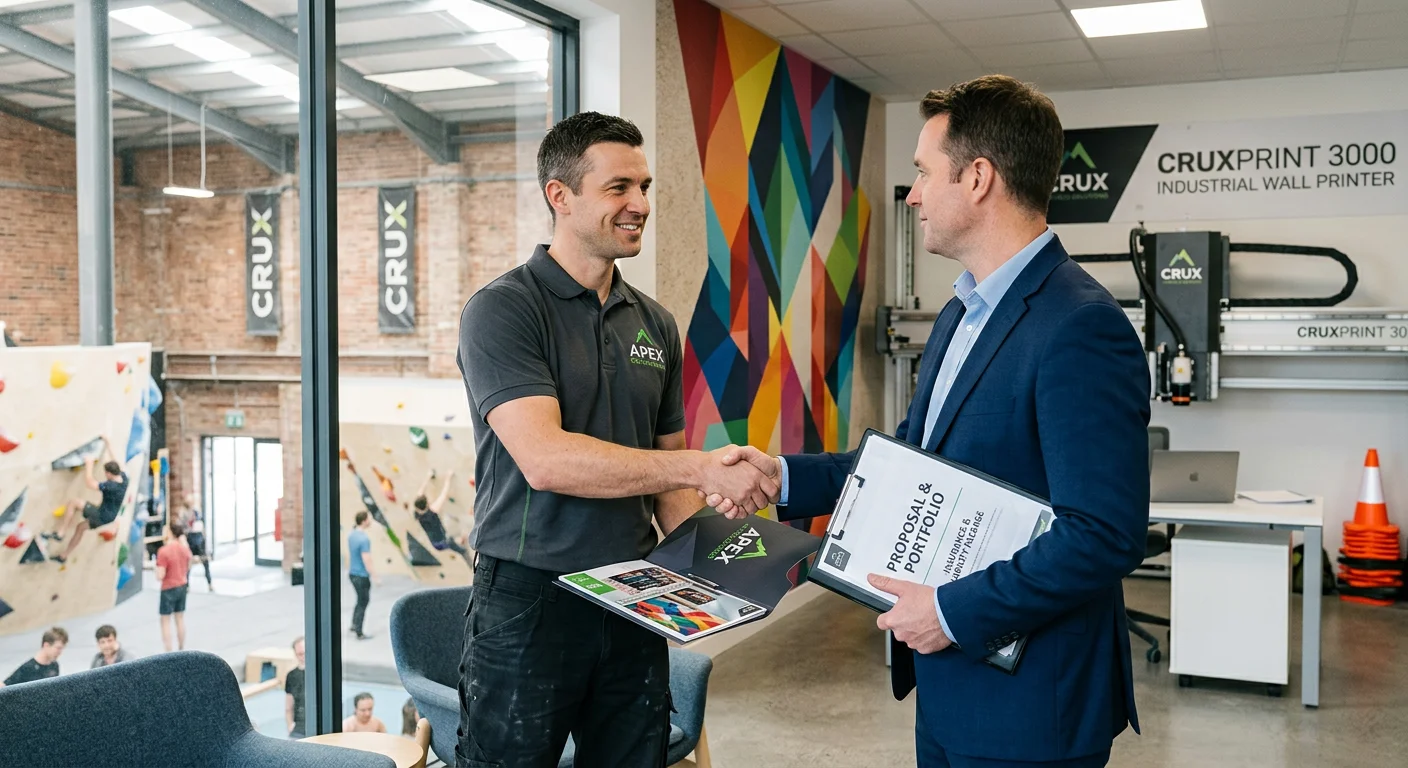
Most wall printing operators buy their equipment, build a basic website, and then wait. That's the wrong sequence. Your lead pipeline needs to be running before the machine arrives.
Here's the channel-by-channel breakdown — with realistic conversion numbers, not optimistic ones.
Google Business Profile + Local SEO
This is your highest-ROI channel. Full stop.
Someone in Calgary types "wall mural printing near me." They're not browsing — they're ready to book. That buying intent is why GBP leads convert at 15–25% lead-to-customer for local service operators. Top-ranked profiles with 10+ reviews and keyword-optimized descriptions push that number past 30%.
Budget $300–$800/month for local SEO content and review management tools. The return builds over time. Paid ads stop the moment you stop paying. A well-optimized GBP listing keeps delivering leads in month 18 with zero extra spend.
Your priority action: Claim your GBP listing on day one. Photograph every completed job. Respond to every review — including the negative ones.
HomeStars and Local Service Marketplaces
HomeStars is where Canadian homeowners go to get a trades quote. Bark.ca and TrustedPros serve similar roles across different buyer groups.
Lead quality here is high. These are project-ready buyers comparing quotes right now. Expect $15–$60 per lead and a 10–20% close rate on residential work. The math works: at $40/lead and 15% close, you're paying $267 per acquired client. Against a $1,500–$3,000 residential job, that's a solid CAC.
The catch: speed determines everything. Respond within two hours and your close rate climbs. Wait six hours and the client has already booked your competitor. Set up mobile alerts on every inquiry.
Real Estate and Property Developer Partnerships
No channel delivers warmer leads than a trusted referral. A real estate agent recommends your wall printing services to a client staging a condo. That agent isn't sending you a cold lead — they're sending you a pre-sold conversation.
Referral close rates land at 20–30%+. That often doubles the baseline performance of any paid channel. Target:
Real estate agents working pre-sale staging
Interior designers handling condo and commercial fitouts
General contractors on restaurant and gym builds
Property managers overseeing multi-unit residential buildings
Budget $100–$300/month for relationship-building — coffees, printed sample portfolios, a small referral incentive. One interior designer who mentions you on a regular basis can send 4–6 qualified referrals per year. Each job is worth $2,000–$8,000.
Kijiji and Facebook Marketplace
These channels are not glamorous. They work anyway — especially in months one through three, before your GBP profile has reviews and your pipeline is still empty.
Expect a 3–8% conversion rate from inquiry to booking. Leads tend to be residential, price-sensitive, and smaller in scope. That's fine. Early residential jobs build your portfolio, generate reviews, and cover operating costs. Your higher-value B2B pipeline develops in the background.
Promoted Kijiji listings run $30–$150/week in most Canadian metros. Keep your listing copy direct: show a before/after photo, state your price range, and include a call-to-action with a phone number.
LinkedIn Outreach to Local B2B Decision-Makers
For gym chains, restaurant groups, and commercial developers, LinkedIn puts you in front of the people who approve budgets.
Cold LinkedIn outreach to well-targeted decision-makers produces around a 5–15% positive reply rate and a 10–25% meeting-to-client conversion on warm conversations. Put those together and you get a 3–8% lead-to-customer rate — modest in percentage terms, but the deal sizes justify it. One gym chain client committing to 5 locations at $4,000–$6,000 per location is a $20,000–$30,000 contract.
Tools run $50–$200/month. Personalize every message. Reference their specific location, their brand look, a recent opening. Generic outreach gets ignored. Specific outreach gets replies.
The One Variable That Changes Every Conversion Rate
Channel selection matters less than response speed.
The research is clear: contact a lead within five minutes and you're 10x more likely to close than if you wait 30 minutes. For local wall printing inquiries, a sub-two-hour response window across all channels — GBP, HomeStars, Kijiji, email — lifts your booking rate by 30–50% over slower competitors.
Send a quote with visual mockups, itemized scope, and a clear next step within 24 hours. Operators who do this keep conversions in the 15–25% band. Those who send generic follow-ups a week later see sub-10%.
The equipment doesn't close jobs. Your pipeline and your response time do.
Seasonal Operating Strategy: Indoor Wall Printing vs Exterior Wall Printing Services
Canadian weather doesn't negotiate. Your business model has to.
First-year operators struggle in winter for one reason. They built their revenue around outdoor wall jobs — then watched their pipeline freeze with the temperature. The ones who stay profitable fix this before November hits.
The fix is a clear indoor/outdoor split. Treat each season as its own revenue mode.
Winter Mode: Indoor Wall Printing Is Your Core Business
From November through February (March in the Prairies), move most of your capacity to climate-controlled interior projects: corporate lobbies, restaurant feature walls, daycare murals, gym branding, retail fitouts, and residential basements.
These aren't backup jobs. They're often your most profitable work. Controlled environments give you predictable curing times, reliable ink adhesion, and zero weather delays.
Some clients will still ask for exterior work in winter. A heated tent enclosure makes those jobs workable. Use it only for jobs you can't defer. Printing on frozen or damp surfaces causes adhesion failure — and that failure lands on you, not the client.
Winter commercial strategy: pre-sell your Q1 indoor calendar during Q3's outdoor peak. Lock those contracts before the cold arrives. Offer a $2–$3/sq ft booking incentive on large interior jobs for November–February slots. It fills your calendar. It also gives clients a real reason to commit now rather than later.
Summer Mode: Exterior Wall Printing Takes Priority
May through September is your outdoor window. Push façades, commercial signage, storefront refreshes, and patio branding hard while conditions hold.
Run every exterior site through a four-tier filter before quoting:
Fully indoor
Indoor with direct sun exposure
Semi-protected outdoor
Fully exposed outdoor
Each category needs different ink selection, clear coat weight, and lifecycle expectations. Price each one to match — and build durability premiums into outdoor pricing to cover the higher replacement cycle risk.
Book exterior print days around overcast conditions where you can. High heat dries ink at different rates across large wall surfaces. That's manageable — but you need to plan for it upfront, not figure it out mid-job.
Summer upsell plays: back-to-school murals, pop-up event backdrops, seasonal patio branding campaigns. These fit the outdoor demand window and line up with B2B marketing cycles that move fast to approval.
The Year-Round Revenue Rule
Winter: indoor-first, exterior by exception.
Summer: exterior-first, interior as backlog control.
Pre-booking Q1 indoor contracts during your Q3 outdoor peak is the single most effective cash flow move in this business. Do it every year and you cut out the revenue gap that shuts down most first-year operators.
90-Day Step-by-Step Roadmap to Your First Paying Wall Printing Job
Three months. That's all you need to go from zero to a working, revenue-generating wall printing business in Canada.
Here's how to use those 90 days.
Days 1–30: Legal Foundation, Equipment Setup, and Portfolio Shots
Get your legal structure locked first.
Register your business — federal or provincial — and sign up for GST/HST right away. Don't wait for the $30,000 threshold. Open a dedicated business chequing account. Get a business credit card with a $5,000–$15,000 limit. That card covers your ink, travel, and ad spend while client payments come in.
Your machine arrives. Calibrate it before you quote a single job.
Run test prints on at least four substrates: painted drywall, concrete/masonry, primed plywood, and painted OSB. Find your best print speed for each surface — aim for 6–10 m²/hour for high-quality UV on smooth interior walls. Write down every prep step you take. That list becomes your quote checklist.
Build your portfolio with three to five pro-bono or materials-only installs. Go after local cafés, salons, or gyms. In return, ask for a signed photo release, a written testimonial, and permission to tag them on social. Shoot at least one timelapse video per job. These assets fuel every channel you'll build next.
Claim your Google Business Profile. List on Kijiji and HomeStars. Set a clear service radius — 50–80 km works for most operators — and a minimum job size of 40–60 sq ft or $600–$800.
Days 31–60: First Paid Jobs and Outbound Pipeline
Send 20 targeted pitches per week. Focus on real estate stagers, interior designers, boutique retail owners, and local architects. Each pitch needs a custom mockup of their space with a proposed mural — not a generic brochure. Add a limited-time offer: 20% off the first 100 sq ft, booked within 30 days.
Launch a localized Google Ads campaign at CAD $20/day. Target "wall printing [city]," "custom mural [city]," and "restaurant wall graphics [city]." Budget for $20–$80 per lead. Review and tighten your negative keywords every week.
Your goal for this phase: two paid jobs. Target 60–150 sq ft each at $22–$28/sq ft — that's $1,320–$4,200 gross per job. After each project wraps, record a 2–3 minute client video testimonial. Grab a before/after photo set too. Build these into case studies on your GBP listing and website.
Days 61–90: Scale to 400 sq ft/Month and Lock One B2B Contract
Hit 400 sq ft/month by day 90. At $22–$28/sq ft, that puts gross revenue at $8,800–$11,200 per month. Variable costs — ink, consumables, and owner-operator labor — land around $1,700–$2,000 at this volume. Push for a net margin above 45% after overhead.
Publish four SEO-targeted blog posts built around high-intent questions:
UV-printed murals vs. hand-painted vs. vinyl — break down the real cost difference ($30–$50/sq ft hand-painted vs. your $22–$28/sq ft, plus faster installation)
Durability of UV murals in commercial spaces (5–10 year indoor lifespan with proper clear coat)
UV ink safety for schools and kids' rooms
Top mural ideas for cafés and salons in [your city]
Land one recurring B2B contract before day 90. Target fitness studio chains, franchise café groups, or school boards with multi-location plans. Start with a pilot location at standard rate. Then lock in a 5–10% discount on follow-up sites under a multi-site agreement. A five-location deal at 150 sq ft per site × $24/sq ft = $18,000 gross. One contract like that shifts your whole business.
Get five Google reviews with photos attached. That's the point where your GBP listing starts ranking and pulling in leads on its own — no paid ads needed.
Phase | Key Milestone | Revenue Target |
|---|---|---|
Days 1–30 | Machine calibrated, 3–5 portfolio installs, GBP live | $0–$1,500 (pro-bono builds) |
Days 31–60 | 2 paid jobs closed, ads running, outreach pipeline active | $2,640–$8,400 |
Days 61–90 | 400 sq ft/month, 1 B2B contract signed, 5+ reviews | $8,800–$11,200/month |
Ninety days is enough. Run this sequence in order — not whenever it feels convenient.
Conclusion
The wall printing business in Canada isn't a gamble. It's a real opportunity — open to anyone willing to put in the work.
You now have the exact numbers. Startup costs range from $15,000 to $50,000 CAD. You get realistic profit margins per job, provincial registration requirements, and a 90-day roadmap from zero to your first paying client. That's not theory. That's a hands-on playbook built for the Canadian market.
Here's what most people miss: the entrepreneurs who succeed with commercial wall printing services aren't the ones with the most money. They're the ones who start before they feel ready. They land that first mural contract. Then they let momentum carry them forward.
So stop researching. Start deciding.
Pick your budget tier. Choose your province. Register your business this week.
The walls in your city are blank. Your competitors haven't claimed them yet.