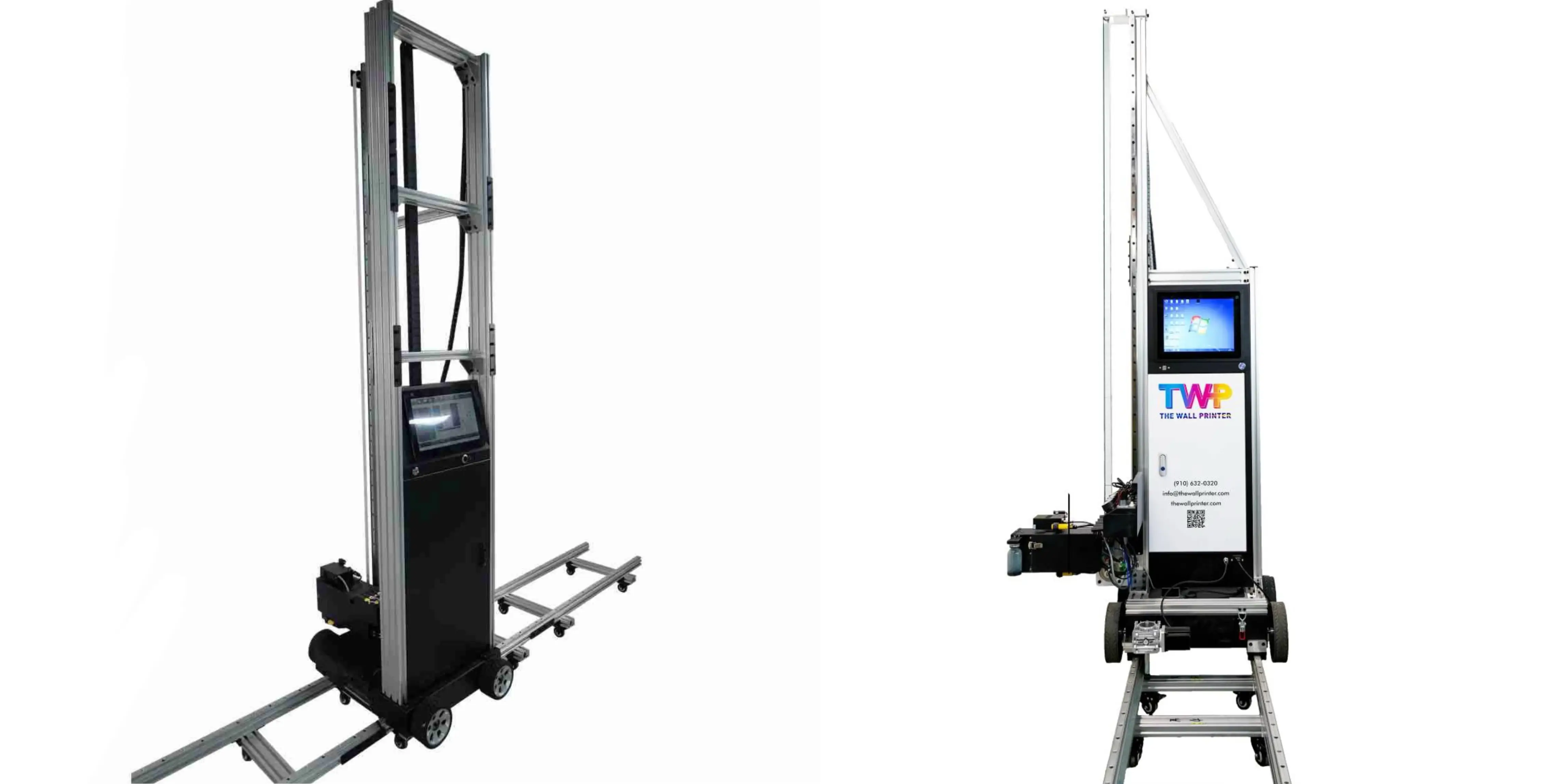
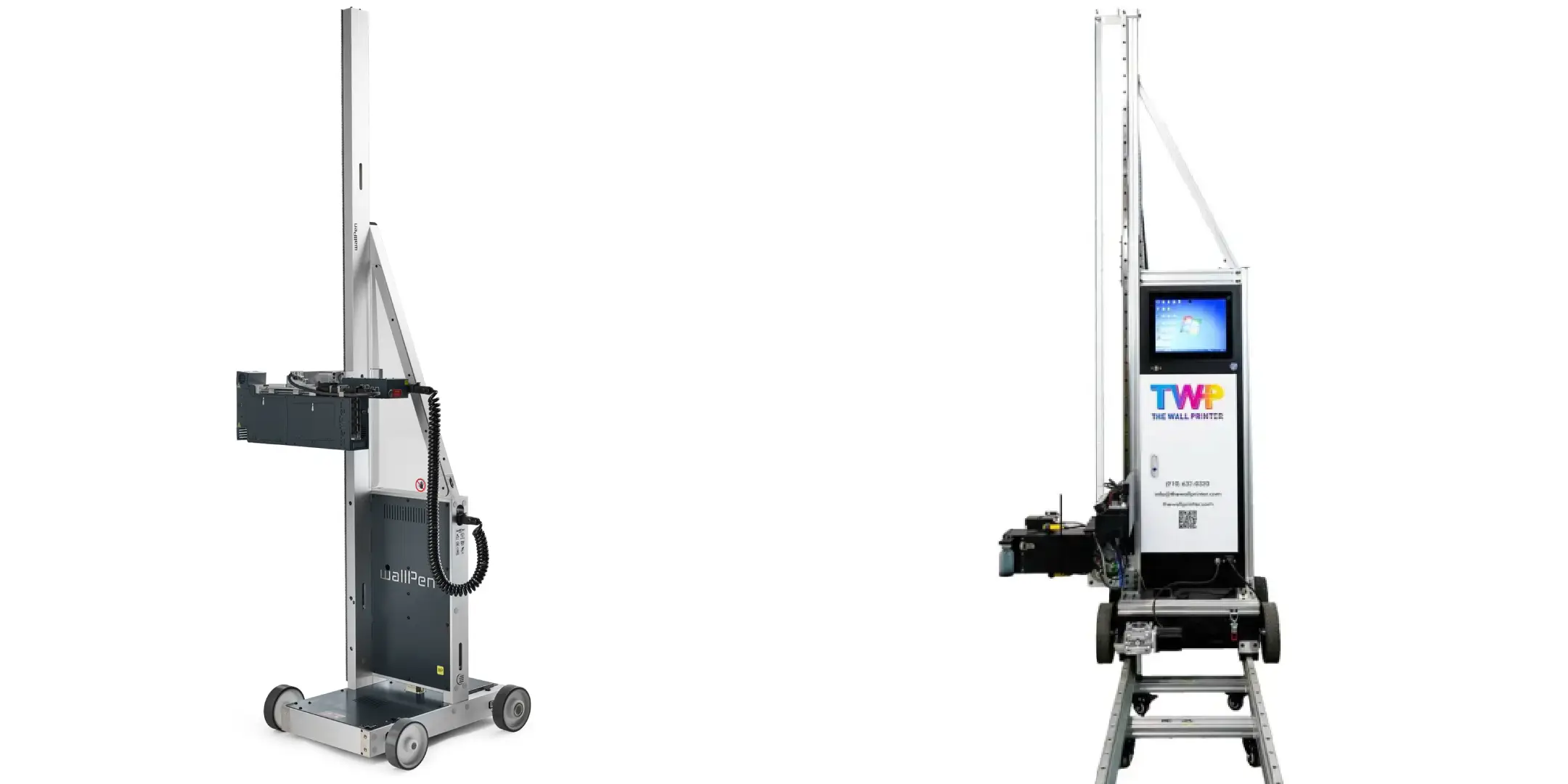
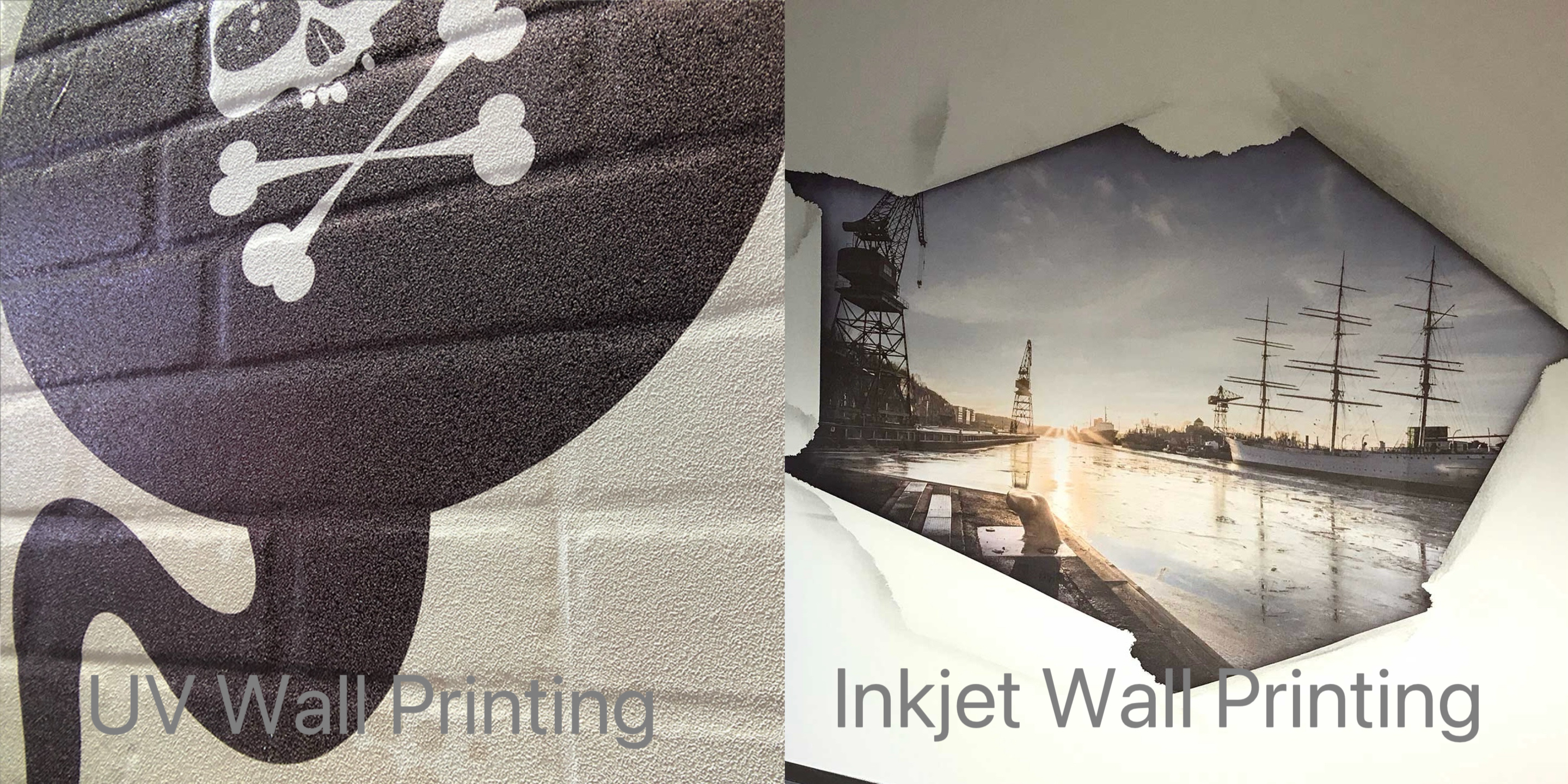
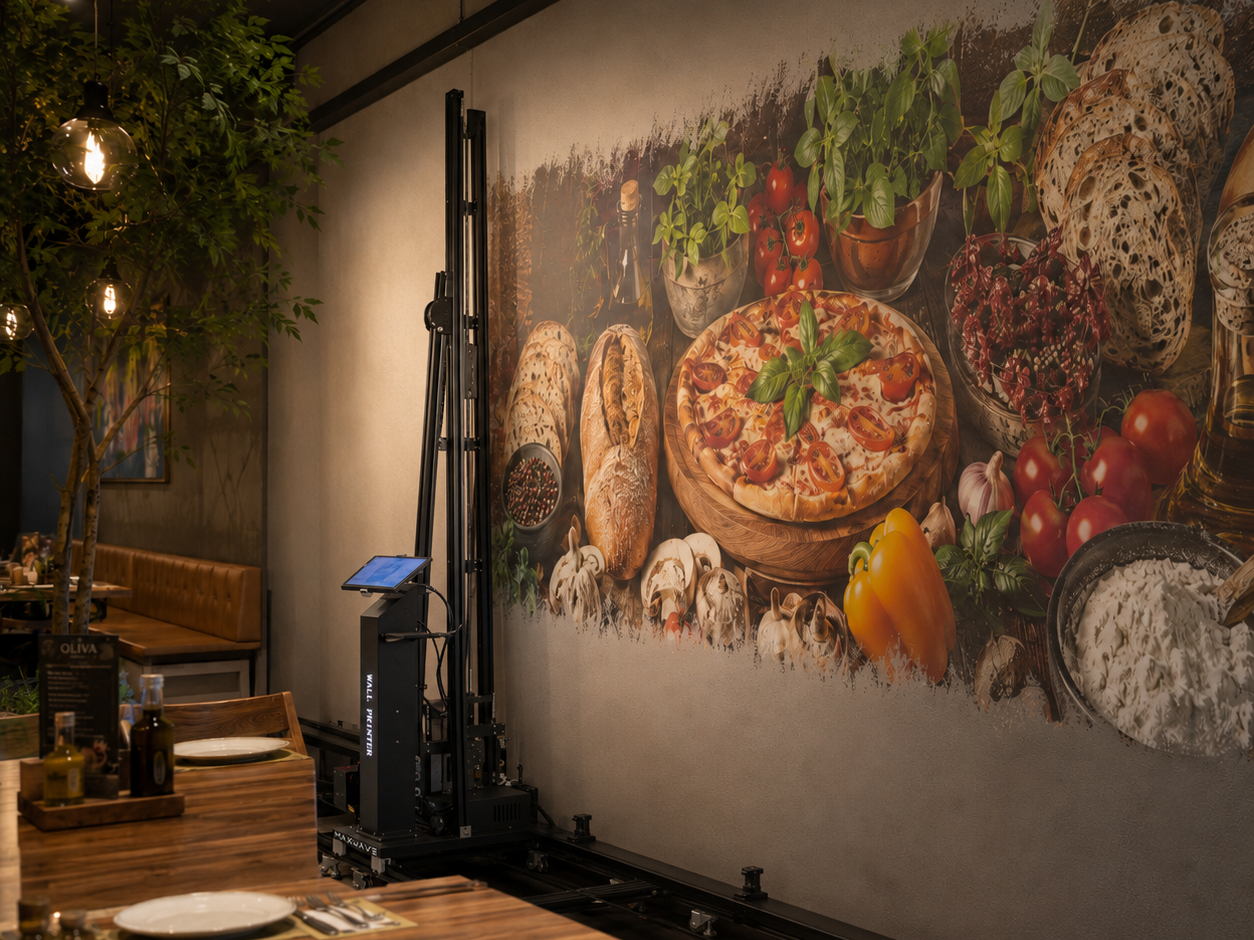
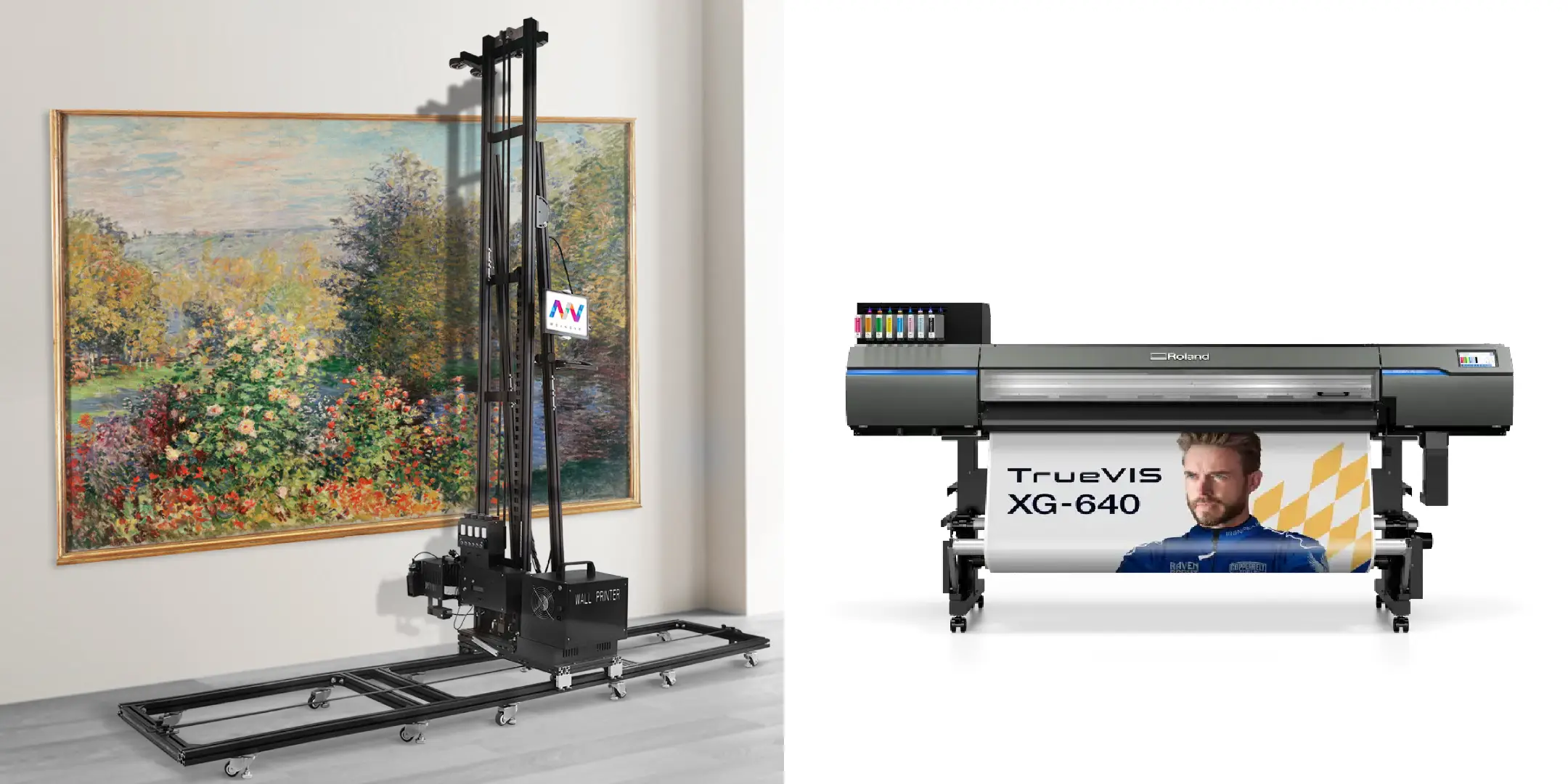
A wall printer and a large format printer can both produce large graphics, but they are built for very different businesses.
A wall printer prints directly onto the finished wall.
A large format printer prints onto vinyl, paper, canvas, wallpaper, film, or other media that must later be installed or mounted.
That difference affects almost everything: the jobs you can accept, where the machine operates, how much installation work is required, what materials you need to stock, and how you make money.
The practical answer is:
Choose a wall printer if your core business is murals, branded interiors, decorative walls, and on-site custom printing.
Choose a large format printer if your business depends on banners, vehicle wraps, posters, window graphics, wallpaper, signage, and repeat media production.
Neither machine is universally better. The right one depends on what your customers actually buy.
Wall Printer vs. Large Format Printer at a Glance
Comparison | Wall Printer | Large Format Printer |
|---|---|---|
How it prints | Directly onto the wall | Prints onto separate media |
Typical products | Murals, logo walls, decorative interiors | Banners, vinyl, wraps, posters, wallpaper |
Installation | Usually no separate graphic installation | Media must often be mounted or installed |
Where it operates | At the customer’s location | Usually in a print shop |
Materials required | Mainly ink and surface preparation | Ink plus vinyl, paper, film, canvas, laminate, etc. |
Best for | Custom on-site projects | Repeat production and multiple media types |
Main advantage | Seamless direct-to-wall result | Broad product range and higher production flexibility |
Main limitation | Mainly focused on walls and rigid surfaces | Requires additional installation for wall graphics |
The Biggest Difference: Direct-to-Wall vs. Print-on-Media
This is the most important distinction.
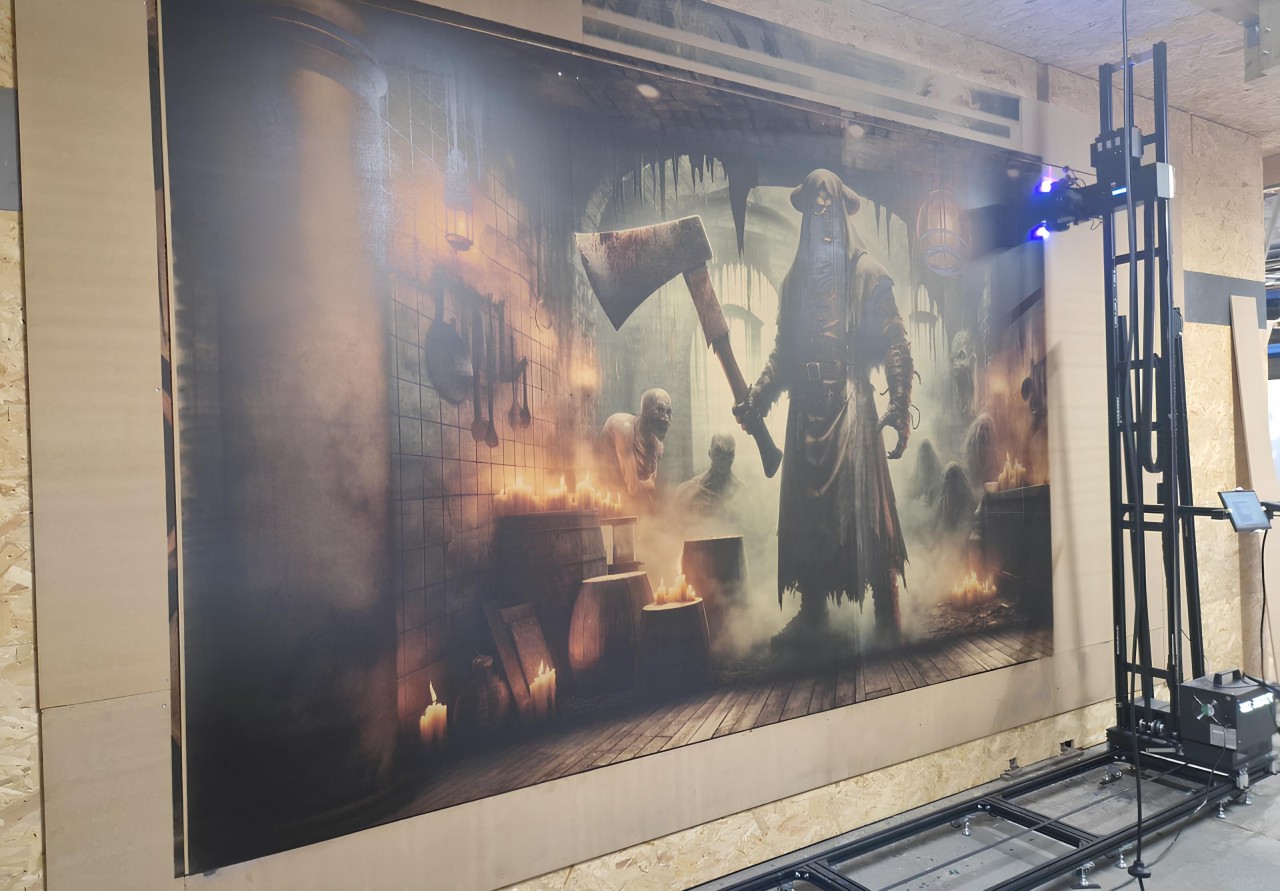
A wall printer machine moves directly in front of the customer’s wall and prints the image onto the finished surface.
There is no vinyl layer, wallpaper roll, mounting board, or adhesive between the design and the wall.
A large format printer works differently.
It prints the design onto a separate material first. That material is then trimmed, laminated when needed, transported to the site, and installed.
For a wall mural, that could mean printing several wallpaper or vinyl panels and aligning them during installation.
With direct wall printing, the workflow is closer to:
Prepare artwork → inspect wall → calibrate printer → print.
With large format printing, the workflow may involve:
Prepare artwork → print media → dry or cure → laminate → cut → transport → install.
That difference can make a wall printer much more attractive for businesses focused specifically on custom murals and interior walls.
What Can a Wall Printer Produce?
Wall printers are designed primarily for customized architectural and decorative surfaces.
Typical applications include:
Residential feature walls;
Children’s room murals;
Restaurant and café decoration;
Office reception walls;
Retail branding;
Hotel interiors;
Schools and educational spaces;
Gyms and entertainment venues;
Corporate logos and brand walls.
UV wall printers can also work on more than standard painted drywall.
Depending on the ink system and surface preparation, they may print on plaster, concrete, brick, wood, glass, tile, metal, and other rigid surfaces.
The main benefit is that the finished graphic becomes part of the wall itself.
There are no visible vinyl edges or wallpaper panel seams.
For businesses selling custom interior transformation, this is a major advantage.

What Can a Large Format Printer Produce?
Large format printers are much broader production tools.
Depending on the printer technology, they can produce:
Vinyl graphics;
Banners;
Posters;
Vehicle wraps;
Window graphics;
Wallpaper;
Canvas;
Exhibition graphics;
Retail signage;
Backlit displays;
Floor graphics.
This makes them better suited to sign shops and commercial print businesses serving many different product categories.
A large format printer is therefore not simply an alternative way to create a mural.
It is a different business platform.
If 80% of your customers want banners, vehicle wraps, vinyl lettering, and exhibition graphics, buying a wall printer instead would severely limit your service range.
If 80% of your customers want direct murals and branded walls, a large format printer may create unnecessary production and installation steps.
Which Is Better for Murals?
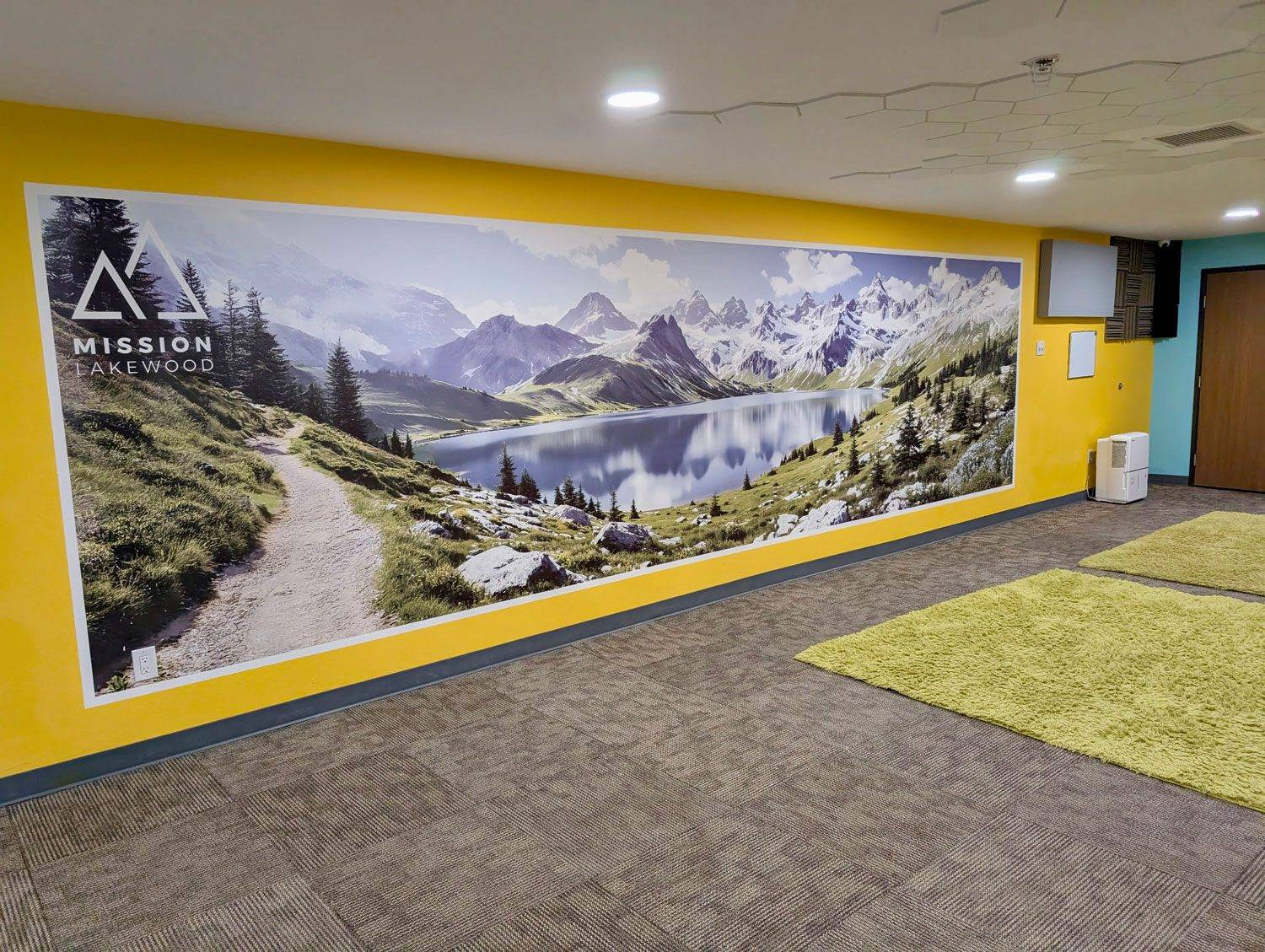
For permanent or semi-permanent custom murals, a wall printer often provides the simpler workflow.
The machine prints the artwork directly where the finished design will remain.
This eliminates media seams, adhesive application, panel alignment, and much of the installation work associated with wallpaper or vinyl.
That is particularly useful for large illustrations, photographs, branded interiors, and decorative feature walls.
A large format printer still makes sense when the mural needs to be removable or replaceable.
For example, a seasonal retail campaign may be better printed onto vinyl or wallpaper because the graphic will change after several months.
The decision is therefore simple:
Long-term customized wall design → wall printer.
Temporary or frequently replaced graphic → large format printer.
Which Is Better for Banners, Wraps and Signage?
Large format printing wins easily.
A wall printer is not designed to replace a roll printer for vehicle graphics, banners, stickers, posters, or window film.
Large format printers are built around media handling.
They can feed rolls continuously, produce repeated graphics, and work with finishing equipment such as laminators and cutters.
This makes them much better for high-volume signage production.
A sign shop printing hundreds of banners or vehicle graphics needs that media workflow.
A mural company printing directly inside restaurants and offices does not.
Which Gives You More Material Flexibility?
It depends on what “material flexibility” means.
A large format printer usually supports more print media.
You may be able to switch among vinyl, banner material, canvas, wallpaper, film, and other printable substrates.
A wall printer supports more installed architectural surfaces.
Instead of bringing the material into the printer, the printer travels to the surface.
That may include painted walls, plaster, concrete, brick, wood, tile, glass, or metal after suitable preparation.
So the difference is:
Large format printer = more printable media.
Wall printer = more direct-to-surface applications.
Which Is Faster?
Speed should be evaluated across the complete project—not only while the printhead is moving.
A large format printer may produce printed media much faster in a controlled shop environment.
But after printing, the job may still require lamination, cutting, transport, and installation.
A wall printing machine normally operates more slowly than a production roll printer, but once the image is printed, the mural is largely finished.
This means the faster option depends on the job.
For 100 identical banners, the large format printer is clearly more efficient.
For one customized restaurant mural, direct wall printing can remove several production and installation stages.
Compare total project time rather than advertised print speed.
Which Is Easier to Operate?
A wall printer simplifies the material workflow but adds job-site variables.
The operator must inspect the wall, position the machine, calibrate the printhead distance, and deal with different floors and surface conditions.
Large format printers normally operate in a stable shop environment.
Once media profiles and print settings are established, repeated production can be more predictable.
However, a large format business may also require knowledge of laminating, cutting, vinyl application, color management, and installation.
So neither system is automatically easier.
They simply require different skills.
A wall printer operator needs stronger on-site setup and surface assessment skills.
A large format operator needs stronger media production and finishing skills.
Which Requires More Equipment?
A wall printing business can operate with a relatively focused equipment setup.
The core requirements are the wall printer, computer, ink, cleaning supplies, basic spare parts, surface-preparation tools, and transportation.
A full large-format graphics business may require more supporting equipment depending on the products offered.
For vinyl work, that can include a cutter, laminator, work tables, media storage, and installation tools.
This does not mean a wall printing business is automatically cheaper.
It means the capital is concentrated differently.
Wall printing puts more investment into the mobile printing system.
Large format printing spreads investment across printing, media handling, finishing, and installation.
How Do the Business Models Differ?
This is where the choice becomes much clearer.
Wall Printer Business
A wall printer is usually part of a project-based local service business.
Revenue comes from individual walls and installations.
Customers may include homeowners, restaurants, hotels, offices, schools, interior designers, and retailers.
The business often competes through design, customization, local service, project execution, and visual impact.
Large Format Printing Business
A large format printer usually supports a production-based print and signage business.
Customers may order multiple banners, posters, vinyl graphics, window decals, wraps, or exhibition materials.
The business competes more heavily on production capability, turnaround time, media choice, finishing, and repeat volume.
Understanding which model fits your existing customer base is more important than comparing maximum DPI.
Which One Has Lower Operating Costs?
There is no universal winner.
A wall printer avoids purchasing vinyl, wallpaper, laminate, and other print media for each mural. Its main consumables are ink, cleaning supplies, and maintenance components.
A large format printer adds substrate cost to every project, but the machine may produce much higher volumes and spread equipment cost across more units.
Labor also differs.
Direct wall printing can reduce the separate installation stage required for large vinyl or wallpaper graphics.
Large format production can reduce printing labor through automation but may require installers later.
The best comparison is:
Cost per completed customer job—not ink cost per square meter or machine price alone.
Include equipment, ink, media, finishing, labor, travel, installation, maintenance, and rework.
Which Is Better for a Small Business?
A wall printer can be attractive for a small business that wants to specialize.
A solo operator can focus on murals and direct wall decoration without building a complete sign-production workshop.
This can work particularly well for businesses targeting homes, cafés, restaurants, offices, and interior designers.
A large format printer may be better if the goal is to offer a much wider menu of print products.
However, that wider range also means competing with established sign shops and print companies that may already operate multiple printers and finishing machines.
Specialization can therefore be an advantage for a new wall printing business.
Should an Existing Sign Shop Add a Wall Printer?
Often, yes.
A sign shop already owns customer relationships, design software, color-management knowledge, and sales channels.
A wall printer can add a service that the shop's existing roll printers do not provide: direct printing onto the customer’s wall.
Instead of replacing the large format printer, the wall printer expands the product range.
A customer ordering exterior signage may also need a branded reception wall.
A restaurant ordering window graphics may want a mural inside.
For an established print business, the two machines can complement each other very well.
Can a Wall Printer Replace a Large Format Printer?
For most print businesses, no.
A wall printer cannot efficiently replace a large format machine for banners, vehicle wraps, vinyl decals, posters, and roll-based signage.
Likewise, a large format printer cannot fully replicate the direct-to-wall workflow without printing media first and installing it afterward.
They overlap in one important area—wall graphics—but solve that job differently.
The better question is not:
“Which machine can replace the other?”
It is:
“Which machine matches the majority of the jobs I actually sell?”

Which One Should You Choose?
Choose a wall printer machine when your main business will involve:
Custom murals, direct wall graphics, branded interiors, residential decoration, restaurants, offices, hotels, schools, or on-site architectural printing.
Choose a large format printer when your main business will involve:
Banners, vinyl, posters, wallpaper, vehicle wraps, window graphics, exhibition materials, and repeat print production.
Choose both when you already operate a sign or print business and want to add direct wall printing as another premium service.
Questions to Ask Before Buying
Before choosing either system, review the last few months of customer demand—or the market you plan to enter.
Ask yourself:
What products will generate most of my revenue?
Will customers want permanent murals or removable graphics?
Do I want to work primarily on-site or from a fixed shop?
Do I need vehicle wraps, banners, and signage as well as murals?
How much finishing and installation work am I willing to manage?
What equipment do I already own?
Those answers matter much more than comparing the highest resolution or maximum advertised print speed.
Conclusion
A wall printer and a large format printer are not competing versions of the same machine.
They are designed for different workflows.
A wall printer is the better choice when your business focuses on direct-to-wall murals, branded interiors, and customized on-site decoration.
A large format printer is the better choice when your business depends on banners, vinyl, wraps, wallpaper, signage, and high-volume media production.
For an existing sign or print shop, the strongest solution may be owning both: the large format printer handles traditional media while the wall printer opens a new direct-to-wall service category.
The decision should ultimately follow your customer demand.
Choose the machine that matches the jobs you expect to sell most often—not the one with the longest specification sheet.
Considering adding direct wall printing to your business?
Send WallPrintBox your typical customer projects, wall materials, mural sizes, expected monthly workload, and current printing equipment. The team can recommend whether a wall printer fits your existing workflow and arrange a sample print before you invest.