Before buying a wall printer, one question matters more than almost anything else:
Can it print on the walls your clients actually have?
Not the smooth demo wall in a showroom. Real jobs involve concrete, brick, drywall, plaster, stucco, wood panels, glass, tile, metal, acrylic, and sometimes surfaces that were never designed for printing.
The truth is simple: a wall printer can print on many surfaces, but not every surface is print-ready.
The result depends on three things:
surface stability, surface preparation, and the right ink system.
This guide breaks down the most common wall surfaces, what works, what needs preparation, and what risks to watch before accepting a job.
Quick Answer: What Surfaces Can A Wall Printer Print On?
A wall printer can print on smooth concrete, sealed plaster, drywall, painted walls, brick, wood panels, metal panels, ceramic tile, glass, acrylic, PVC sheets, and prepared textured walls.
However, some surfaces need primer, sanding, sealing, or an adhesion promoter before printing. Existing wallpaper and fabric wallcoverings are usually not recommended for direct printing.
The better question is not only:
“Can a wall printer print on this surface?”
The better question is:
“What preparation does this surface need before printing?”
Wall Surface Compatibility Table
Wall Surface | Printability | Prep Level | Recommended Ink | Main Risk |
|---|---|---|---|---|
Smooth Concrete | Yes | Medium | UV-curable | Moisture, dust, weak sealing |
Rough Concrete / CMU Block | Conditional | High | Flexible UV | Ink bleeding, banding, uneven absorption |
Brick Wall | Conditional | High | Flexible UV | Deep mortar joints, head collision |
Drywall / Gypsum Board | Yes | Low–Medium | UV or water-based | Poor finishing, visible seams |
Latex-Painted Plaster | Yes | Medium | UV-curable | Fresh paint, chalking, gloss adhesion |
Stucco / Textured Plaster | Conditional | High | Exterior UV | Texture destroys detail |
Wood Panels | Yes | Medium | UV-curable | Resin, tannin bleed, grain absorption |
Glass / Mirror | Conditional | High | UV + adhesion promoter | Poor adhesion, scratching |
Metal Panels | Yes | High | Flexible UV | Grease, oxidation, thermal expansion |
Ceramic Tile | Conditional | High | UV + ceramic primer | Glaze adhesion failure |
PVC / Acrylic Sheet | Yes | Medium | Flexible UV | Static, dust, warping |
Wallpaper / Fabric Wallcovering | Not recommended | Overlay needed | UV on overlay only | Ink bleed, peeling, unstable base |
Concrete Walls
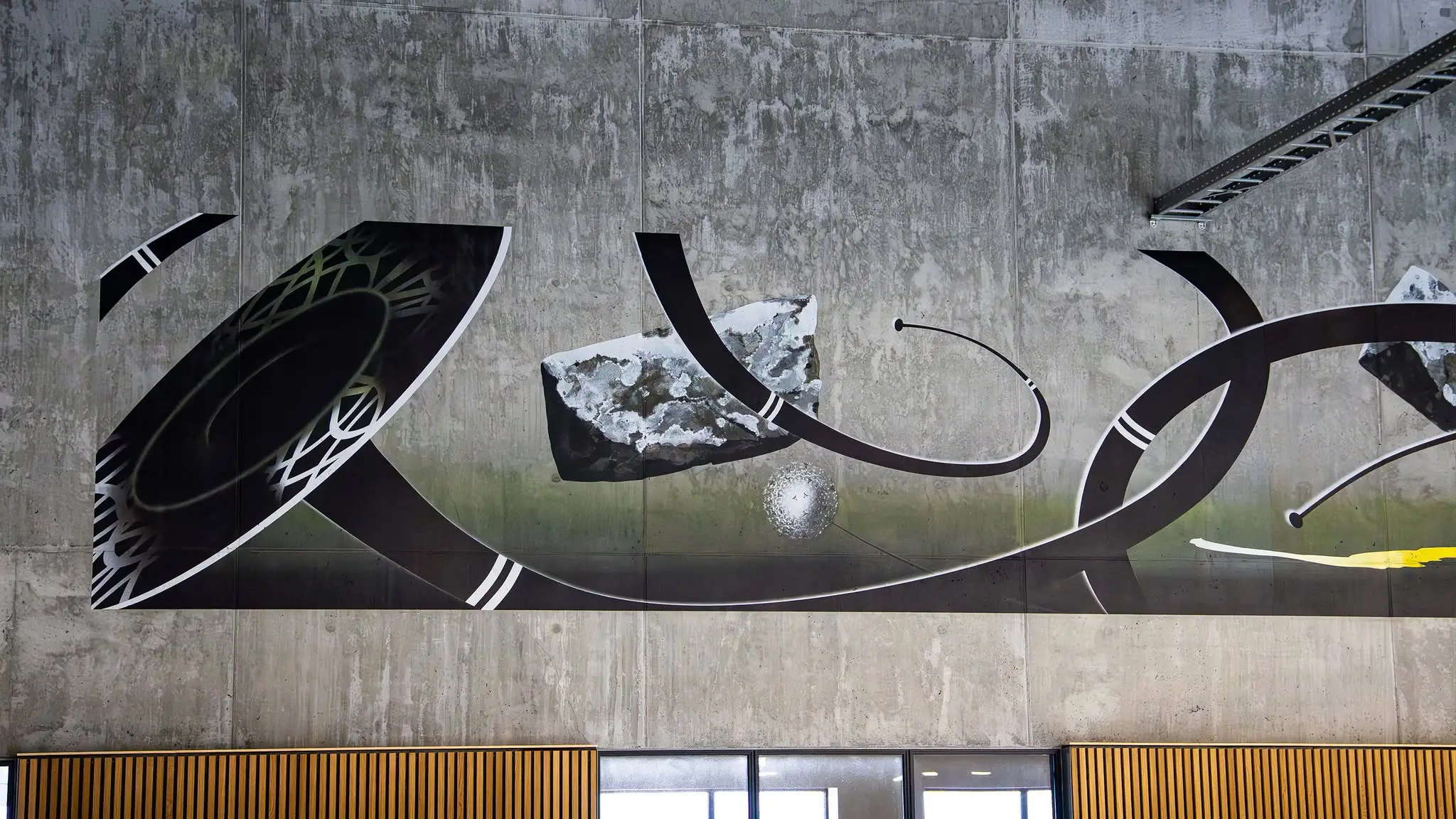
Printability: Yes, especially on sealed smooth concrete.
Concrete is one of the most common surfaces for wall printing. Smooth, sealed concrete can deliver sharp edges, strong color, and good adhesion. Rough or porous concrete can also be printed, but it needs more preparation.
Best For:
Basements, gyms, industrial-style restaurants, parking areas, exterior feature walls, and commercial interiors.
Required Prep:
The wall must be cleaned, dried, repaired, and sealed. Dust, oil, moisture, and loose surface material will reduce adhesion. Small holes, cracks, and rough patches should be filled before printing.
For rough concrete or CMU block, a block filler or acrylic/epoxy sealer is usually needed to reduce absorption and create a more even printable surface.
Recommended Ink:
UV-curable ink is the safest choice for concrete. Water-based ink should only be used on sealed interior concrete with very low porosity.
Main Risk:
Unsealed concrete can absorb ink unevenly, causing dull color, bleeding, banding, or flaking.
Operator Note:
Concrete is not difficult to print on. It is difficult to print on without proper sealing.
Brick Walls

Printability: Conditional.
Brick walls can look excellent when printed correctly with a properly calibrated wall printing machine. The natural texture gives murals a premium, industrial feel. But brick is also risky because mortar joints and uneven surfaces can affect printhead distance.
Best For:
Cafés, bars, loft interiors, restaurants, galleries, retail feature walls, and industrial-style spaces.
Required Prep:
Clean the wall thoroughly. Remove dust, efflorescence, loose mortar, and crumbling areas. Deep joints or broken brick sections should be filled before printing.
A masonry sealer or primer is strongly recommended. It helps equalize absorption between brick faces and mortar joints.
Recommended Ink:
Flexible UV-curable ink is best for exterior or unplastered brick. Water-based ink can work only on sealed interior brick under controlled conditions.
Main Risk:
Deep mortar joints can cause image distortion, uneven color, or printhead collision. A practical rule is to keep surface variation within about 3–4 mm before printing.
Operator Note:
Brick rewards good prep. The same texture that makes it beautiful also punishes shortcuts.
Drywall / Gypsum Board
Printability: Yes.
Drywall is one of the easiest and most reliable surfaces for wall printing when properly finished.
Best For:
Homes, offices, schools, retail interiors, hotel rooms, kids’ rooms, and commercial feature walls.
Required Prep:
The wall should have a smooth Level 4–5 finish. Screw heads, joints, and seams must be filled and sanded. The surface should be clean, stable, and primed before printing.
Unfinished drywall is risky because paper, gypsum, and joint compound absorb ink differently.
Recommended Ink:
UV-curable ink is best for permanent installations. Water-based ink can work for temporary interior murals on fully sealed surfaces.
Main Risk:
Poor finishing can lead to visible seams, screw marks, dull patches, or uneven color absorption.
Operator Note:
Drywall is “easy mode” only when the surface is flat, clean, sealed, and properly finished.
Latex-Painted Plaster
Printability: Yes, if the paint is fully cured and stable.
Latex-painted plaster is one of the most common surfaces for a UV wall printer in real client projects. It looks simple, but fresh paint or unstable old paint can cause problems
Best For:
Homes, offices, hotels, restaurants, galleries, commercial interiors, and reception walls.
Required Prep:
Make sure the paint has fully cured. A minimum of 14 days after painting is recommended, and longer may be needed in cold or humid environments.
Clean the wall to remove grease, dust, and residue. Glossy or semi-gloss finishes should be lightly scuff-sanded. Older plaster should be checked for chalking or peeling.
Recommended Ink:
UV-curable ink is best for commercial and long-term work. Water-based ink is only suitable for low-traffic interior spaces.
Main Risk:
Fresh paint can continue curing under the ink layer and cause micro-cracking or adhesion failure. Glossy paint can also reduce grip if not scuffed or primed.
Operator Note:
Latex-painted plaster is friendly to wall printing, but only after the paint is fully cured.
Stucco / Textured Plaster
Printability: Conditional.
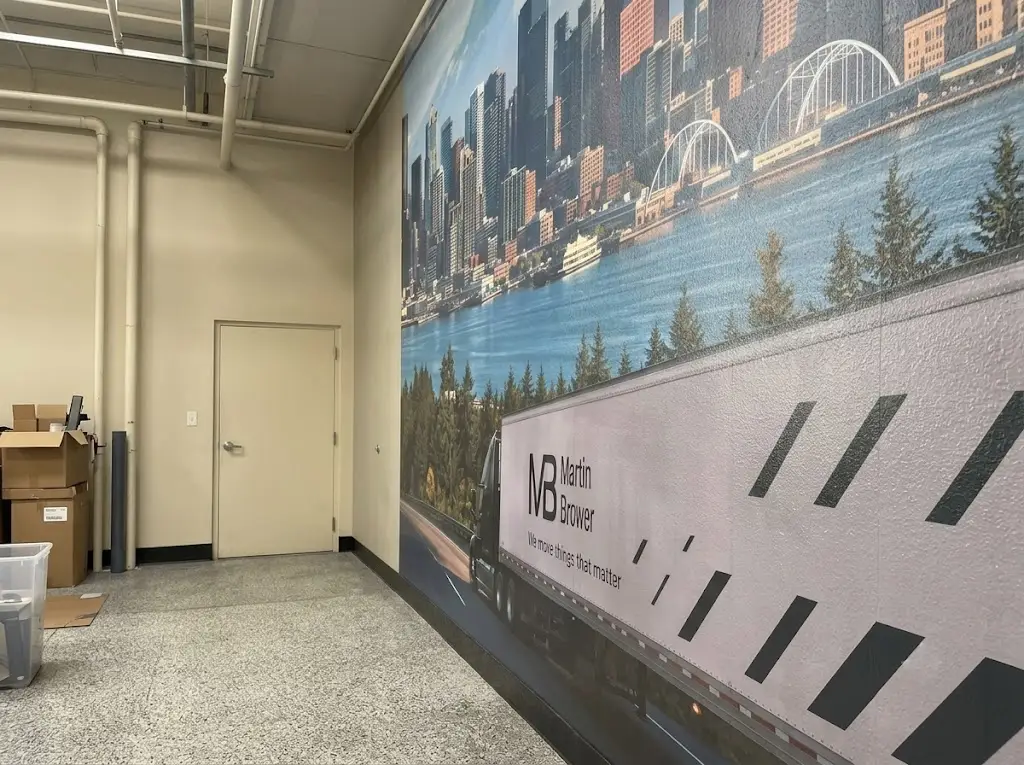
Fine stucco can be printed with acceptable results. Heavy stucco or aggressive textured plaster is much harder because the printhead cannot reach recessed areas evenly.
Best For:
Exterior feature walls, Mediterranean-style buildings, textured commercial interiors, gyms, cafés, and decorative architectural walls.
Required Prep:
Pressure wash the surface and remove loose material. If the stucco is new, check cure time and surface stability. Apply elastomeric primer to bridge small texture gaps.
For high-resolution graphics, a skim coat may be needed to reduce peak-to-valley depth before printing.
Recommended Ink:
Weather-resistant UV ink or flexible UV ink is recommended, especially for exterior stucco.
Main Risk:
Heavy texture reduces visible resolution. Fine text, small logos, and photorealistic details may break down.
Operator Note:
Stucco is best for bold graphics, large patterns, and decorative effects — not tiny text or fine detail.
Wood Panels
Printability: Yes, if sealed.
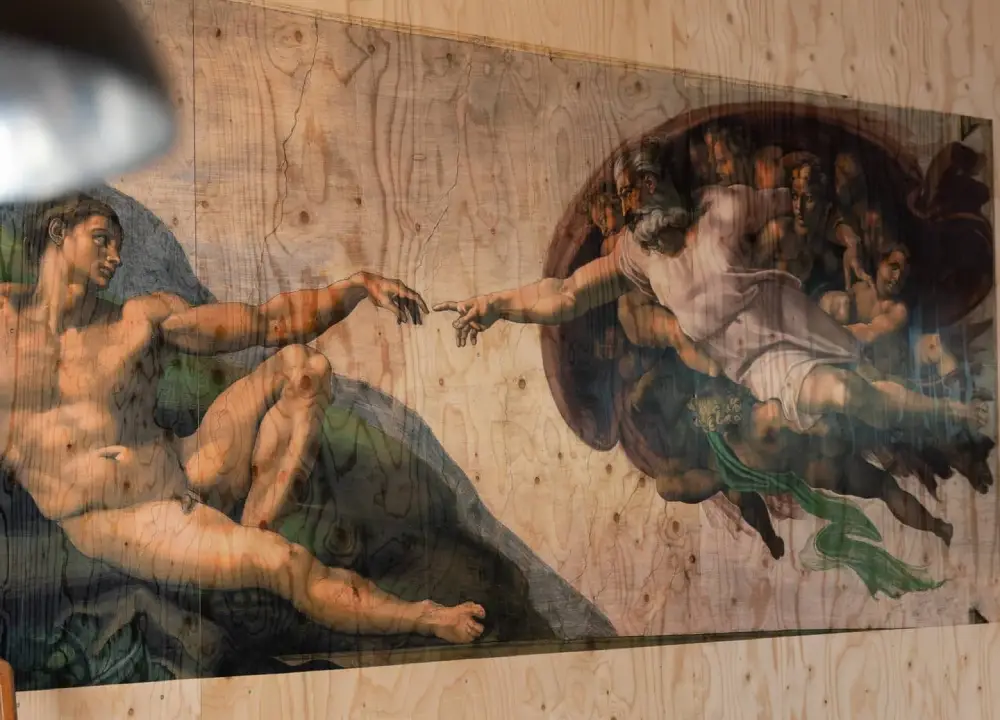
Wood panels can produce beautiful printed results with a properly configured wall printer machine, especially in restaurants, retail interiors, offices, and boutique spaces. But raw wood is chemically active and can cause ink problems.
Best For:
MDF walls, plywood panels, timber interiors, feature walls, retail décor, offices, restaurants, and boutique hotel interiors.
Required Prep:
Let wood panels acclimate to the room before printing. Sand the surface, remove all dust, seal knots, and apply wood sanding sealer or stain-blocking primer.
Open-grain wood, knots, and resin pockets need extra attention.
Recommended Ink:
UV-curable ink is the best choice. Flexible UV is better for thin panels or veneer that may move.
Main Risk:
Resin pockets, tannin bleed, wood grain absorption, and edge wicking can affect adhesion and color.
Operator Note:
Sealed wood prints clean. Raw wood fights back.
Glass / Mirror
Printability: Conditional.
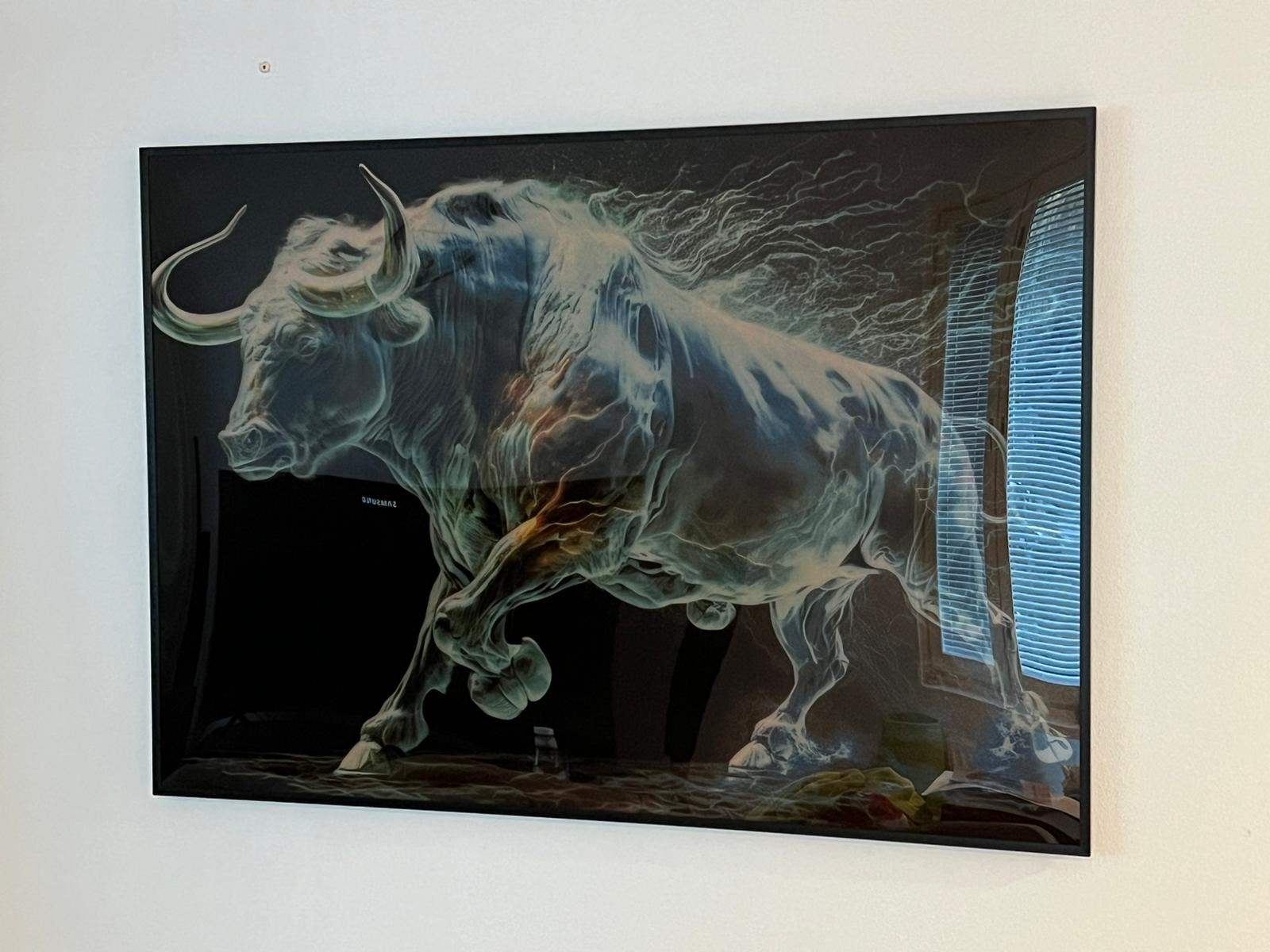
Glass can produce sharp, premium results with a properly prepared wall art printer setup, but it requires proper adhesion chemistry. The surface is non-porous, so ink will not bond well without preparation.
Best For:
Glass partitions, office privacy walls, hotel interiors, retail displays, decorative glass panels, and luxury interior features.
Required Prep:
Clean the glass, degrease with IPA or acetone, apply a silane adhesion promoter or UV glass primer, and allow full drying time before printing.
Back-printing is preferred when possible because the glass protects the ink layer.
Recommended Ink:
UV-curable ink with glass adhesion support.
Main Risk:
Poor adhesion, flaking after cleaning, glare during inspection, and scratching on front-printed glass.
Operator Note:
Glass does not fail because it is unprintable. It fails because someone skipped the adhesion promoter.
Metal Panels
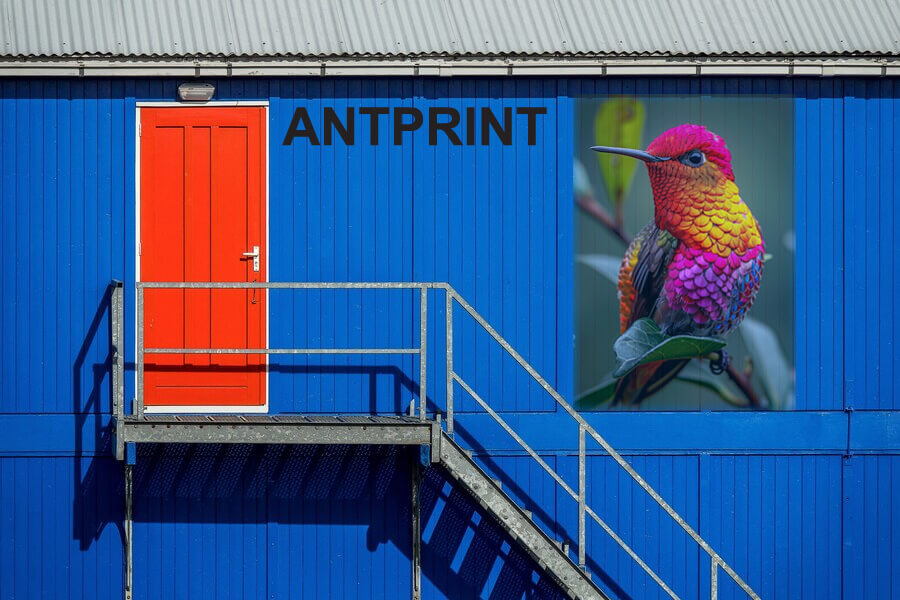
Printability: Yes, with proper primer.
Metal can be very profitable, but it is unforgiving. Smooth, non-porous surfaces expose every shortcut in cleaning and adhesion preparation.
Best For:
Aluminum panels, steel doors, ACM cladding, warehouse shutters, industrial interiors, signage walls, and commercial feature panels.
Required Prep:
Degrease thoroughly. Remove rust, oxidation, fingerprints, and factory oils. Apply a metal-specific primer or adhesion promoter. Use a white underbase when printing full-color graphics on dark or reflective metal.
Recommended Ink:
Flexible UV-curable ink is recommended, especially for exterior metal or surfaces that expand and contract.
Main Risk:
Grease causes adhesion failure. Reflective or dark metal can make CMYK colors look dull without a white base. Thermal expansion can crack rigid ink films.
Operator Note:
Metal is not hard to print on, but it leaves no room for poor prep.
Ceramic Tile
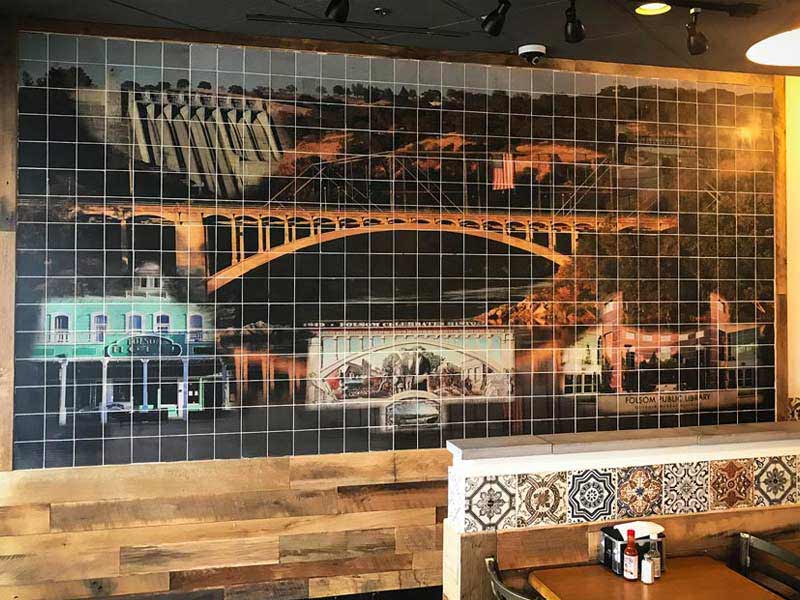
Printability: Conditional.
Glazed ceramic tile can print with sharp detail and strong color when prepared properly for a mural printer, but the glaze behaves like glass. It is slick, non-porous, and difficult for ink to grip.
Best For:
Bathrooms, kitchens, hotel interiors, restaurants, wellness centers, decorative tile walls, and commercial interiors.
Required Prep:
Deep clean the tile, remove soap scum and grease, degrease with IPA, and apply a ceramic adhesion promoter. On very glossy tile, light scuffing may help, but the glaze should not be damaged.
Always run a small test patch before full production.
Recommended Ink:
UV-curable ink with ceramic adhesion promoter.
Main Risk:
Adhesion failure on glaze and distortion around grout lines.
Operator Note:
Tile gives clean detail, but the glaze offers almost no natural grip. Primer is the job.
PVC / Acrylic Sheet
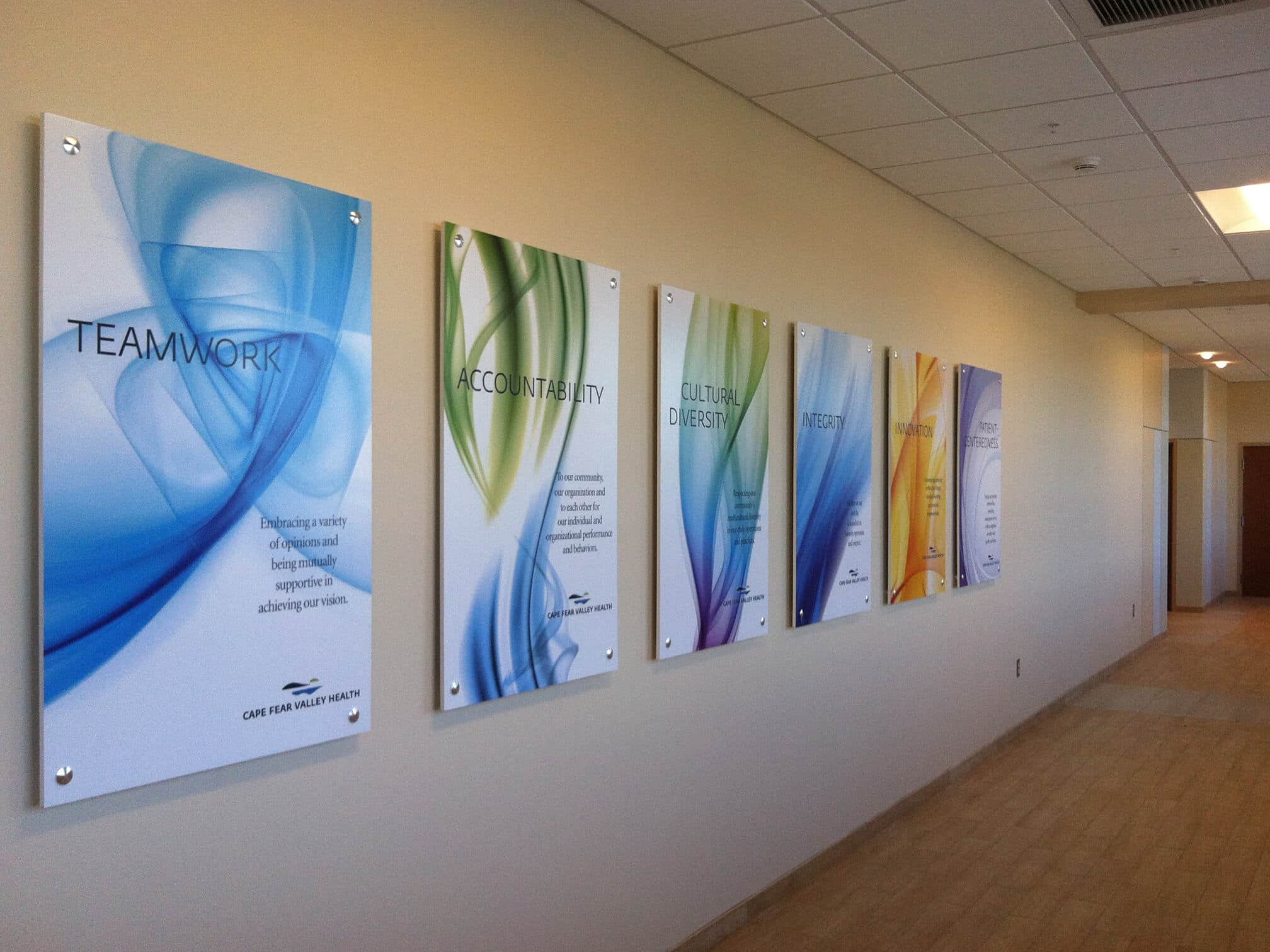
Printability: Yes.
PVC and acrylic sheets are excellent for sharp, clean wall graphics when used with a vertical printer as mounted panels or temporary installations.
Best For:
Retail displays, decorative panels, signage walls, event graphics, acrylic-mounted wall art, and temporary commercial installations.
Required Prep:
Remove the protective film close to printing time. Degrease the surface, use anti-static treatment, wipe with IPA, wear gloves, and check that the sheet is flat.
Recommended Ink:
Flexible UV-curable ink.
Main Risk:
Static dust, fingerprints, and panel warping.
Operator Note:
Acrylic prints beautifully, but static control is not optional.
Wallpaper / Fabric Wallcovering
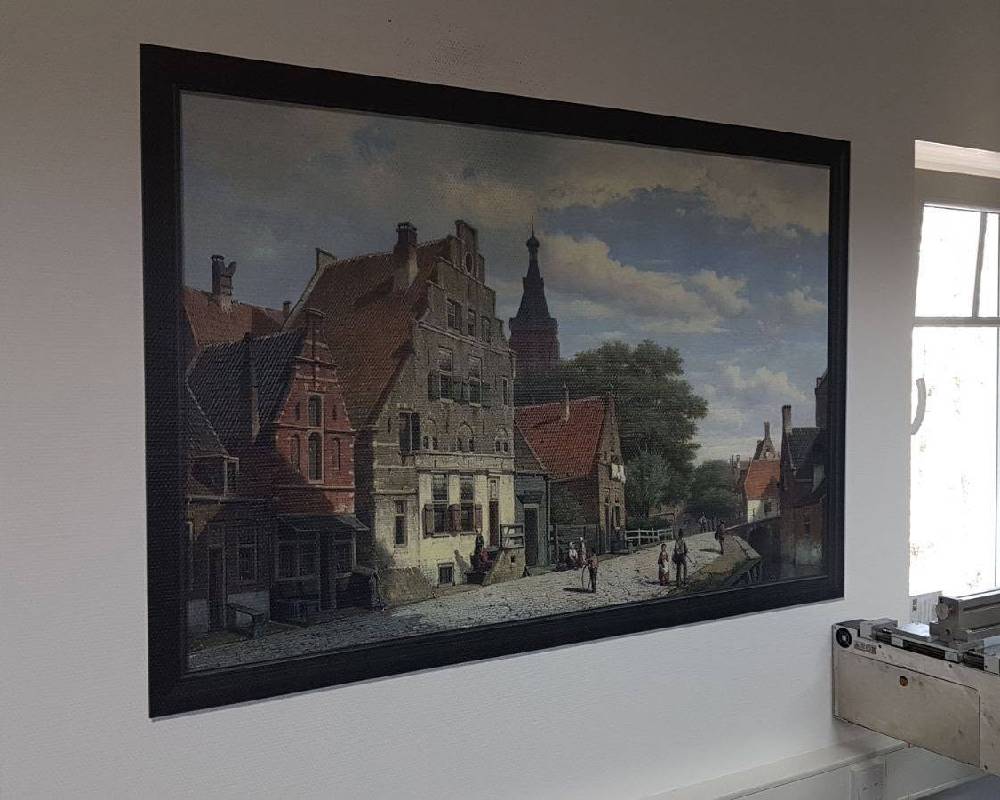
Printability: Not recommended for direct printing.
Existing wallpaper and fabric-covered walls are unstable substrates. For a wallpaper printer or wall printing machine, the issue is not whether ink can land on them. The issue is whether the covering, adhesive, and wall underneath can support a durable print.
Best For:
Use an overlay panel, PVC sheet, or new printable wallcovering instead of printing directly onto existing fabric or wallpaper.
Required Prep:
If removal is not possible, install a stable overlay surface and print on that. Do not treat old wallcovering as a reliable base.
Recommended Ink:
UV-curable ink on a new overlay surface only.
Main Risk:
Ink bleed, trapped moisture, peeling, unstable adhesive, and poor long-term adhesion.
Operator Note:
Existing wallpaper and fabric are surfaces to cover, not surfaces to trust.
3 Rules Before Printing On Any Wall Surface
First, the wall must be clean, dry, and stable.
Loose paint, dust, grease, moisture, chalking, or crumbling material will ruin adhesion before the printer starts.
Second, the wall must be flat enough for the printhead.
Most quality problems come from surface variation, not ink. If the wall has deep texture, protrusions, cracks, or uneven joints, it may need sanding, filling, skim coating, or local repair.
Third, primer is not optional on difficult surfaces.
Concrete, brick, glass, metal, tile, glossy paint, and old plaster often need the correct primer or adhesion promoter before printing.
Good wall printing is not just about the machine. It is about surface judgment before printing starts.
Conclusion
Almost every common wall surface can be printed under the right conditions.
Smooth drywall, sealed plaster, and primed concrete are the easiest surfaces. Brick, stucco, glass, metal, ceramic tile, wood, PVC, and acrylic can also work when properly prepared. Existing wallpaper and fabric wallcoverings are usually not worth direct printing.
The real question is not:
“Can a wall printer print on this?”
The better question is:
“What does this surface need before printing?”
A wall printer can handle more surfaces than most buyers expect, but the operator must understand cleaning, sealing, priming, ink choice, and surface flatness before the job starts.
Before accepting a client job, check the wall material, moisture, flatness, paint condition, and primer requirements first. That step protects the print, the machine, and your profit.
Not sure whether your wall is ready for printing? Send your wall material, surface photos, and project size to a wall printer supplier before you quote the job — the right surface check can save you from costly reprints.