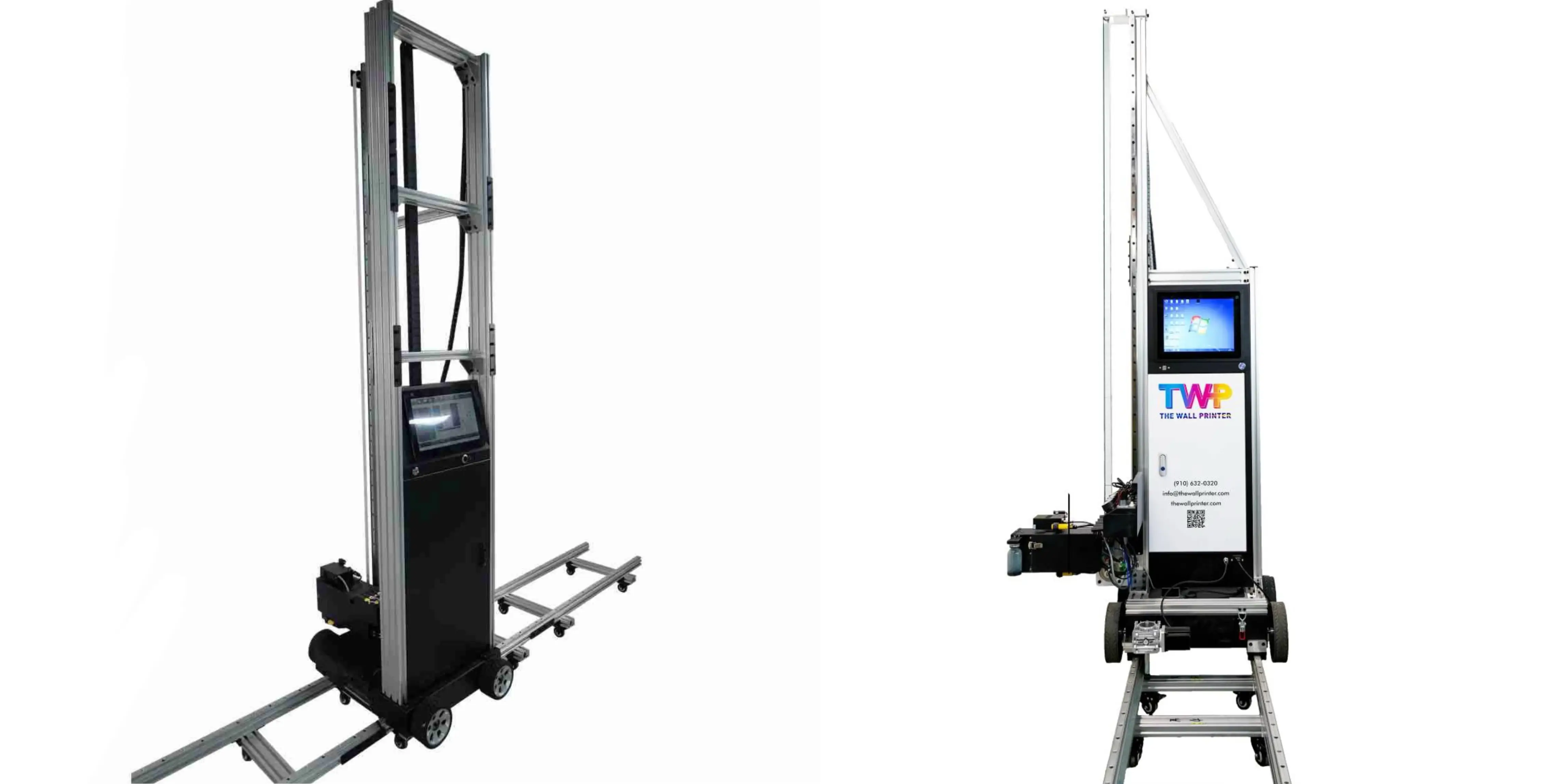
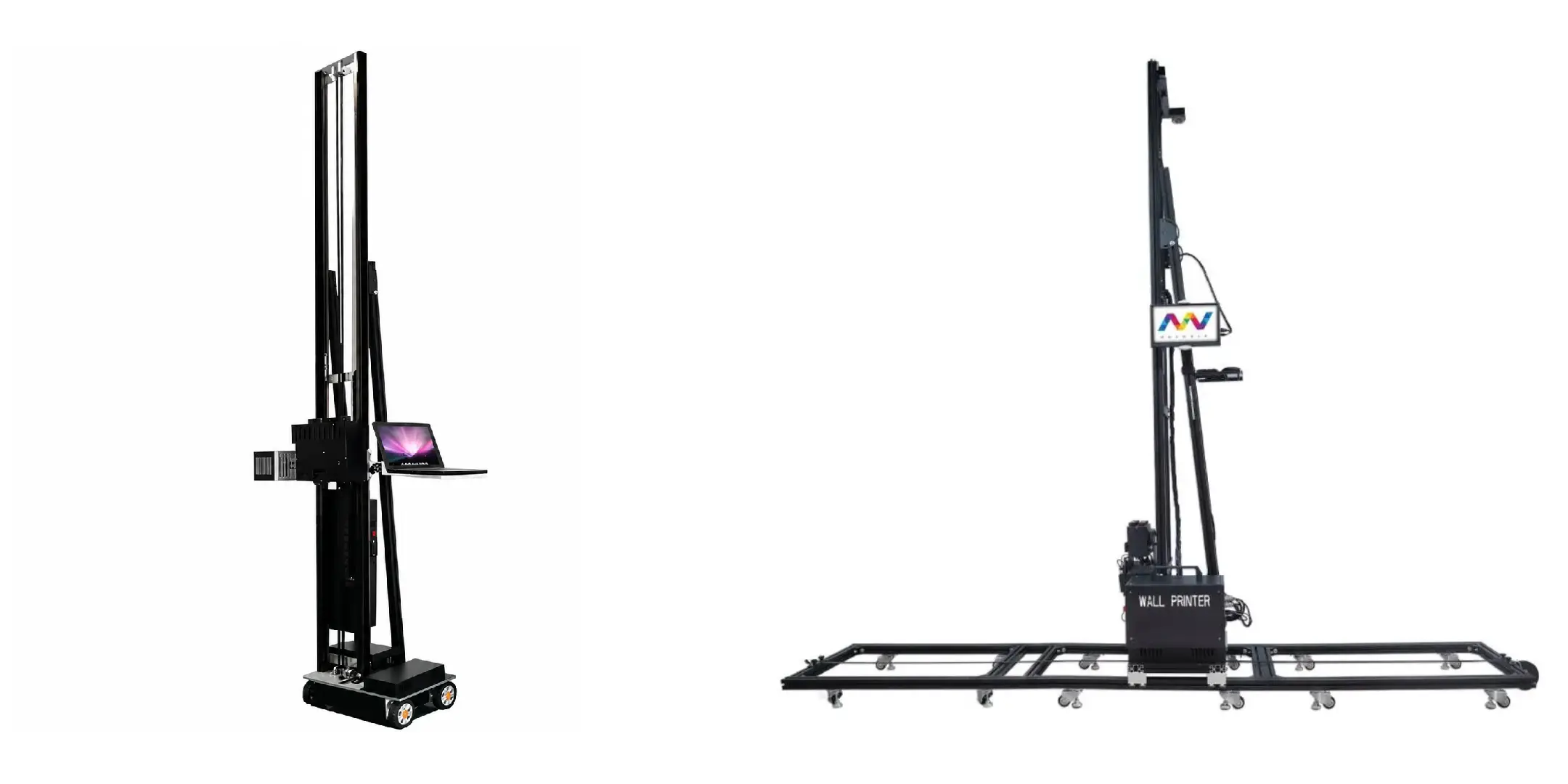
Wheel-type and rail-type wall printers can produce similar murals, but they are designed for different working conditions.
A wheel-type wall printer is generally easier for beginners, solo operators, and businesses that frequently move between job sites. A rail-type wall printer takes longer to install but provides a more stable horizontal path for large and continuous murals.
The right choice depends on your typical project size, floor conditions, transportation needs, and operator experience.
Wheel Type vs. Rail Type Wall Printer at a Glance
Comparison | Wheel Type | Rail Type |
|---|---|---|
Transportation | Easier to move | More components to carry |
Setup | Faster | Requires rail assembly and leveling |
Beginner use | Generally easier | More setup steps |
Solo operation | More convenient | May need help during installation |
Horizontal stability | Depends on floor and wheel control | More stable after proper setup |
Small projects | Better suited | Setup may take too long |
Large murals | Possible with careful calibration | Usually more suitable |
Best user | Mobile or small business | Project team or fixed studio |
Which Type Is Easier to Transport?
A wheel-type wall printer is usually easier to transport because it does not require a separate horizontal track.
The operator can move the machine into position, calibrate it, complete the mural, and pack it away with fewer components. This is useful for residential, retail, office, restaurant, and school projects where the machine changes location regularly.
A rail-type printer requires track sections, connectors, and leveling components. It usually needs more vehicle space and more time for loading and unloading.
For a mobile wall-printing business, wheel type is normally the more convenient option.
Which Type Is Faster to Set Up?
Wheel-type printers generally reach the printing stage faster.
The operator mainly needs to inspect the wall and floor, position the machine, set the printhead distance, and confirm the image location.
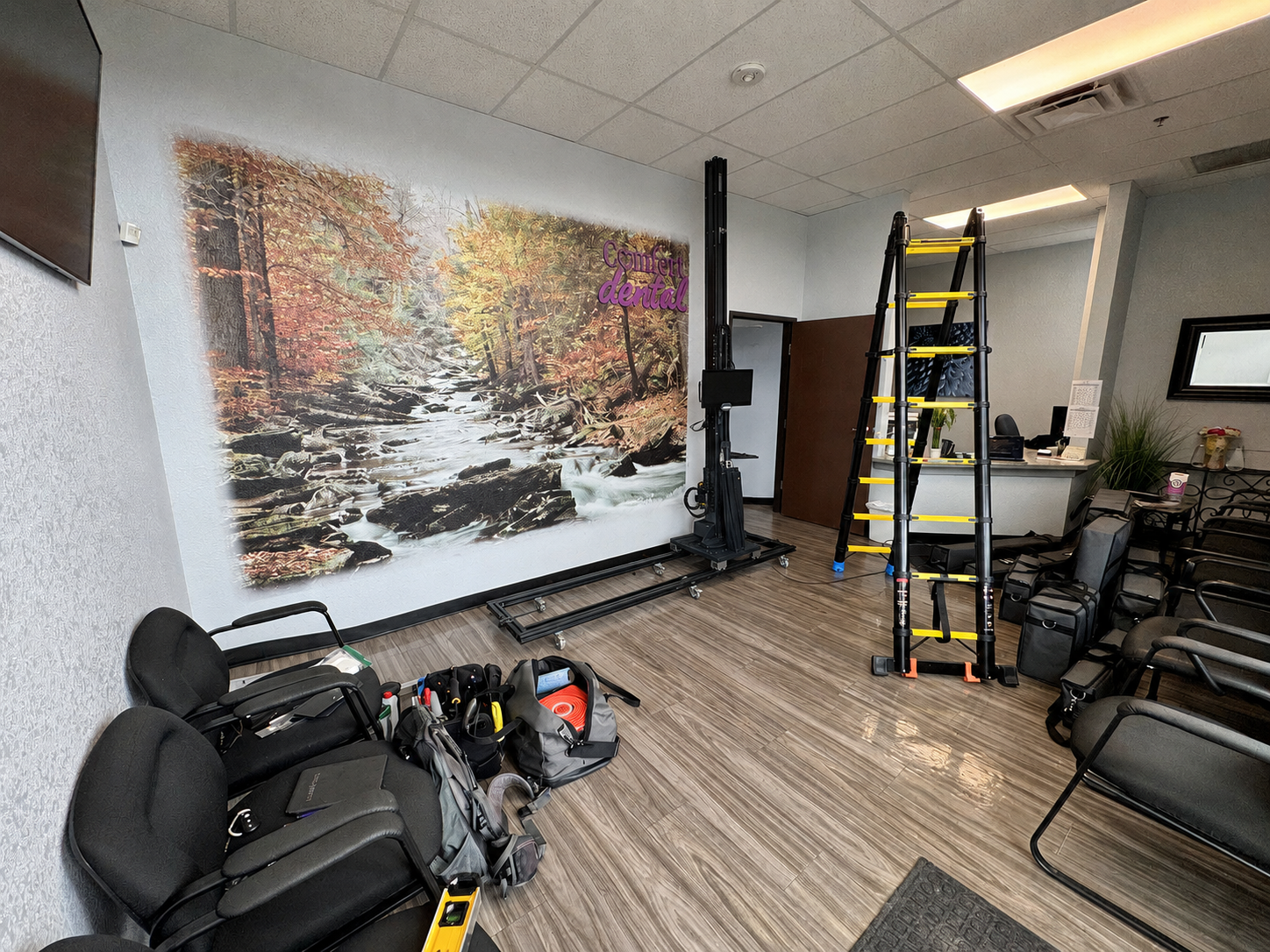
A rail-type machine requires the operator to assemble the rail, level each section, and ensure that the track remains parallel to the wall.
This additional preparation can be unnecessary for a small logo or residential mural. However, it becomes less important on a large commercial wall because the rail provides a consistent movement path throughout the project.
Wheel type is faster for short jobs. Rail type requires more preparation but can provide better consistency during long jobs.
Which Type Is Easier for Beginners?
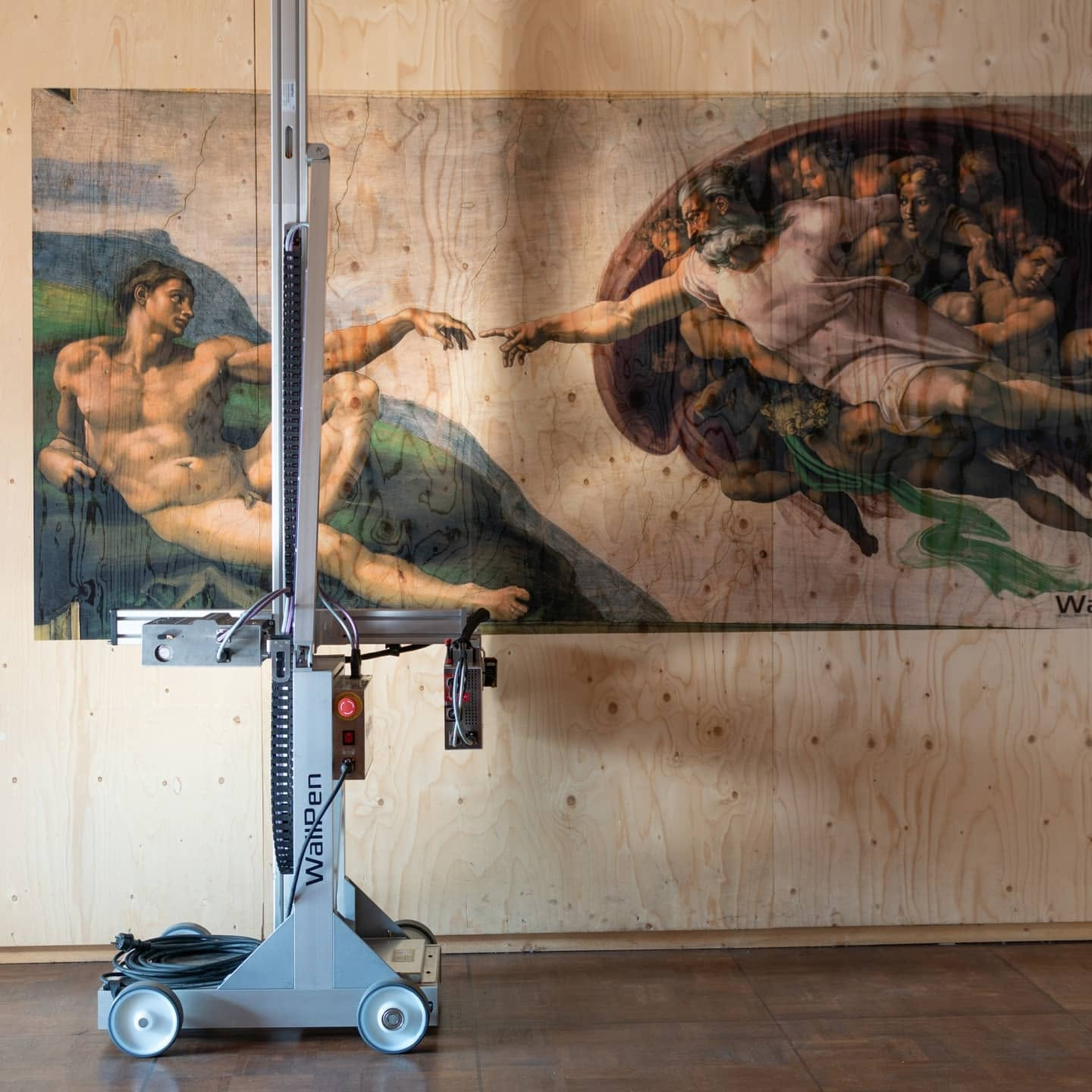
Wheel-type printers are generally more beginner-friendly because they have fewer mechanical setup steps.
A new operator can focus on artwork preparation, wall inspection, distance calibration, and printing without first learning how to assemble and level a long track.
Rail-type printers require more attention during installation. Incorrect track alignment can affect the complete mural.
Once the operator learns the procedure, however, rail setup becomes repeatable and predictable.
Training quality also matters. A wheel-type machine with poor software and weak instructions may still be difficult to operate.
Wheel type has the shorter initial learning curve, while rail type becomes easier after the operator masters the setup process.
Which Type Handles Uneven Floors Better?
Wheel-type wall printer machines move directly across the floor. Uneven tiles, deep joints, debris, carpet, or sloping floors may interfere with their movement.
The travel path should therefore be cleaned and checked before printing.
A rail system can be leveled independently from small floor variations. This may create a straighter movement path, but it also increases setup time.
The practical choice is:
Smooth indoor floors and frequent relocation: wheel type;
Slightly uneven floors with enough setup time: rail type;
Severely damaged or obstructed floors: prepare the area before using either machine.
Which Type Handles Uneven Walls Better?
Wall adaptability depends more on the distance-sensing system than on whether the machine uses wheels or rails.
Both types should maintain a safe gap between the printhead and the wall. A reliable system may include distance sensors, automatic adjustment, limit switches, and collision protection.
A rail provides a straight horizontal path, but the wall may still curve toward or away from the printhead. Wheels also do not automatically follow wall variation unless the machine has an effective sensing and adjustment system.
For brick, concrete, textured plaster, or bowed walls, request a demonstration on a similar surface.
Do not assume that either design can automatically print on every uneven wall.
Which Type Provides Better Accuracy?
A properly installed rail-type printer generally provides stronger horizontal repeatability over long distances.
The fixed track can reduce directional drift, making it useful for panoramic murals, geometric designs, long text, and projects that require accurate section alignment.
A high-quality wheel-type printer can still produce professional results, especially on ordinary residential and commercial murals. Its accuracy depends on motor control, wheel synchronization, floor condition, calibration, and software.
For small and medium murals, the visible difference may be limited. For long architectural graphics, the rail system’s stability becomes more valuable.
Which Type Is Better for One-Person Operation?
Wheel type is normally easier for a solo operator.
One person can transport, position, calibrate, print, and pack the system without carrying and aligning multiple rail sections.
A rail-type wall printing machine may also be operated by one trained person, but installation is usually faster and safer with two people.
When comparing usability, consider the complete workflow from unloading to packing—not only the time when the printer is running.
Which Type Should You Choose?
Choose a wheel-type wall printer when:
You are a beginner or solo operator;
You frequently move between customer sites;
Most projects are small or medium-sized;
Fast setup is important;
Vehicle and storage space are limited.
Choose a rail-type wall printer when:
Most projects involve long commercial walls;
Horizontal positioning accuracy is important;
You have an experienced operator or installation team;
The machine is used in a fixed or semi-fixed location;
Additional setup time is acceptable.
Some convertible wall printers support both movement methods. For example, selected WallPrintBox configurations can switch between wheels and rails, allowing operators to use wheel mode for mobile projects and rail mode for long or demanding walls.
What Should You Test Before Buying?
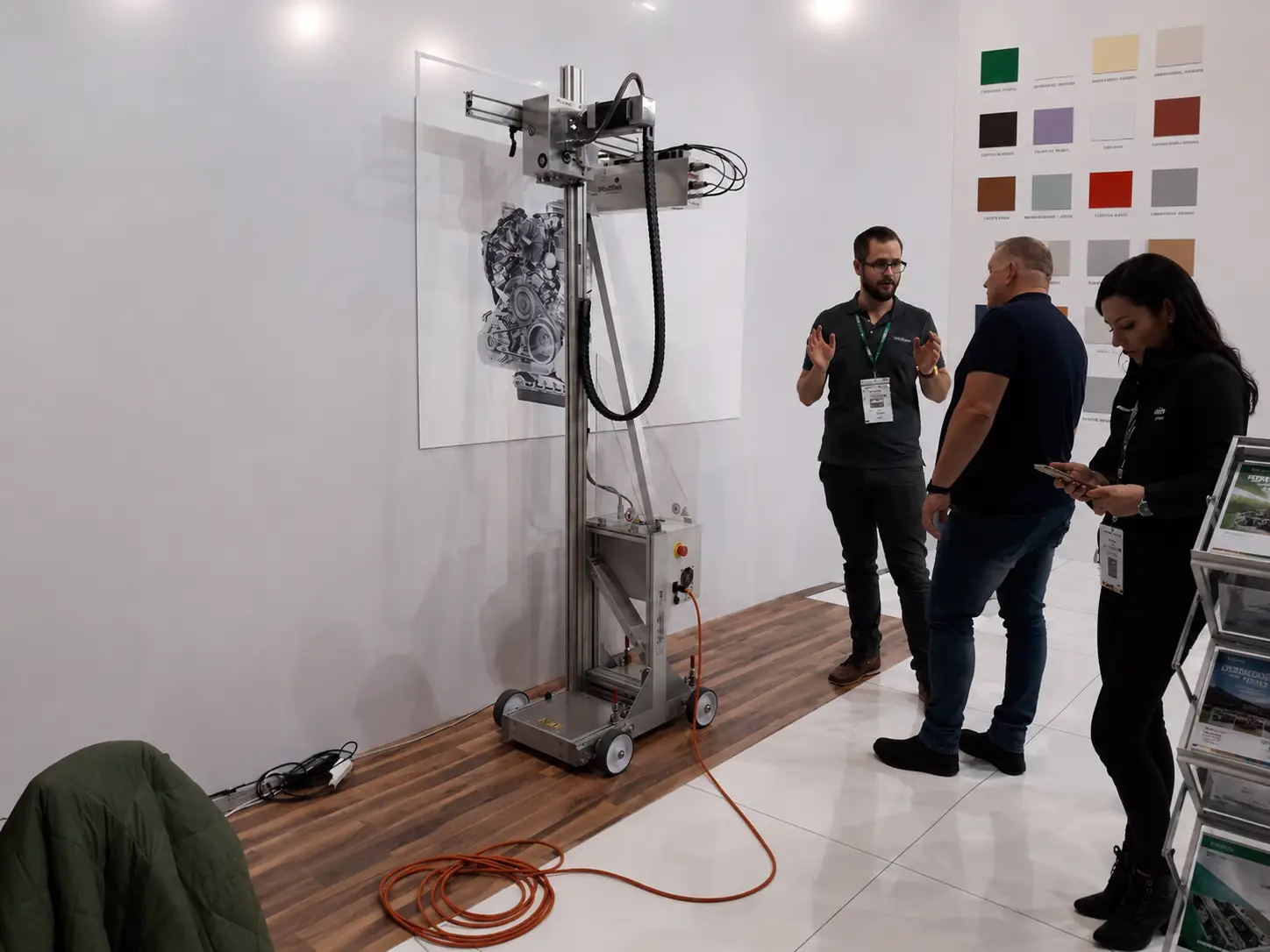
Ask the supplier to demonstrate the complete workflow rather than only showing a finished mural.
The test should include unpacking, assembly, calibration, image positioning, a timed print, restarting after a pause, and packing the machine again.
Use artwork containing straight lines, small text, gradients, and faces because these details make movement and alignment problems easier to identify.
Also test the machine on a floor and wall similar to those found in your normal projects.
Conclusion
A wheel-type wall printer is generally easier to transport, quicker to set up, and more suitable for beginners, solo operators, and frequent small jobs.
A rail-type wall printer requires more preparation but offers a stable horizontal path for long murals, fixed studios, and large commercial projects.
Choose wheel type when mobility and setup speed matter most. Choose rail type when long-distance consistency is more important than installation time.
For businesses handling both types of work, a convertible wheel-and-rail machine may provide the greatest flexibility.