Yes, a wall printer can print on brick walls, but only when the surface meets the basic requirements for printing.
Unlike drywall or sealed plaster, brick is not a simple flat surface. It has texture, pores, mortar joints, dust, moisture, and uneven absorption. These factors can affect print clarity, ink adhesion, color consistency, and long-term durability.
In general, brick walls that are structurally sound, clean, fully dry, reasonably flat, and properly sealed or primed are suitable for direct wall printing. Smooth red brick, sealed fair-faced brick, and well-maintained masonry walls can usually produce strong results.
However, direct printing is not recommended if the brick wall has loose mortar, hollow areas, moisture problems, deep cracks, severe weathering, deep joints, or large uneven sections. These walls should be repaired, leveled, sealed, or primed before deciding whether they are suitable for wall printing.
In short: brick walls can be printed, but they should not be assumed to be print-ready. The surface must be inspected first, and preparation such as cleaning, drying, repair, sealing, or priming may be required depending on the wall condition.
Brick Wall Printing Compatibility Table
Brick Surface | Can It Be Printed? | Prep Level | Best Use |
|---|---|---|---|
Standard Red Brick | Yes | Low–Medium | Interior murals, cafés, lofts, restaurants |
Fair-Faced Concrete Brick | Yes | Low | Photo murals, gradient designs, indoor feature walls |
Culture Stone / Faux Brick | Conditional | Medium–High | Decorative textured walls |
Exterior Facade Brick | Conditional | High | Outdoor branding, large graphics |
Old Eroded Brick | Not recommended directly | Repair first | Needs skim coat or surface repair |
Deep Hollow-Joint Brick | Not recommended directly | Repair first | Too much distortion risk |
This table gives the basic rule: the smoother, cleaner, and more stable the brick, the better the wall printing result.
Which Brick Walls Print Best?
Not all brick walls behave the same. The final result depends on surface texture, porosity, joint depth, and wall condition.
Standard Red Brick
Printability: Good.
Standard red brick is one of the easier brick surfaces for wall printing. It usually has a consistent face, moderate texture, and good ink adhesion after cleaning and sealing.
Best For:
Cafés, restaurants, industrial-style interiors, loft apartments, retail feature walls, and decorative murals.
Prep Needed:
Brush away loose dust, check for moisture, clean the surface, and apply a thin masonry sealer if the brick is porous.
Main Risk:
Uneven ink absorption if the brick is too dusty or too porous.
Verdict:
Red brick is usually a good candidate for wall printing when the surface is clean and stable.
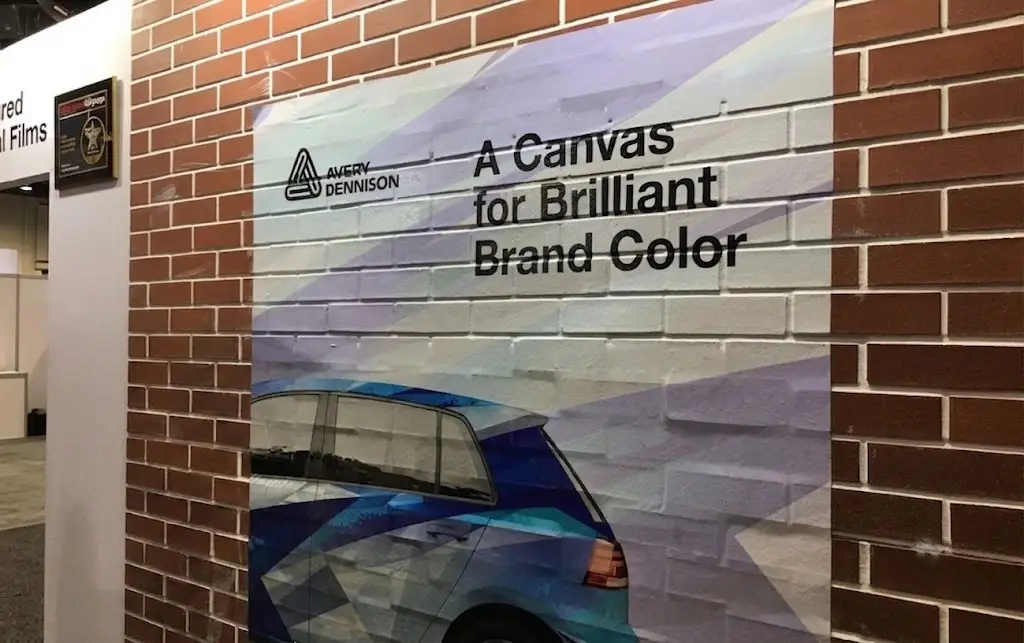
Fair-Faced Concrete Brick
Printability: Excellent.
Fair-faced concrete brick or clean architectural masonry often produces some of the best results. The surface is usually denser and more uniform than rough brick, which helps improve color consistency and line clarity.
Best For:
Interior murals, modern commercial spaces, offices, galleries, restaurants, and designs with gradients or photo-style graphics.
Prep Needed:
Clean the wall, remove dust, check for chalking, and apply primer only if the surface is powdery or highly absorbent.
Main Risk:
Surface chalking or powdering can reduce adhesion if not treated.
Verdict:
This is one of the best brick-type surfaces for a wall printer.

Culture Stone And Faux Brick
Printability: Conditional.
Culture stone and faux brick can look impressive after wall printing, but they usually have more uneven texture and deeper grooves. The raised areas may print well, while recessed joints may receive less ink or appear lighter.
Best For:
Decorative feature walls, themed restaurants, bars, hotels, entertainment spaces, and textured mural effects.
Prep Needed:
Fill deep gaps where necessary, sand down sharp high spots, clean thoroughly, and apply a primer or sealer to control absorption.
Main Risk:
Deep grooves can cause color thinning, shadowing, and image distortion.
Verdict:
Printable, but only after surface leveling and proper testing.

Exterior Facade Brick
Printability: Conditional.
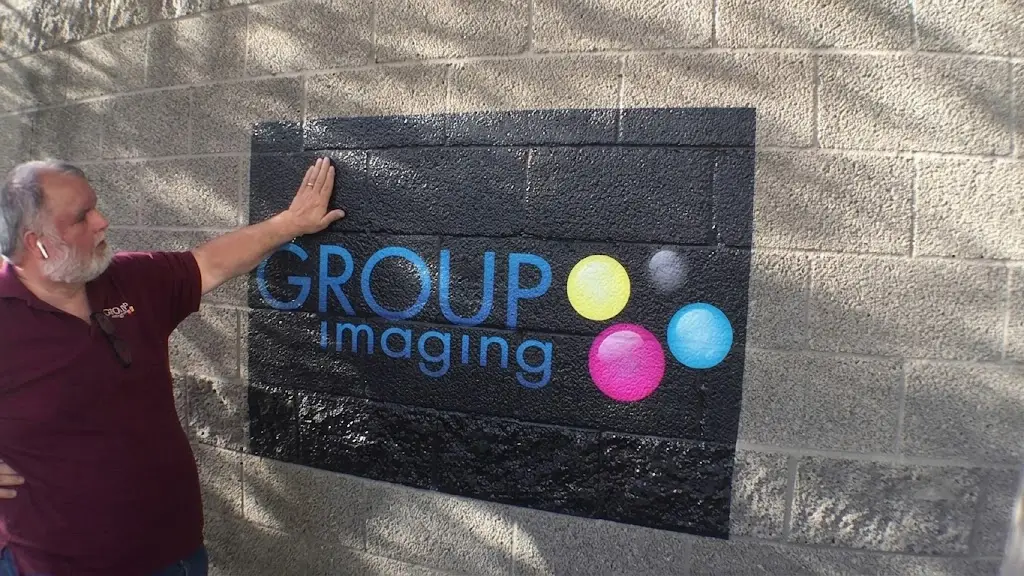
Exterior brick can be printed, but it requires more preparation than indoor brick. Outdoor walls face sunlight, rain, temperature changes, dust, and moisture movement from the building structure.
Best For:
Outdoor brand walls, commercial façades, public murals, restaurants, retail locations, and exterior decorative graphics.
Prep Needed:
Remove dust, salts, mold, and loose material. Make sure the wall is dry. Use a compatible exterior primer or anti-alkali sealer when needed. Apply a UV-resistant protective coating after printing.
Main Risk:
Moisture, UV exposure, alkali migration, and weathering.
Verdict:
Exterior brick can work with a UV wall printer, but it should be treated as a higher-risk surface that requires primer and protective coating.
Severely Eroded Or Deep-Joint Brick
Printability: Not recommended for direct printing.
Some brick walls are too rough or damaged for direct wall art printing. If the brick is crumbling, hollow, deeply recessed, or heavily uneven, the printhead may not maintain a safe and consistent distance from the wall.
Best For:
Repair first, then print on a prepared surface.
Prep Needed:
Structural repair, joint filling, plaster skim coat, or installation of a stable overlay panel.
Main Risk:
Printhead collision, ink pooling, broken image lines, poor adhesion, and visible distortion.
Verdict:
Do not print directly. Repair or resurface the wall first.

When Should You Not Print Directly On Brick?
A brick wall may look printable from a distance but still fail during production.
Do not print directly on brick if:
The mortar is loose or crumbling
The brick surface is flaking or powdery
The wall sounds hollow when tapped
There is active moisture or water seepage
Efflorescence or white salt marks are visible
The joints are too deep or uneven
The wall has sharp protrusions in the print area
The surface is greasy, dusty, moldy, or contaminated
Outdoor weather is windy, very humid, or unstable
In these cases, direct printing is risky. The better choice is to repair the wall, fill the joints, apply a skim coat, or print on a mounted panel instead.
The rule is simple: do not expect the printer to fix a bad wall.
How To Prepare A Brick Wall Before Printing
Most brick wall printing problems come from poor preparation, not from the printer itself.
Before printing, follow this basic preparation process.
1. Inspect The Wall
Check the full print area before setting up the machine.
Look for loose brick, hollow spots, cracks, sharp protrusions, deep joints, damp areas, flaking material, and salt marks. If the wall is unstable, repair it before printing.
A wall printer needs a safe distance between the printhead and the wall. Large bumps or sudden surface changes can increase the risk of collision.
2. Clean The Surface
Brick holds dust easily. Even when the wall looks clean, dust can sit inside pores and mortar joints.
Remove:
Loose dust
Sand and debris
Grease
Mold
Efflorescence
Loose paint or old coating
Cement powder or chalking
Use a stiff brush, vacuum, or low-pressure cleaning method depending on the wall condition. For exterior walls, pressure washing may help, but the wall must dry completely before printing.
Clean brick gives ink and primer a better surface to bond to.
3. Control Moisture
Moisture is one of the biggest risks in brick wall printing.
Brick is porous, so it can hold water inside even when the surface looks dry. Printing on damp brick can cause adhesion failure, color problems, bubbling, or early peeling.
Before printing, make sure the wall is fully dry. New masonry should be allowed to cure properly. Repaired areas should also be fully cured before printing.
For high-humidity areas, allow extra drying time or use dehumidification if needed.
4. Fill Deep Joints And Repair Damage
Deep mortar joints can distort the printed image. The print may look clear on the brick face but weak inside the recessed lines.
For rough or deeply jointed brick walls, fill cracks, holes, and deep gaps before printing. Grind down sharp high spots if needed.
The goal is not to remove the brick texture completely. The goal is to create a surface that is safe for the printer and consistent enough for the image to look intentional.
5. Apply Sealer Or Primer
Brick absorbs ink unevenly if it is too porous. A masonry sealer or primer helps control absorption and improves adhesion.
For standard indoor red brick, a transparent acrylic masonry sealer is often enough. For older, powdery, exterior, or high-porosity brick, a stronger compatible primer may be needed.
The primer or sealer must be fully dry before printing. Printing too early can cause uneven ink laydown or adhesion problems.
Basic Machine Settings For Brick Printing
Brick is not a flat board, so the printer should not be treated as if it is printing on a smooth wall.
The rougher the brick, the more carefully the machine needs to be set.
Brick Texture | Suggested Printing Approach |
|---|---|
Smooth brick / shallow joints | Normal speed, standard pass count, basic surface check |
Medium texture / visible joints | Slower speed, more passes, active distance sensing |
Deep joints / rough masonry | Surface repair first; do not rely only on printer settings |
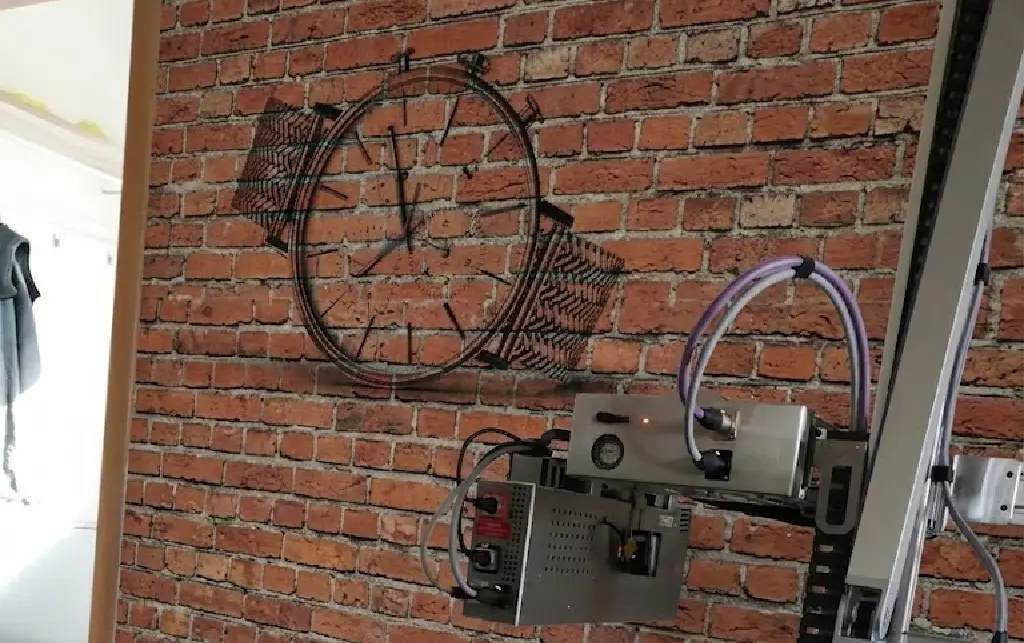
For brick walls, the printhead should clear the highest points of the surface, not the average surface. If the printer is set too close, the head may hit the wall. If it is set too far away, the image may lose sharpness.
A small test print is strongly recommended before full production. Test on the roughest part of the wall, not the smoothest section.
Check for:
Line clarity
Color saturation
Ink absorption
Adhesion
Gaps around mortar joints
Distortion on raised or recessed areas
If the test patch fails, fix the surface before adjusting the artwork or printing the full wall.
Does Brick Texture Affect Print Quality?
Yes. Brick texture affects print quality more than many buyers expect.
A smooth brick wall can hold clear graphics, strong color, and good line definition. With modern wall printing technology, rough brick can also create a more rustic, textured look. This can be attractive for murals, industrial interiors, restaurants, and bars.
However, deep grooves and uneven mortar joints can cause:
Lighter color inside recessed areas
Slight image distortion
Less detail on rough surfaces
More visible texture through the design
Higher ink usage or additional passes
This does not mean brick is a bad surface. It means the design should match the surface.
Large graphics, bold patterns, typography, logos, and mural-style artwork usually work better on rough brick than small text or fine photo details.
What Ink Works Best On Brick Walls?
UV-curable ink is commonly used for wall printing on brick because it cures quickly and works on many prepared surfaces.
For indoor brick, UV ink with proper surface cleaning and sealing can produce durable results. For outdoor brick, the ink system should be suitable for exterior exposure, and a protective coating is strongly recommended.
The ink choice should match:
Indoor or outdoor use
Brick porosity
Primer or sealer type
Expected cleaning method
Sunlight and weather exposure
Desired lifespan
Ink alone does not guarantee durability. Surface preparation and protection are just as important.
Does A Printed Brick Wall Need Protective Coating?
For interior brick walls, a clear protective coating is optional but recommended in high-traffic areas.
For exterior brick walls, a protective coating is strongly recommended.
A clear topcoat can help protect the print from:
Scratches
Dust and cleaning
Moisture
UV exposure
Outdoor weathering
Early fading
For indoor murals in cafés, restaurants, offices, hotels, and retail stores, a matte or satin clear coat can make the surface easier to clean.
For outdoor brick murals, use a UV-resistant exterior clear coat that is compatible with the ink and primer system.
After printing and coating, avoid water, abrasion, and cleaning chemicals during the early curing period. The supplier or coating manufacturer should provide the recommended curing time.
How Long Does Wall Printing On Brick Last?
Durability depends on the surface, ink, primer, coating, and environment.
Indoor printed brick murals can last for years when the wall is dry, clean, sealed, and protected from abrasion.
Outdoor brick prints face more stress. Sunlight, rain, heat, cold, moisture movement, and pollution can all reduce lifespan if the wall is not properly prepared and coated.
The biggest durability risks are:
Moisture behind the brick
Poor primer selection
Skipping protective coating outdoors
Printing on dusty or powdery brick
Deep cracks or unstable mortar
Strong UV exposure without protection
A well-prepared brick wall can be a durable printed surface. An unprepared brick wall can fail quickly.
Best Designs For Brick Wall Printing
Brick has a strong visual texture, so not every design works equally well.
Good design choices include:
Large murals
Bold graphics
Brand walls
Restaurant feature walls
Vintage or industrial-style artwork
Large text and logos
Decorative patterns
Sports, music, or street-art themes
Designs that may not work well include:
Very small text
Highly detailed portraits
Fine technical drawings
Light colors over dark red brick without a white base
Designs that require perfect photo smoothness
For dark brick or highly textured brick, a white base layer may help improve color brightness.
The design should work with the brick texture, not fight against it.
Final Verdict
Brick walls can become excellent surfaces for direct wall printing, but they need to be evaluated as real project surfaces rather than standard smooth walls.
For indoor red brick, fair-faced brick, restaurants, cafés, hotels, retail stores, and industrial-style interiors, wall printing can create a textured visual effect that wallpaper or decals cannot easily match. The key is to check the wall condition before confirming the job.
When the surface is stable, dry, clean, and not too uneven, brick can become one of the most attractive canvases for custom wall graphics and murals.
Planning a brick wall printing project? Send us your wall photos, wall size, location, and indoor/outdoor use. Our team will help you check whether the surface is suitable for printing and recommend the right wall printer model for your project.