Skip the price research and you can fall into one of two traps.
You buy a cheap wall printer that looks affordable online but cannot handle real commercial jobs. Or you invest in a professional machine before your order volume is strong enough to pay it back.
The wall printer price range is wide, but the decision is not just about the machine price. It is about monthly job volume, customer type, support risk, and how fast the machine can turn into revenue.
The right wall printer is not always the cheapest one. It is the one that matches your current business stage.
Quick Answer: How Much Does A Wall Printer Cost?
A wall printer can cost anywhere from $3,000 to $60,000+, depending on machine tier, printhead type, structure, ink system, software, support, and shipping.
Machine Tier | Realistic Startup Cost | Best For |
|---|---|---|
Entry-Level | $3,000–$4,000 landed | Testing demand, small residential jobs, side business |
Mid-Tier | $6,000–$12,000 landed | Local mural service, cafés, offices, small commercial work |
Professional | $15,000–$25,000+ landed | Regular commercial jobs, hotels, retail, contractors |
Premium / Enterprise | $35,000–$60,000+ | Multi-site rollouts, franchise projects, high-support operations |
The price you see online is rarely the price you need to start printing. A proper budget should include machine cost, shipping, customs, starter ink, spare parts, training, and support.
Entry-Level Wall Printers: $3,000–$4,000 Real Startup Cost
Entry-level wall printers are often advertised at $1,500–$3,000, especially on marketplace listings. But that number usually covers only the basic machine.
Once you add shipping, import costs, starter ink, cleaning supplies, and at least one spare printhead, the real startup cost often lands closer to $2,800–$4,000.
This tier is not useless. It has a clear place in the market. It works for buyers who want to test demand before investing more seriously.
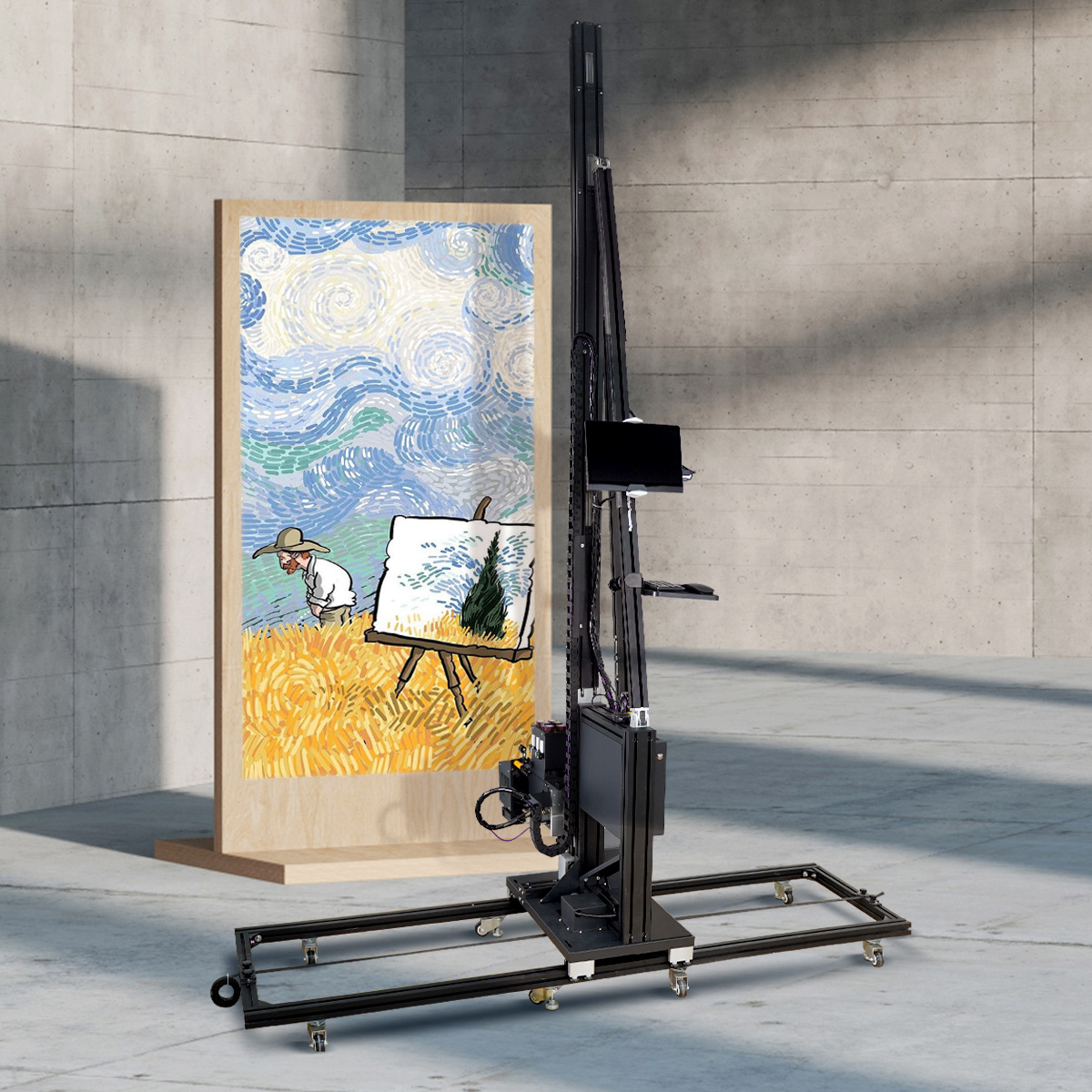
An entry-level wall printer usually uses a lighter frame, basic motion system, economy printhead, and simpler software. It can produce good results on flat indoor walls, but it requires more manual setup, more calibration, and more patience.
Best for:
Testing the market, side-hustle mural work, residential feature walls, kids’ rooms, and occasional small café or studio projects.
Not ideal for:
Commercial fit-out companies, advertising agencies, hotel projects, chain stores, or operators expecting daily production.
What to confirm before buying:
Ask about the exact printhead model, spare parts availability, machine weight, software support, and whether the machine has basic distance sensing or job-resume capability.
The honest takeaway: entry-level machines lower the cash barrier, but they leave less margin for mistakes.
Mid-Tier Wall Printers: $6,000–$12,000 Real Startup Cost
The mid-tier range is where wall printing starts to look like a real small business tool.
Machines in this range usually offer stronger frames, better printhead options, improved motion control, and more practical software support. Many operators choose this tier because it balances affordability, output quality, and realistic payback potential.
A mid-tier machine may use Epson i1600 or i3200-class printheads, support CMYK or CMYK+W ink, and offer better calibration stability than entry-level systems. Some models also include touchscreen control, automatic wall-distance sensing, print-resume function, or wall/floor printing capability.
This tier is usually the strongest match for new operators who want to move beyond testing and start selling paid wall printing services.
Best for:
Local mural businesses, interior design studios, cafés, offices, restaurants, schools, retail stores, and small commercial interiors.
Not ideal for:
Very high-volume chain rollouts or projects where local service infrastructure and guaranteed uptime are required.
What to confirm before buying:
Ask about printhead type, ink cost per square meter, training, warranty, software, spare parts, and real production speed under standard quality mode.
The honest takeaway: mid-tier wall printers are usually the best balance for first-time business buyers.
Professional Wall Printers: $15,000–$25,000+ Real Startup Cost
Professional machines are built for operators who already know they have commercial demand.
At this level, you are paying for stronger mechanics, better ink systems, improved automation, more stable output, and lower downtime risk. These wall printing machines are not just for printing one or two residential murals per month. They are for businesses that need consistent results across regular paid projects.
A professional wall printer usually offers better structural stability, stronger printhead options, improved wall-distance control, and more reliable operation across long jobs. This matters for hotels, schools, offices, shopping centers, and retail fit-outs where project failure is expensive.
Best for:
Commercial mural companies, fit-out contractors, retail designers, hotel projects, schools, and operators with steady monthly demand.
Not ideal for:
Buyers who are still unsure whether their local market can support wall printing.
What to confirm before buying:
Ask for real job videos, standard-mode speed, printhead lifespan, support process, spare parts lead time, and whether the supplier has experience with your target surfaces.
The honest takeaway: professional machines only make sense when your pipeline can keep them working.
Premium And Enterprise Wall Printers: $35,000–$60,000+
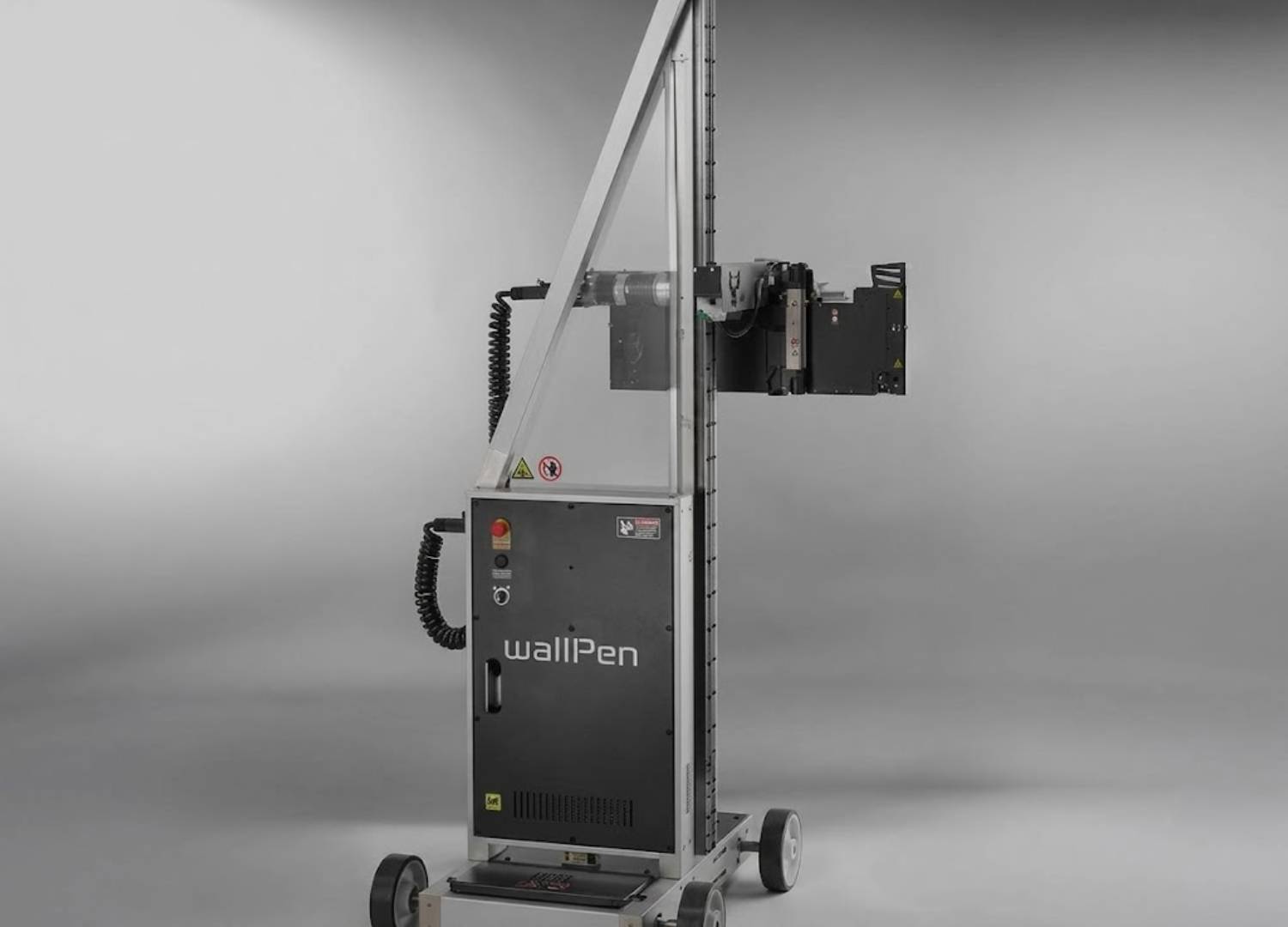
The premium category includes high-end US and European systems with stronger support structures, proprietary software, better documentation, and often more formal onboarding.
These wall printer machines are not expensive only because of the hardware. They cost more because of the ecosystem around the machine: training, business support, regional service, software workflow, and spare-parts structure.
For operators bidding on multi-location contracts, franchise rollouts, municipal projects, or high-consistency brand campaigns, this support can matter more than the printhead itself.
Best for:
Large commercial operators, franchise campaigns, national branding projects, municipal work, and buyers who need structured support.
Not ideal for:
Small residential businesses, part-time operators, or buyers without confirmed commercial volume.
What to confirm before buying:
Ask about local service coverage, annual software cost, printhead replacement cost, ink lock-in, service contract terms, and total landed cost.
The honest takeaway: premium machines are not for everyone. They are for businesses where downtime, inconsistency, and service delays cost more than the machine itself.
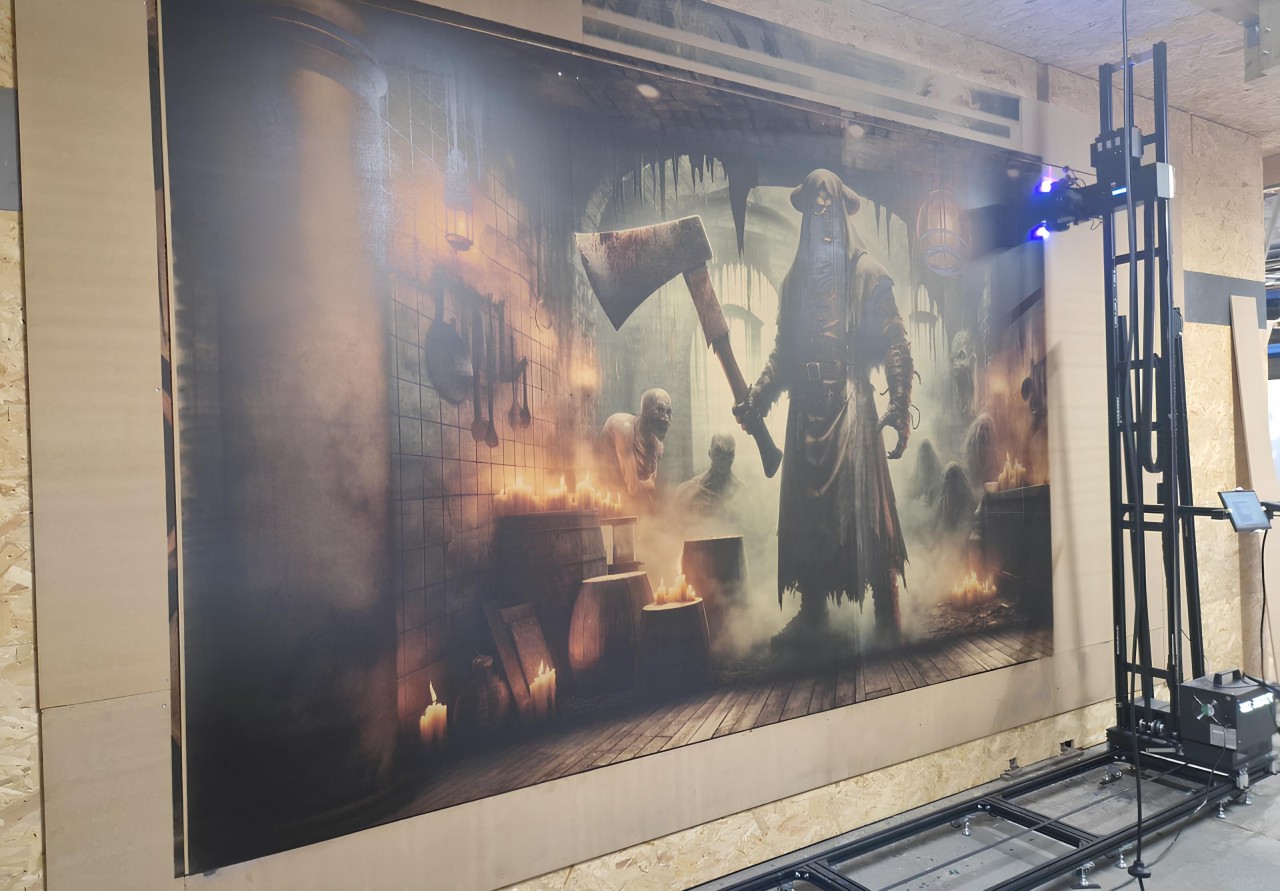
Entry-Level Vs Professional Wall Printer: Key Differences
The difference between entry-level and professional vertical wall printers is not just price. It is risk, stability, support, and output consistency.
Factor | Entry-Level | Mid-Tier | Professional / Premium |
|---|---|---|---|
Real Startup Cost | $3.0K–$4K | $6K–$12K | $15K–$60K+ |
Best Use | Testing, small murals | Local business, cafés, offices | Commercial, hotel, retail, chain projects |
Printhead | DX7 / basic Epson | i1600 / i3200 | i3200 / Ricoh / industrial heads |
Support | Remote, limited | Better supplier support | Structured support / regional service |
Main Risk | Downtime, calibration, short lifespan | Supplier quality varies | High cost, needs steady pipeline |
Payback Logic | Works only with low overhead | Best balance for startups | Works only with commercial volume |
The most important point is simple: entry-level machines help you start; professional machines help you scale.
Hidden Costs Buyers Must Add
The listed machine price is not the full startup cost.
Before comparing wall printer prices, buyers should add shipping, import fees, starter ink, spare parts, training, software, and basic maintenance supplies. For most imported wall printers, the realistic startup budget is usually 15–30% higher than the quoted machine price.
Listed Machine Price | More Realistic Startup Cost |
|---|---|
$2,000 | $2,800–$4,000 |
$5,200 | $6,000–$8,000 |
$10,000 | $11,500–$14,000 |
$45,000 | $50,000–$55,000+ |
A “cheap” wall printer is not always cheap once it starts operating. The real comparison should be based on ready-to-print startup cost, not only the machine quote.
Wall Printer Ink Cost And Operating Cost
Ink cost matters, but it is only one part of the real operating cost.
Most wall art printers use around 6–15 ml/m² of ink, depending on coverage, surface type, pass count, and white ink usage. Ink prices can range from $45–$160/L.
For example, the WallPrintBox reference model uses about 8 ml/m² with ink at $50/L, which equals roughly $0.40/m².
Cost Item | Typical Cost / m² |
|---|---|
Ink | $0.40–$1.50/m² |
Cleaning / purging fluids | $0.10–$0.30/m² |
Primer / surface prep | $0.50–$3.00/m² |
Printhead / small parts reserve | $0.10–$0.50/m² |
Realistic variable cost | $1.10–$5.30/m² |
The better question is not only “How much does the ink cost?”
It is “What is my real cost per sellable square meter?”
Ink rarely destroys profit by itself. The bigger risks are failed prints, clogged printheads, poor adhesion, bad calibration, and slow spare-parts access.
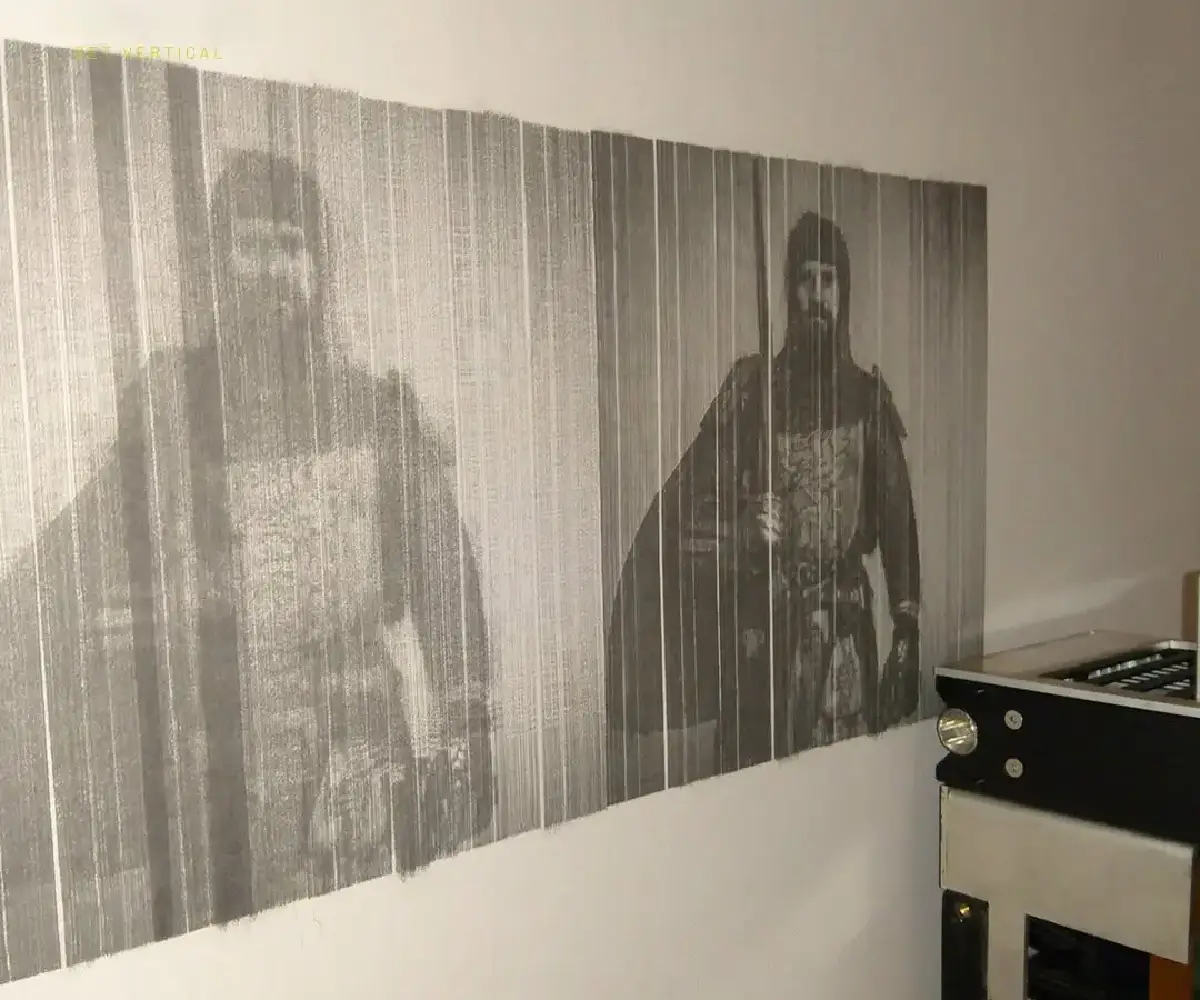
Which Wall Printer Price Tier Should You Choose?
Choose based on your business stage, not on the most impressive spec sheet.
If You Are... | Recommended Tier |
|---|---|
Testing wall printing as a side business | Entry-Level |
Starting a local mural service | Mid-Tier |
Serving cafés, offices, schools, and retail stores | Mid-Tier / Professional |
Running hotel, shopping mall, or contractor projects | Professional |
Bidding on multi-location contracts | Premium / Enterprise |
Unsure about local demand | Start lower, prove demand first |
If you have no confirmed clients, do not overbuy. If you already have commercial demand, do not underbuy.
The right purchase is the machine that fits your monthly volume floor, not your best-case dream volume.
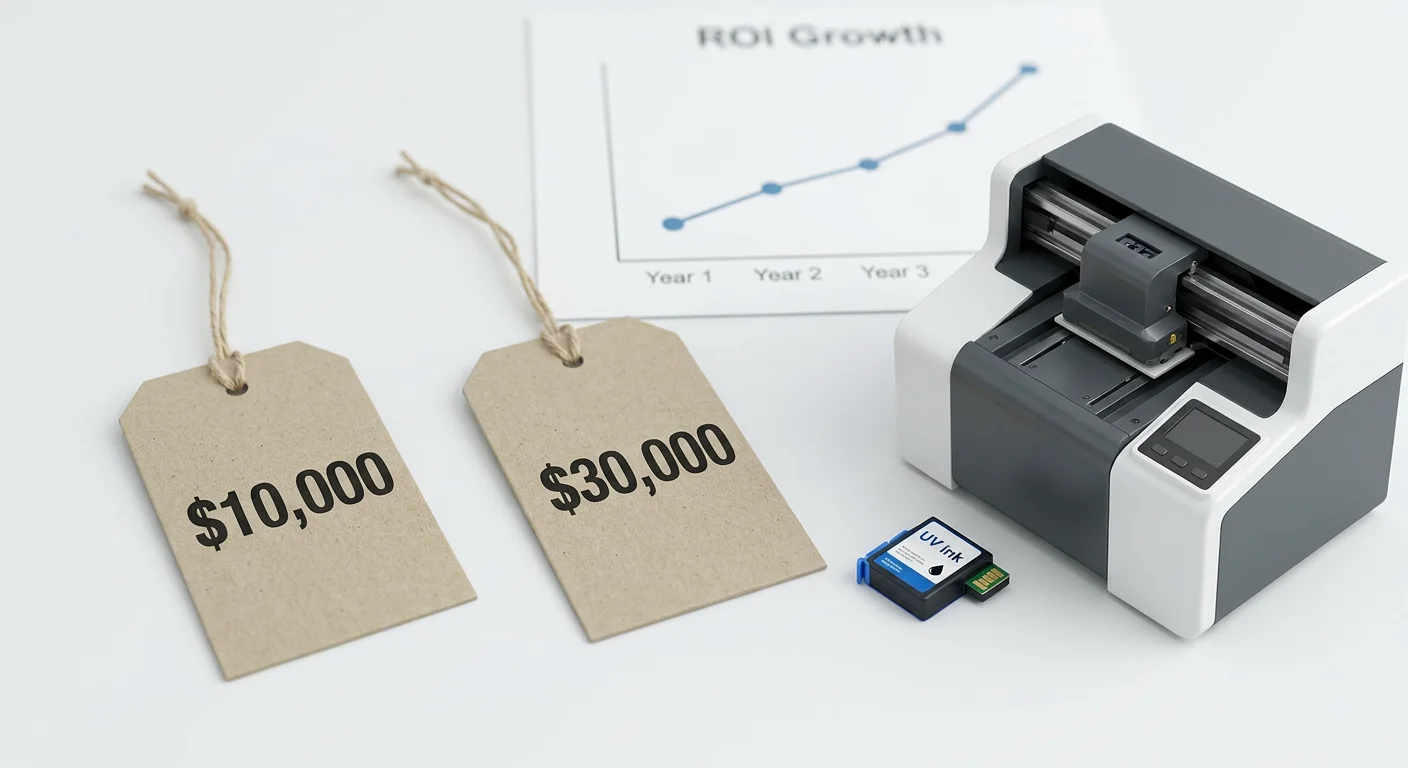
Simple ROI And Payback Range
3D wall printer payback depends on three numbers:
Initial investment, monthly output, and selling price per square meter.
A simplified payback guide looks like this:
Monthly Output | Recommended Tier | Typical Payback |
|---|---|---|
Under 60 m²/month | Entry-Level | 5–8 months |
60–200 m²/month | Mid-Tier | 3–5 months |
200–500 m²/month | Professional | 2–3 months |
500 m²+/month | Premium / Enterprise | Depends on contracts and utilization |
Higher-tier machines do not always take longer to pay back. If they are fed with enough commercial work, they may pay back faster because they reduce downtime and increase output capacity.
But if your monthly volume is low, a professional machine can become a cash-flow problem.
The real risk is not machine price. The real risk is buying a machine your current pipeline cannot support.
If your goal is to start a small wall printing business rather than simply buy the cheapest machine, a mid-tier business-ready system such as WallPrintBox may be easier to justify. It sits below premium European and US systems, but gives first-time operators more structure than a bare entry-level machine.
Conclusion
The wall printer price range is not just a list of machine costs. It is a business decision.
Entry-level machines help you test the market with less money at risk.
Mid-tier machines offer the best balance for most small wall printing businesses.
Professional machines make sense when you have regular commercial work.
Premium systems are for buyers who need support structure, uptime, and multi-site consistency.
The right wall printer price range depends on your real order volume, target clients, and ability to manage support risk.
Do not buy the cheapest machine just because it lowers your startup cost.
Do not buy the most expensive machine just because it looks safer.
Buy the machine tier that matches where your business is today — and where your confirmed pipeline can take it next.
Not sure which wall printer price range fits your business? Send us your monthly job volume, target clients, budget range, and main application — residential murals, cafés, offices, hotels, retail, or floor graphics. We’ll help you match the right wall printer tier and prepare a quote based on your real business needs.