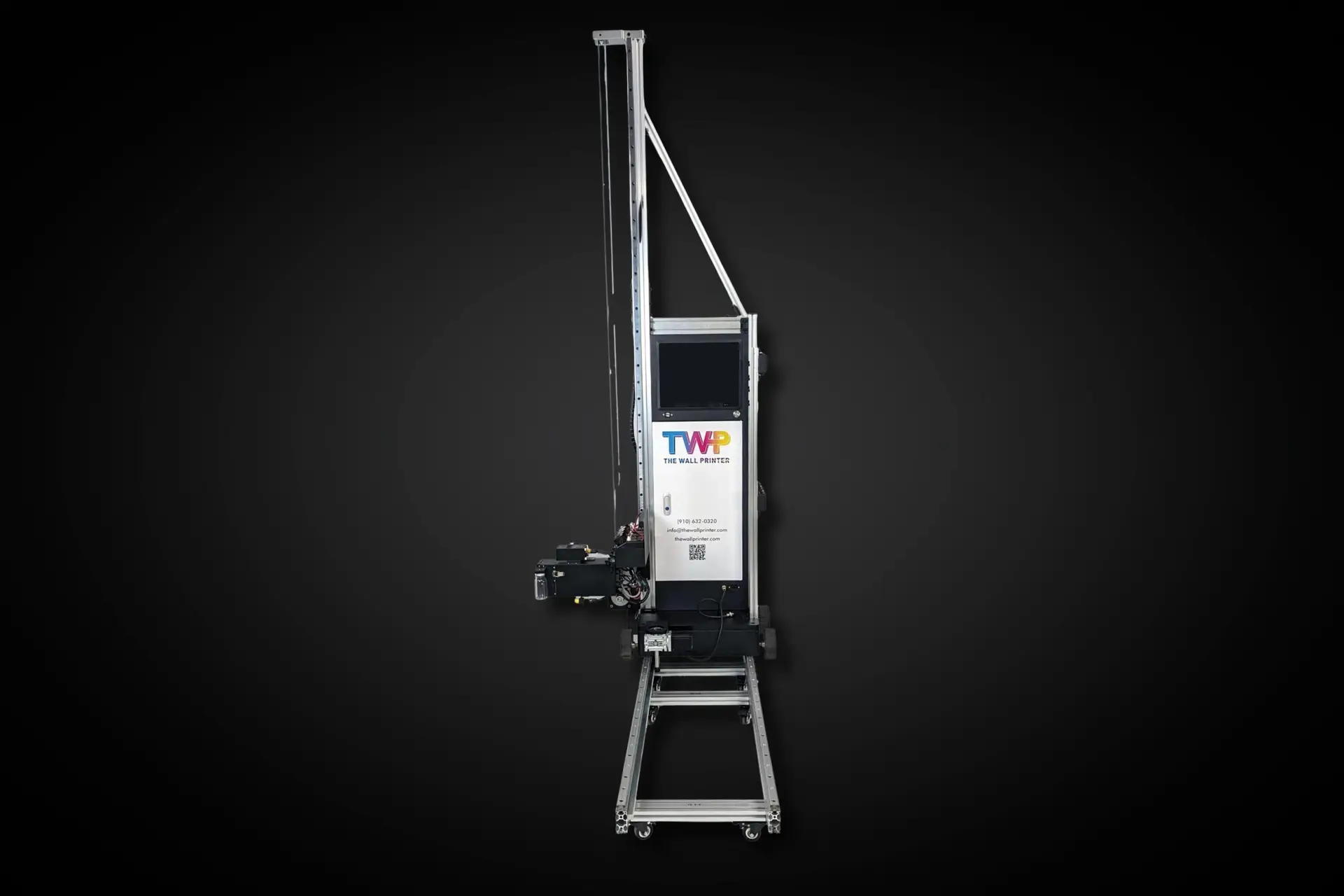
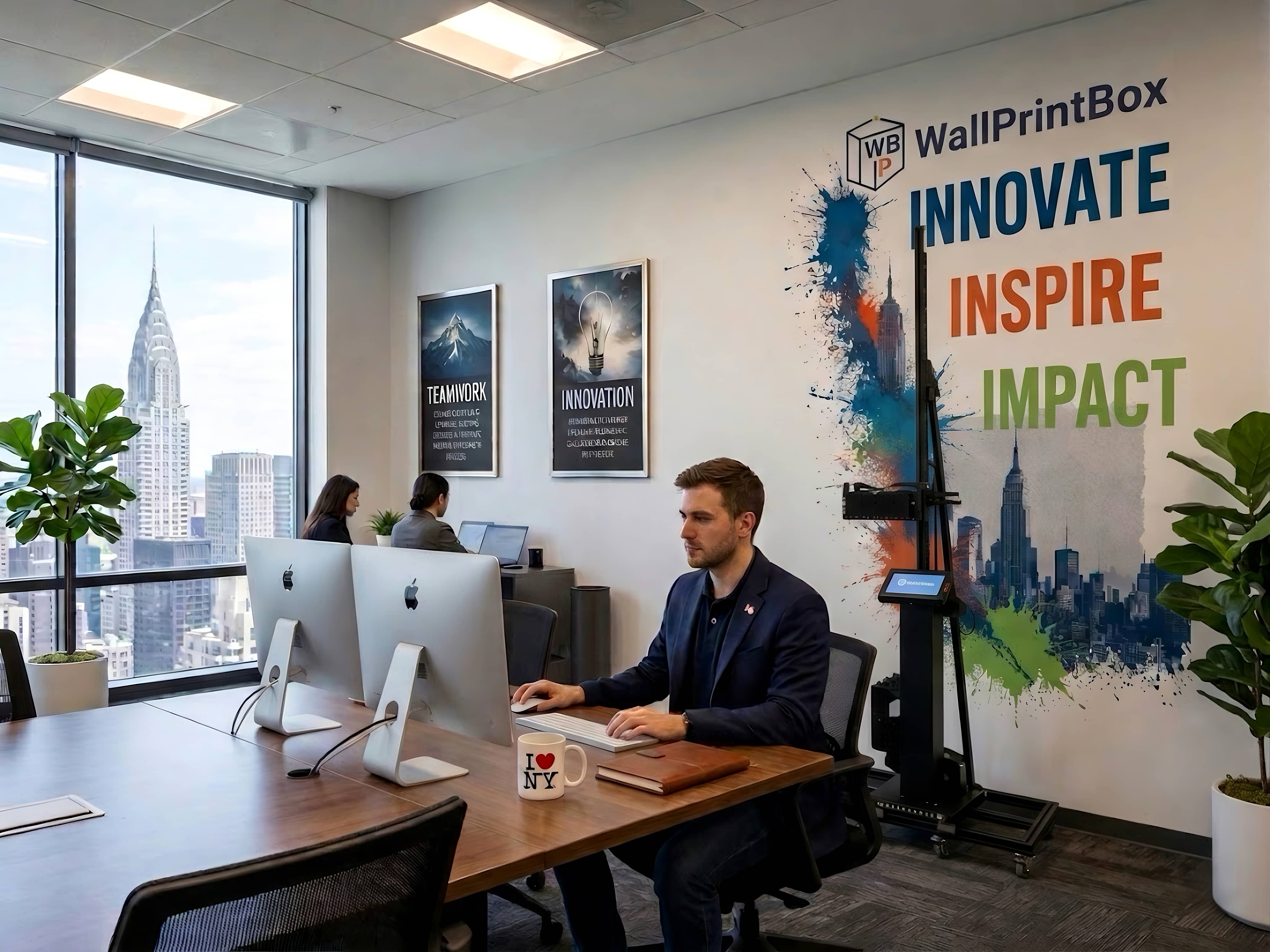
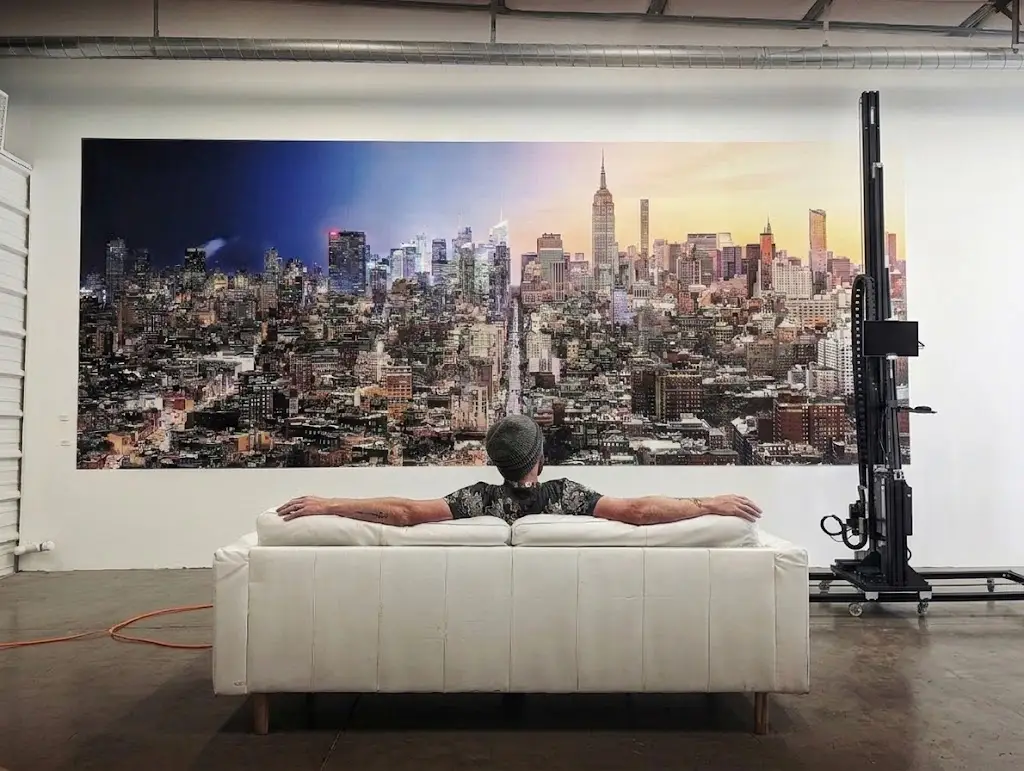
The Wall Printer, commonly known as TWP, is a premium U.S.-based wall printing system aimed at entrepreneurs, sign companies, decorators, and established printing businesses.
Its main selling point is not simply high print resolution. TWP combines commercial UV wall printers with in-person training, lifetime technical support, a five-year manufacturer warranty, and optional business-development resources.
That support comes at a premium price.
Current new wall printer prices start at $39,995 for the Tech Series, while the newer Pro Series costs $44,995. TWP also advertises lower-priced certified reconditioned equipment when inventory is available. Final configurations and prices are confirmed through the purchase agreement and may change.
So, is TWP worth approximately $40,000 to $45,000?
It can be a strong option for buyers who value U.S.-based training, long-term support, standard white ink, and a structured business package. However, the high initial investment only makes sense when the buyer has a realistic plan for generating regular paid projects.
TWP Wall Printer Pricing and Specifications
Comparison | Tech Series | Pro Series |
|---|---|---|
Current new-machine price | $39,995 | $44,995 |
Printhead | Epson DX7 | Epson I3200 |
Maximum advertised resolution | Up to 2,880 DPI | Up to 2,400 DPI |
Ink configuration | CMYK + White UV | CMYK + White UV |
Control system | Onboard touchscreen | 12.1-inch onboard Windows touchscreen |
White ink | Included | Included |
Extended print height | Up to approximately 131.9 in. | Up to approximately 131.9 in. |
Published ink operating cost | Approximately $0.50/ft² | Approximately $0.50/ft² |
Training | In person at TWP headquarters | In person at TWP headquarters |
Technical support | Lifetime | Lifetime |
Published warranty | Five-year manufacturer warranty | Five-year manufacturer warranty |
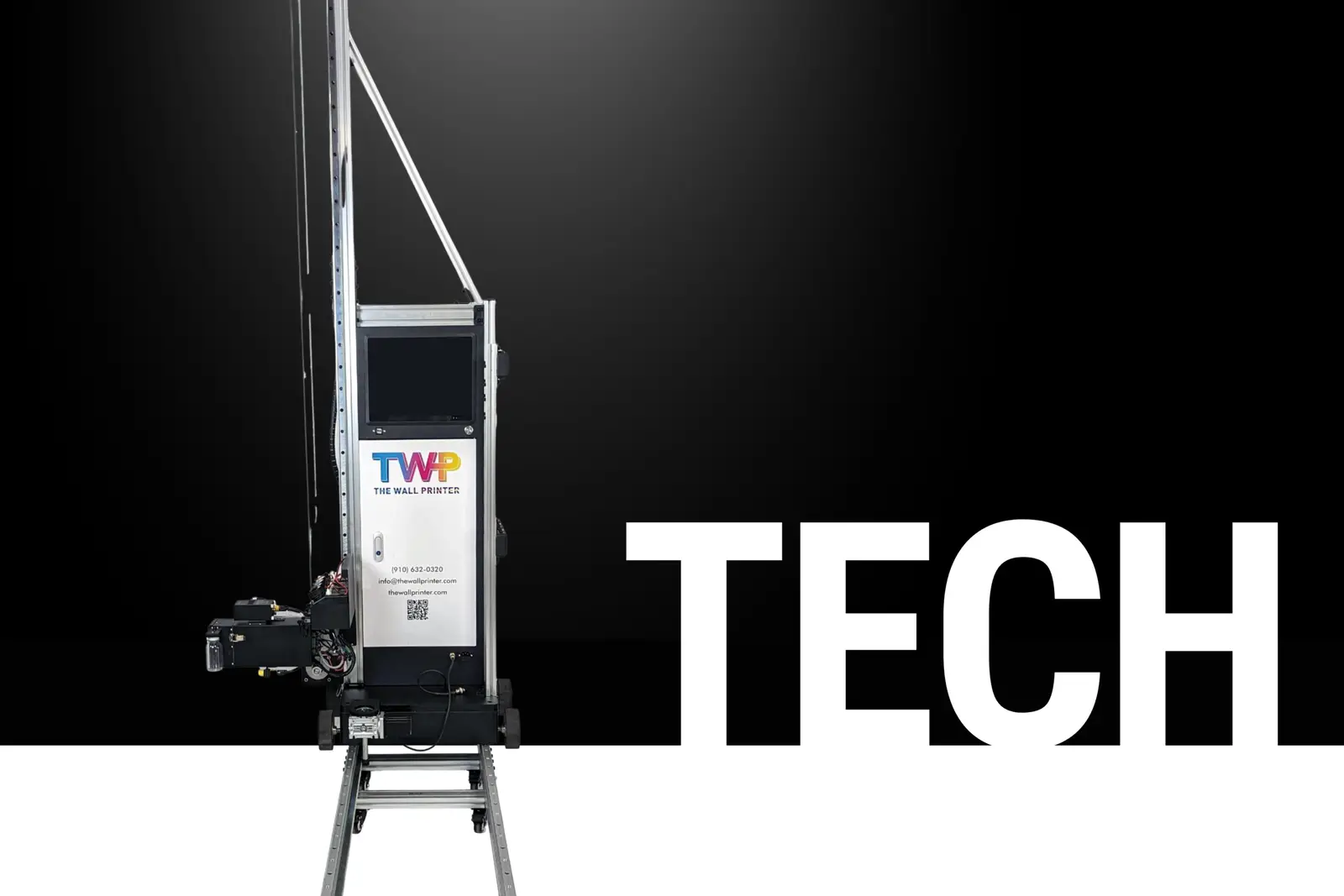
The Tech Series uses the established Epson DX7 printhead, while the Pro Series uses the newer Epson I3200 with 3,200 nozzles and eight ink channels. The Pro can output CMYK and white ink through one printhead, while its onboard Windows touchscreen allows file preparation, test printing, maintenance, and job control directly from the machine.
What Do You Get for the Price?
TWP positions its equipment as a complete wall printing business package rather than a standalone machine.
Every new owner receives hands-on training at the company’s Wilmington, North Carolina headquarters. The training covers machine setup, software, surface preparation, maintenance, troubleshooting, and the normal project workflow.
TWP also advertises lifetime support by phone, email, and video without a mandatory support subscription. A five-year manufacturer warranty is included, while Pro and Floor Series buyers receive hard-shell transport cases. Optional marketing resources include pricing guides, sales materials, website services, CRM tools, and access to an owner community.
This support package is one of TWP’s strongest advantages.
However, buyers outside the Wilmington area should still budget for travel and accommodation during training unless their quotation states otherwise.
TWP Print Quality
TWP advertises up to 2,880 DPI on the Tech Series and 2,400 DPI on the Pro Series.
These figures sound impressive, but maximum DPI is not the most important measure of real wall printing performance.
Higher-resolution modes usually require more passes, which increases printing time. A detailed portrait or small lettering viewed at close range may justify a slower quality mode. A large retail mural viewed from several meters away may not show a meaningful improvement at the maximum setting.
The Pro Series’ Epson I3200 printhead has more nozzles than the DX7 and is designed to produce smoother gradients and more consistent edges across large images. TWP also uses a steel-reinforced belt system rather than a conventional chain drive, which the company says improves positional consistency during vertical movement.
Still, buyers should not rely on the specification sheet alone.
Ask TWP to print your own file on a material similar to your intended projects. The test should show:
The selected DPI and pass count;
Color-only or white-ink mode;
Setup and calibration time;
Actual printing time;
Close-up detail;
Results after continuous operation.
A timed sample at the quality setting you will actually use is more valuable than the maximum advertised DPI.

How Fast Is the TWP Wall Printer?
TWP’s current product pages emphasize printhead resolution, ink management, rail design, and support, but they do not provide one standardized real-world production-speed figure that applies across all images, materials, and quality modes.
That is not necessarily a negative. Wall printer speed changes significantly depending on:
DPI and pass count;
Image coverage;
White-ink use;
Wall texture;
Print height;
Setup and calibration;
Surface testing;
Operator experience.
A high advertised speed may be measured on a smooth light wall using a simple image and color-only mode. A customer project involving photographs, dark walls, white underprinting, or textured concrete will usually take longer.
When comparing TWP with another wall printer, provide both suppliers with the same artwork, wall material, dimensions, and required quality. Measure the complete time from arrival and setup to the finished mural—not only the time during which the printhead is moving.
Ink System and Operating Cost
Both current TWP wall printer machine models include CMYK and white UV ink.
White ink allows operators to print stronger colors on dark walls and selected materials such as glass, tile, concrete, and brick. TWP offers a faster KCMY mode for suitable light surfaces and a WKCMY mode when a white base or spot-white layer is required.
TWP publishes an approximate ink operating cost of $0.50 per square foot, equivalent to about $5.38 per square meter.
At that published rate, ink for a 40 ft² mural would cost approximately $20.
However, this figure does not represent the complete project cost. Buyers also need to include:
Surface preparation;
Operator labor;
Travel;
Setup and calibration;
Cleaning fluid and maintenance supplies;
Marketing and customer acquisition;
Protective coatings when required;
Equipment depreciation.
The PumpBox ink-management system is a useful feature, particularly for white ink. It manages print preparation and cleaning and automatically circulates ink every 12 hours while the printer is idle, helping reduce settling inside the system.
This can simplify maintenance, but it does not eliminate the need for nozzle checks, proper shutdown procedures, cleaning, and regular ink-system inspection.

TWP Pros and Cons
Pros | Cons |
|---|---|
U.S.-based hands-on training | High initial investment of about $40,000–$45,000 |
Lifetime technical support without a required subscription | Training at the Wilmington headquarters may add travel costs |
Five-year manufacturer warranty | Public pages do not provide a single standardized production-speed figure |
White ink included as standard | White ink still requires careful maintenance |
Integrated PumpBox ink circulation and cleaning | Replacement-part and post-warranty prices should be confirmed before purchase |
Onboard touchscreen and integrated workflow | Equipment still needs suitable job-site access and setup space |
Optional business and marketing resources | Profitability depends on the buyer’s ability to generate demand |
No franchise fees or royalties | It is not a passive or fully automated business |
TWP openly states that wall printing is not passive income and that successful owners still need to market the service, build relationships, learn the workflow, and operate the business consistently.
That is an important point. Training and support can reduce the learning curve, but they cannot create customer demand automatically.
How Quickly Can TWP Pay for Itself?
The payback period depends on the net contribution generated by each completed project.
The correct formula is:
Break-even jobs = Total startup investment ÷ Net contribution per job
Net contribution is not the customer’s total payment. It is the amount remaining after ink, labor, travel, surface preparation, marketing, maintenance, and other project-specific costs.
Using the current machine prices:
Average Net Contribution per Job | Tech Series Break-Even | Pro Series Break-Even |
|---|---|---|
$500 | About 80 jobs | About 90 jobs |
$800 | About 50 jobs | About 57 jobs |
$1,200 | About 34 jobs | About 38 jobs |
For example, if a Pro Series owner consistently generates $800 in net contribution from each mural, approximately 57 completed projects would be needed to recover the $44,995 machine price.
This calculation still excludes shipping, travel for training, insurance, marketing setup, working capital, and other startup expenses.
TWP provides an online ROI calculator based on jobs per month, project pricing, and material costs. Its own terms also state that published revenue and ROI examples represent individual scenarios and are not guarantees.
Pricing strategy, customer demand, and labor efficiency usually affect payback more than small differences in ink consumption.
Who Is TWP Best For?
TWP is most likely to fit businesses that:
Have a total equipment budget above $40,000;
Value U.S.-based training and technical support;
Want white ink included from the beginning;
Plan to print residential and commercial walls regularly;
Need support for dark walls and multiple rigid surfaces;
Want access to business and marketing resources;
Prefer buying from a manufacturer rather than an overseas reseller;
Already have customers or a credible lead-generation plan.
Existing sign shops, decorators, mural companies, commercial printers, and contractors may find it easier to justify the investment because they already have customers, sales channels, vehicles, and installation experience.

When TWP May Not Be the Right Choice
TWP may not be the best option when:
Your Market Is Still Unproven
A $40,000-plus machine is difficult to justify when the buyer has not validated local pricing, project demand, or customer-acquisition costs.
A premium wall art printer cannot create a profitable business without a reliable project pipeline.
Your Budget Must Also Cover Marketing and Working Capital
The machine is only one part of the startup budget.
New operators may also need funds for a vehicle, insurance, website, advertising, samples, wall preparation tools, travel, and several months of operating expenses.
Spending the entire budget on equipment may leave too little capital to acquire customers.
You Mainly Work on Severely Uneven or Damaged Walls
Direct wall printing requires a clean, stable, and reasonably accessible surface.
Brick, concrete, and textured materials may be printable, but severe surface variation, loose coatings, moisture, deep joints, and unstable plaster can reduce image quality or prevent safe printing.
A real-material test is essential before promising a customer result.
You Need Verified High-Volume Production
Businesses planning continuous high-volume contracts should not assume that maximum DPI or printhead nozzle count translates directly into daily output.
Request a timed test using your production files and compare the complete setup-to-finish workflow with other systems.
Maintenance and Support Questions to Ask
Before signing a purchase agreement, request written answers to the following:
What exactly does the five-year warranty cover?
Is the printhead included?
Who pays freight for warranty parts?
What are the current replacement prices for the printhead, control board, sensors, pumps, and UV lamp?
Where are parts stocked?
How quickly are common components normally shipped?
Are software updates included permanently?
Are there restrictions on ink suppliers?
What daily and weekly maintenance is required?
What happens if the machine stops during a customer project?
TWP advertises lifetime direct technical support with no subscription fee, but the exact repair, freight, component, and warranty terms should still be confirmed in the final sales agreement.
Final Verdict
TWP is a credible premium wall printer system for buyers who value training, white ink, integrated maintenance features, a five-year warranty, and long-term U.S.-based support.
Its strongest advantage is not the maximum DPI figure.
The main value is the complete support structure around the equipment: training, lifetime technical assistance, warranty coverage, an owner community, and optional business resources.
The main drawback is the price. At $39,995 for the Tech Series and $44,995 for the Pro Series, TWP requires a serious sales plan and enough working capital to support the business while the machine pays for itself.
Before buying, provide TWP with your own artwork, common wall materials, typical mural dimensions, and expected monthly workload. Request a timed demonstration, real ink-consumption data, an itemized delivered quotation, replacement-part pricing, and written warranty terms.
Still deciding whether TWP is the right investment for your business? Send us your typical wall materials, mural dimensions, monthly project volume, budget, and delivery country. We can help you compare the required configuration, arrange a sample print, and provide an itemized quotation so you can evaluate both options using real project data.