Buying the wrong machine in this industry doesn’t just cost money — it costs time, missed opportunities, and months of operating in the wrong business model.
At first glance, wall printers and UV printers look similar because both use inkjet technology and UV curing systems. But once you look deeper into how they operate in real business conditions, they are not variations of the same machine — they are built for completely different industries.
One is designed to transform physical spaces on-site. The other is designed to manufacture printed products in a controlled environment. This difference defines everything from workflow to profit structure.
They are not competing machines. They are different business systems.
Wall Printer vs UV Printer Comparison
Key Factor | Wall Printer | UV Flatbed Printer |
|---|---|---|
Business Model | On-site wall service business | Product printing / manufacturing |
Work Location | Client site (walls, buildings) | Workshop / factory |
What You Produce | Murals & interior wall graphics | Printed products & signage |
Best For | Hotels, cafés, interior decoration | Sign shops, OEM, product printing |
Revenue Type | Per wall / per m² projects | Per item / batch production |
Core Technology Difference
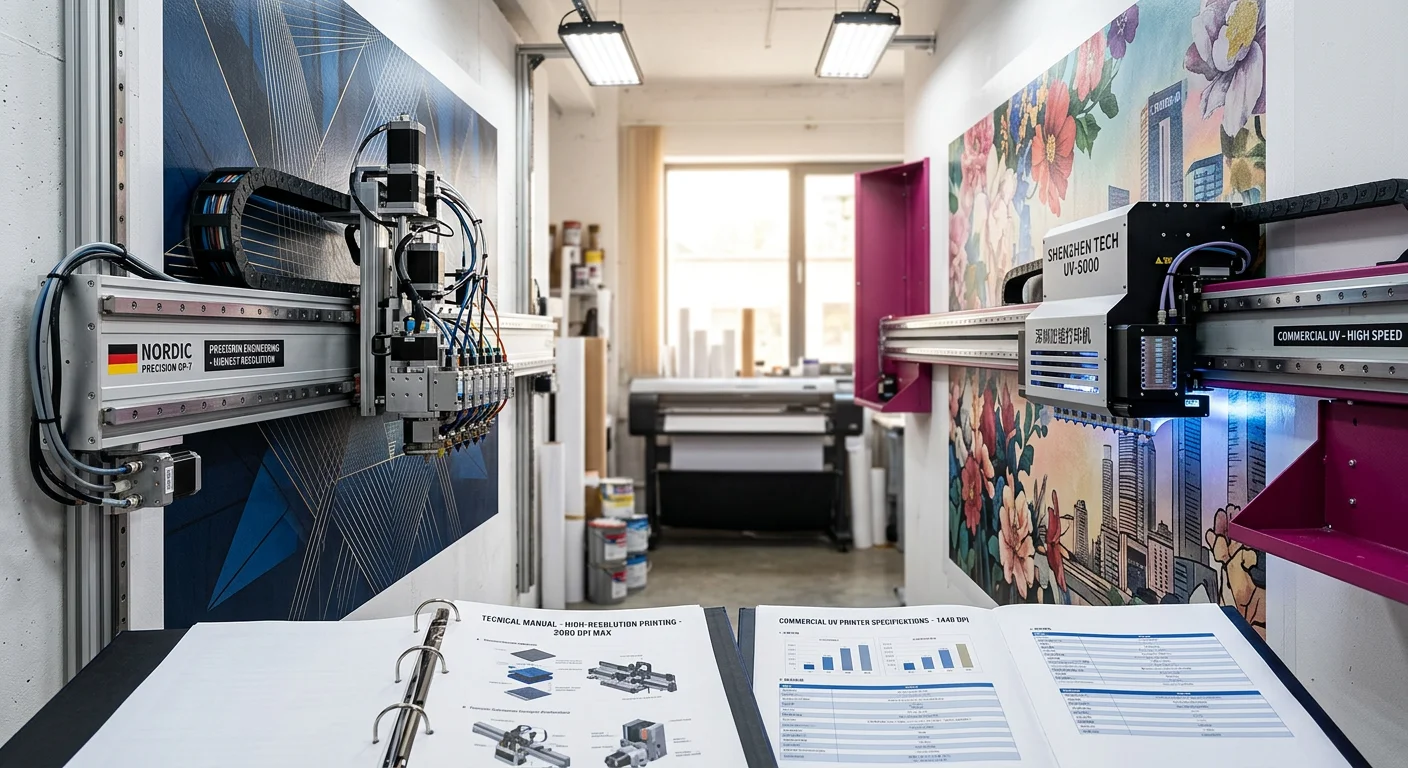
The easiest way to understand the difference is to look at how each machine interacts with its working environment.
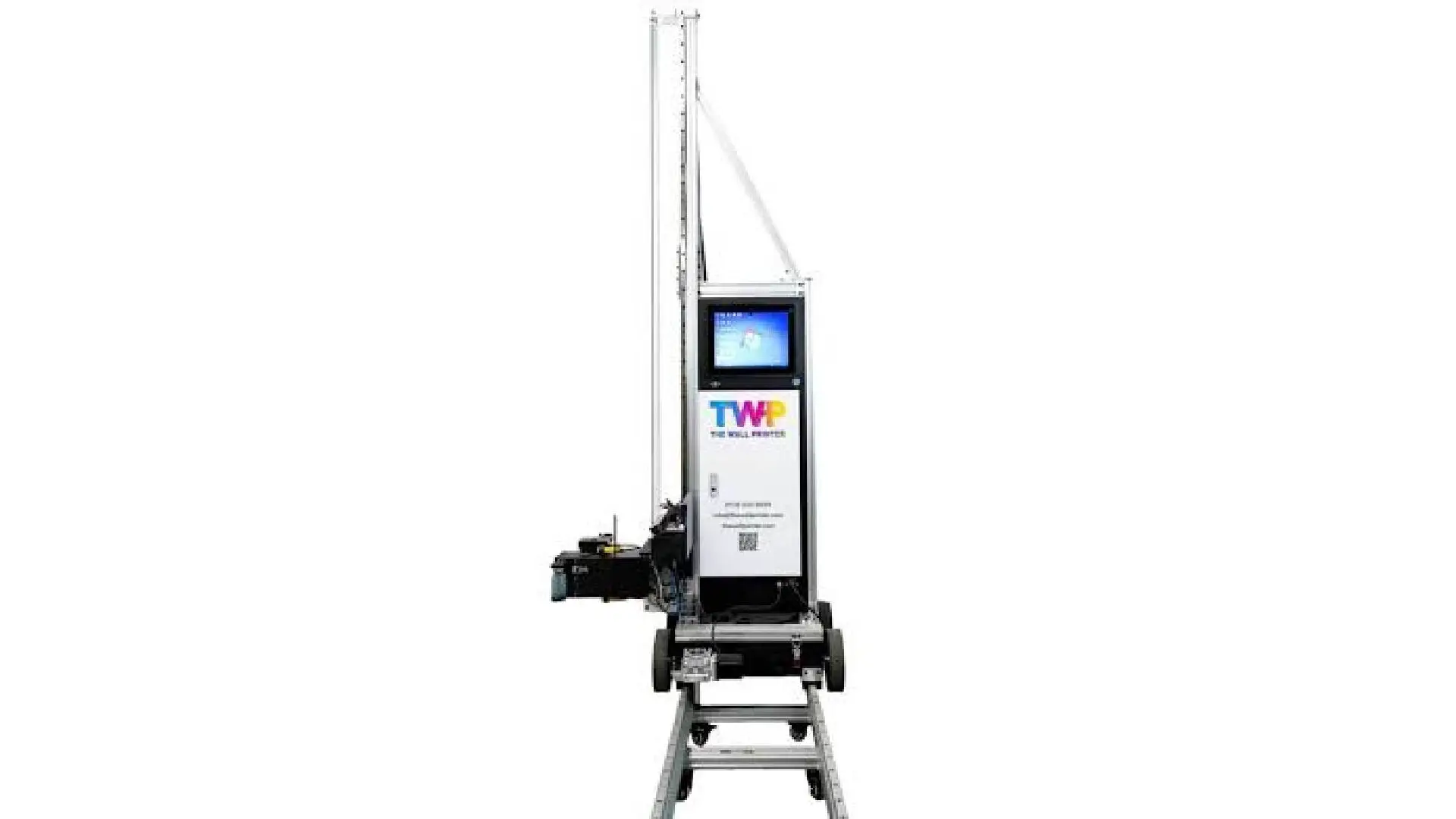
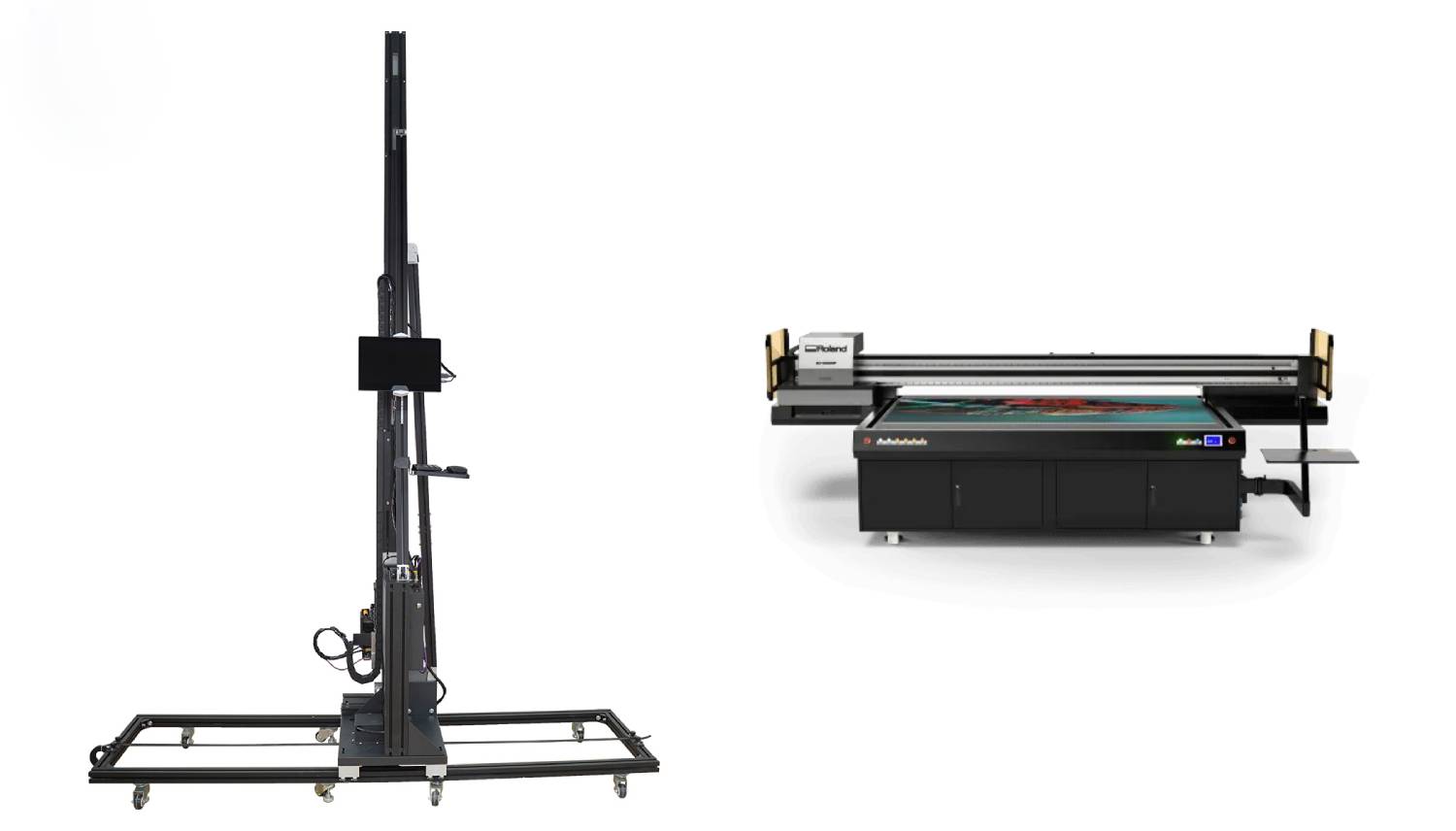
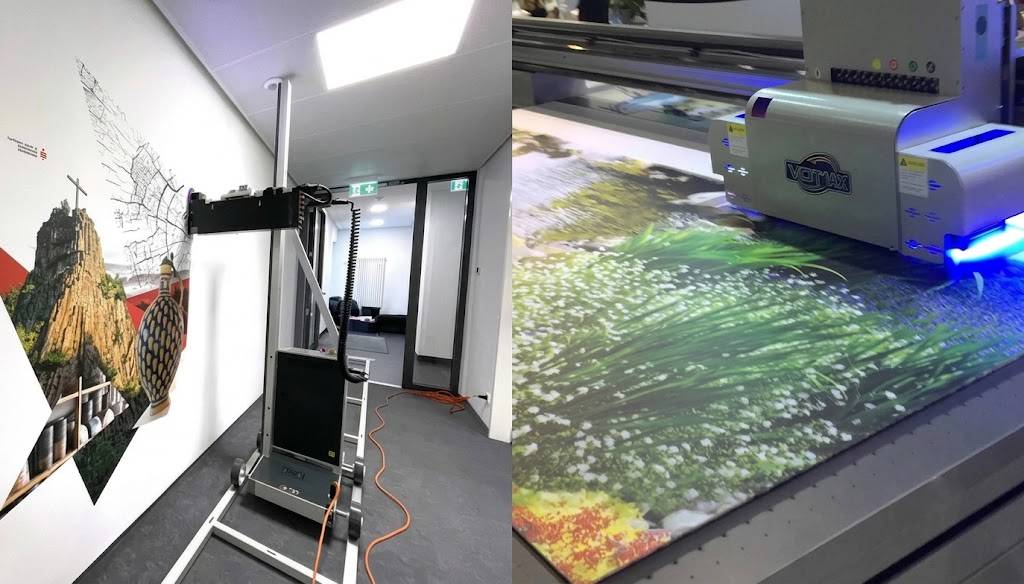
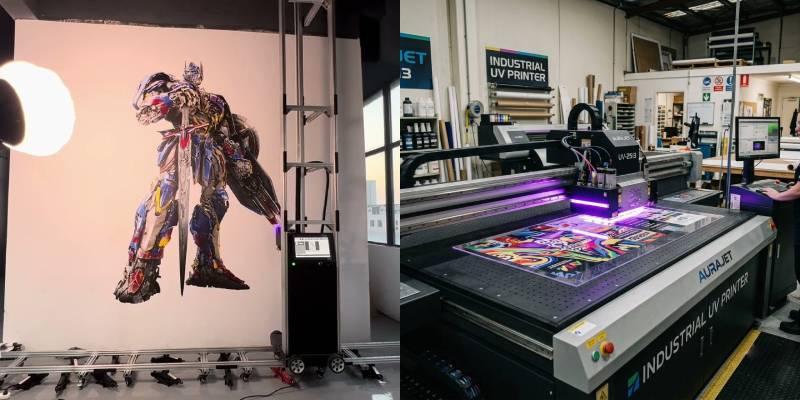
A wall printer is designed to operate in real-world architectural spaces. It moves along a vertical rail system and prints directly onto walls that may not be perfectly flat, smooth, or controlled. Because of this, the machine must constantly adjust distance, alignment, and stability while printing.
A UV printer operates in a completely controlled environment. The substrate is placed on a flatbed, held in position, and printed with precision while UV light cures the ink instantly. There is no environmental variation, no surface instability, and no on-site conditions to manage.
This creates a fundamental split:
Wall printers adapt to the environment
UV printers control the environment
That single difference determines the entire business model behind each machine.
Material & Surface Usage
Material handling is where the separation becomes very clear.
Wall printers are used directly on buildings such as plaster walls, concrete surfaces, brick, and interior architectural finishes. The result is permanent — once printed, the artwork becomes part of the structure and cannot be moved or resold.
UV printers, in contrast, work with physical substrates such as acrylic, wood panels, metal sheets, glass, and signage boards. These materials are printed separately and then installed, shipped, or sold as finished products.
Because of this, wall printing is naturally tied to location-based projects. Each job requires going to the client’s space and transforming it on-site. UV printing is tied to production-based workflows, where multiple items can be printed, stored, and delivered as inventory.
One produces spaces. The other produces products.
Workflow & Business Operation Difference
The workflow of each machine directly shapes the type of business you can build.
Wall printing begins with on-site setup. The machine must be assembled, leveled, and calibrated at each location. Once printing starts, the output is completed directly on the wall with no need for transportation or post-processing. The entire value is created in a single visit.
UV printing happens inside a workshop. Materials are loaded, printed in batches, and then moved into finishing stages such as cutting, packaging, or installation. This creates a production-line structure where efficiency improves with scale and repetition.
Because of this, wall printing businesses tend to operate more like service providers, while UV printing businesses behave more like manufacturing or print factories.
Cost Structure & Revenue Logic
Although both machines use UV ink technology, their cost behavior is different because of how they generate revenue.
Vertical wall printers typically have lower material cost per square meter, but higher dependency on on-site labor, setup time, and travel. UV printers often have slightly higher consumable handling costs, but benefit from controlled environments and batch production efficiency.
The more important difference is how they make money.
Wall printing is project-based. You charge per wall or per square meter depending on complexity and location. UV printing is output-based. You charge per item, batch, or production volume.
This leads to a key conclusion:
The decision is not about cost efficiency — it is about which revenue model fits your business.
Business Model Separation
This is where most buyers make the wrong assumption.
A wall printer is a tool for a service-based business. It earns revenue by going into hotels, restaurants, offices, retail stores, and residential projects to transform fixed surfaces.
A UV printer is a tool for a production-based business. It earns revenue by producing physical goods such as signage, decorative panels, branded items, and commercial products that are later installed or sold.
Even though both machines use UV curing technology, they operate in completely different commercial ecosystems.
Wall printing is location-driven
UV printing is product-driven
They are not competing options — they are two separate industries.
Which One Should You Choose?
The right choice depends entirely on your business direction, not machine specifications.
If your goal is to provide on-site services, interior transformation, or architectural mural work, then a wall printer aligns with that model because it creates value directly in physical spaces.
If your goal is to build a production workflow, signage business, or product-based printing operation, then a UV printer is more suitable because it focuses on scalable output in a controlled environment.
The key insight is simple: You are not choosing a machine — you are choosing a business model.
Final Verdict
Wall printers and UV printers are not competing technologies. They are two different systems designed for two different types of businesses.
One is optimized for transforming spaces on-site. The other is optimized for manufacturing printed products at scale.
The correct decision is not about which machine is better — but which business structure you want to operate in.
If you choose based on specs, you compare machines.
If you choose based on business model, you build profit direction.
If you're still deciding between a wall printer and a UV printer, the real next step is to match the machine to your business model — not just compare specifications. Request a recommendation based on your budget and target market.