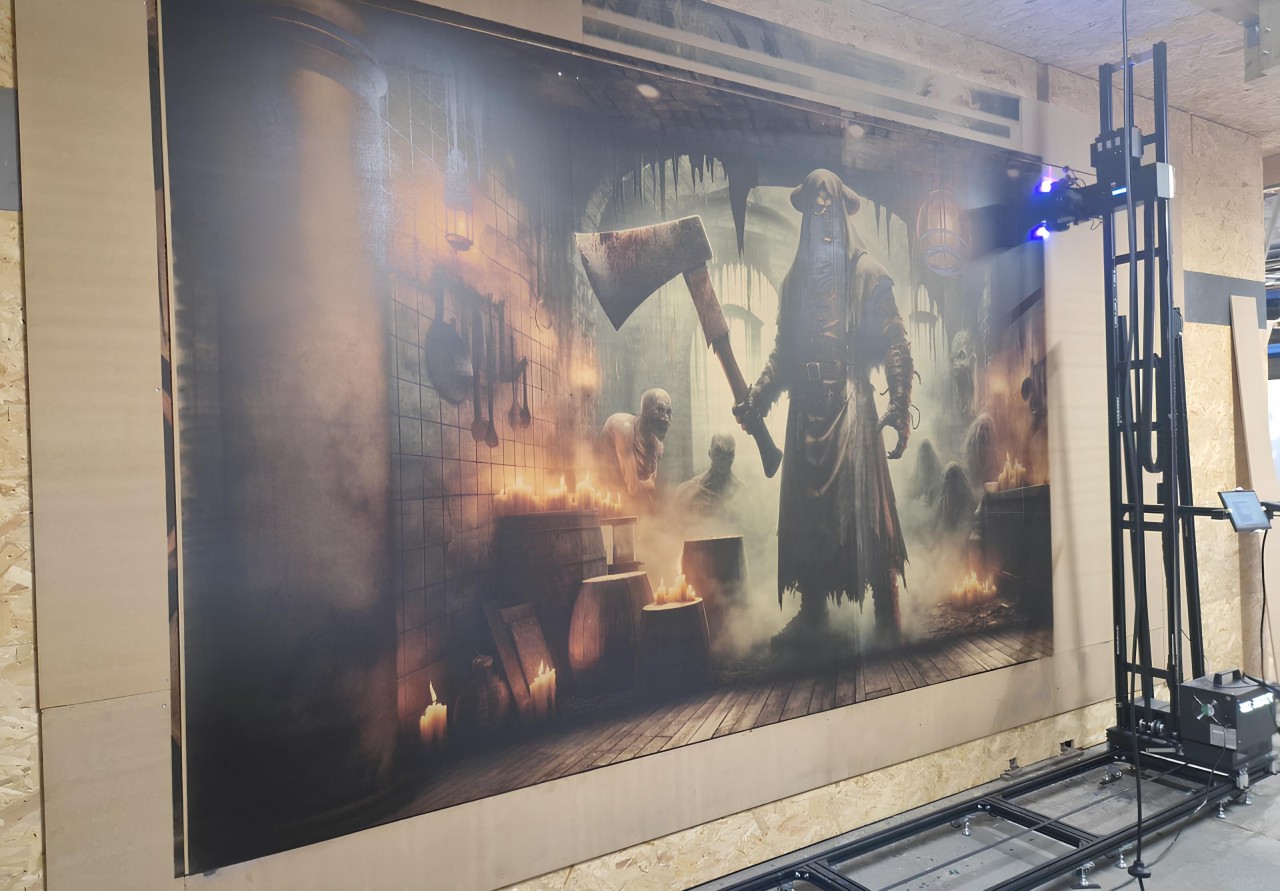
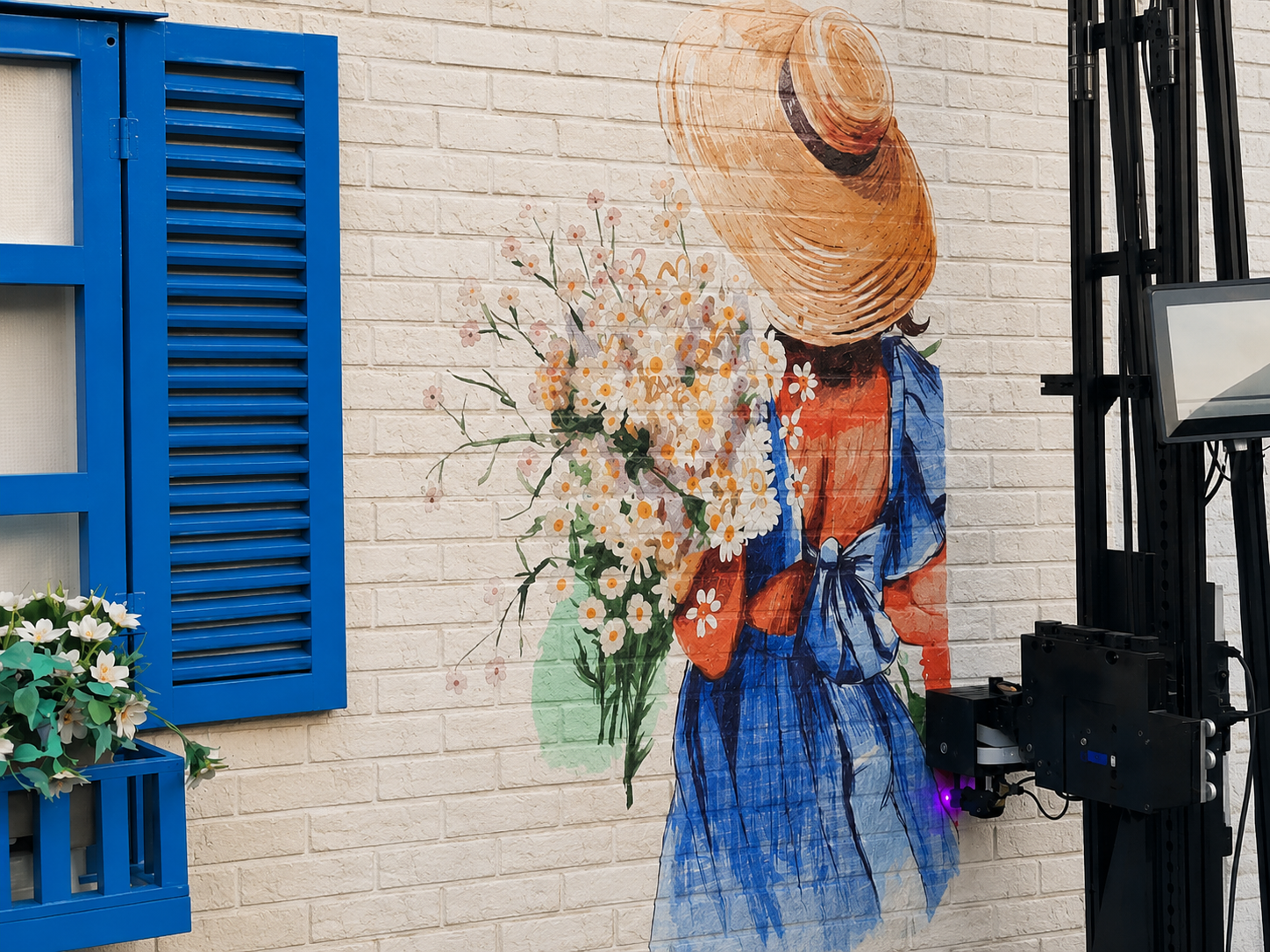
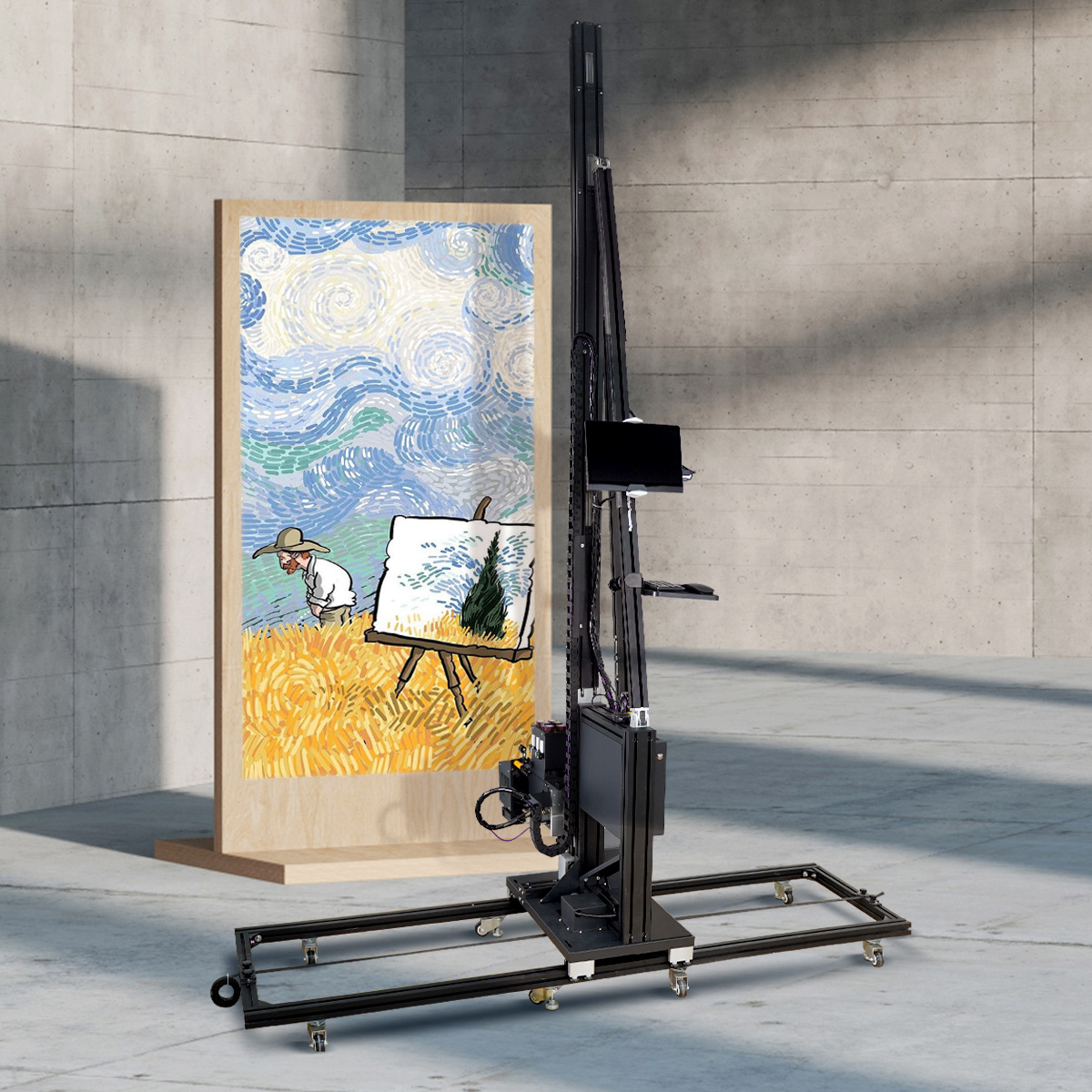
For an established sign shop, adding a wall printer can make more sense than starting a wall-printing business from scratch.
You already have something a new wall-printing startup does not: commercial customers.
Restaurants, offices, retailers, schools, gyms, hotels, property managers, designers and contractors may already be buying signs, window graphics, vinyl lettering, printed panels or interior branding from you. A wall printer gives you another way to sell to those same customers without first building a completely new market.
But that does not mean every sign shop should buy one.
A wall printer makes the strongest business case when it fills a real gap in your current services: customers want permanent or semi-permanent wall graphics, you are currently outsourcing murals or substituting vinyl, and you believe you can generate enough projects to keep the machine working.
If most of your revenue comes from yard signs, banners, vehicle graphics or removable graphics—and customers rarely ask for wall murals—the investment becomes much harder to justify.
The decision should therefore start with three questions:
What new jobs can I sell?
What will it really cost me to deliver those jobs?
How many profitable projects will it take to recover the investment?
1. What Does It Really Cost to Add a Wall Printer to a Sign Shop?
Do not compare wall printers using the machine price alone.
Your real startup investment is closer to:
Total Initial Investment = Machine + Freight + Ink + Training + Spare Parts + Setup + Marketing
Depending on how your existing sign shop operates, some of those costs may already be covered.
For example, you may already have a design workstation, Adobe software, a delivery vehicle, customer-management software and employees who understand print files and color.
That gives an established sign shop an advantage over a completely new wall-printing business.
Machine and Configuration
Wall-printer pricing varies significantly by manufacturer, printhead, ink configuration, rail or wheel system, white-ink capability and support package.
Instead of asking only:
“How much is the machine?”
ask what the quote actually includes.
A useful quote should identify the printhead configuration, ink system, printing software, computer or controller, starter ink, spare parts, training, packaging and freight separately.
If you are comparing a wall printing machine with another supplier, compare the complete working package, not two headline machine prices.
Ink and Consumables
Ink cost matters, but it is usually not the only meaningful variable cost.
A real project can also include:
Surface preparation.
Primer where necessary.
Protective coating for certain applications.
Cleaning fluid.
White ink.
Travel.
Setup and calibration time.
Artwork preparation.
Operator labor.
Maintenance allowance.
This is why “ink costs $X per square meter” does not tell you your actual project margin.
For a sign shop, the more useful calculation is:
Contribution Margin per Job = Selling Price – Direct Job Costs
Direct job costs should include everything that increases because you accepted that wall-printing project.
Labor and Travel Matter More Than Many Buyers Expect
A wall printer works at the customer's location.
That changes the economics compared with producing a sign in your shop.
Your operator may need to load the machine, drive to the customer, unload it, assemble or position it, prepare the wall, print, clean the machine and return to the shop.
For a small mural, this setup and travel time can matter more than the ink cost.
That means sign shops should use a minimum project charge or setup fee, especially for small jobs.
If you quote only by square foot or square meter, a small wall five miles away and a large wall in your own building can appear artificially similar even though their labor economics are completely different.
Maintenance and Downtime
Printheads, ink systems, sensors and motion components also need maintenance.
You do not need to predict an exact printhead replacement date before buying, but you should ask:
How much is a replacement printhead?
Which parts should I keep in stock?
What happens if white ink sits unused?
How long does daily maintenance take?
Can my staff replace common parts?
How quickly can technical support diagnose a problem?
For an existing sign shop, downtime matters because an unreliable machine does not just lose wall-printing revenue—it also ties up employees who could be working on your established sign business.
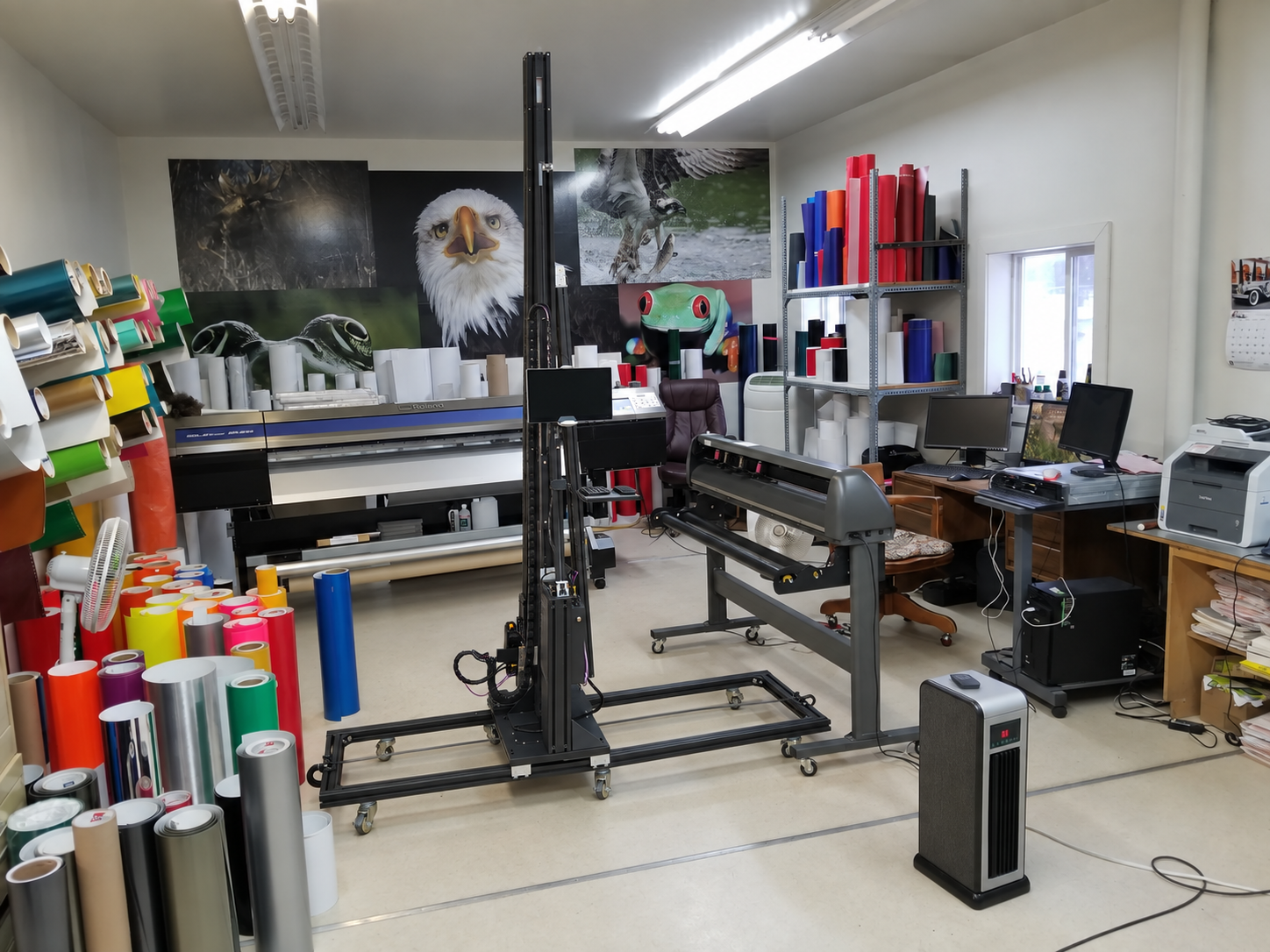
2. What New Jobs Can a Wall Printer Add to a Sign Business?
This is where the investment becomes interesting.
A wall mural printer should not simply duplicate the work you already produce with vinyl and rigid substrates. It should help you sell projects that are difficult, labor-intensive or visually different with your existing equipment.
Commercial Branding Walls
This is one of the most natural cross-sells for a sign shop.
Existing clients may already buy:
Reception signs.
Window graphics.
Directional signage.
Exterior signage.
Dimensional logos.
A direct wall print lets you extend that branding across an entire wall.
Examples include office reception areas, conference rooms, retail feature walls, restaurant interiors, gym branding and hotel corridors.
Instead of selling one sign, you can potentially sell a larger environmental-branding package.
Murals and Feature Walls
Wall printers can also open more decorative jobs.
Restaurants may want artwork rather than another vinyl logo. Schools may want mascots, maps or educational graphics. Children's spaces may want illustrated walls. Hotels and property developers may want decorative feature walls across multiple locations.
These projects can be attractive because wall area is usually much larger than a conventional sign.
However, do not assume every mural customer will accept a premium price.
Your local competition includes:
Vinyl.
Wallpaper.
Hand-painted murals.
Printed wallcovering.
Traditional paint.
The wall printer needs a clear advantage for the particular project.
Direct Printing on Walls That Are Awkward for Vinyl
Some jobs become interesting because installing a large adhesive graphic would be inconvenient.
Direct wall printing avoids producing, trimming, transporting and manually installing multiple large vinyl panels.
That can be especially useful when the customer wants a mural without visible panel seams.
But direct printing is not automatically better than vinyl.
Vinyl remains a better fit when the customer wants:
Easy removal.
Frequent campaign changes.
Temporary graphics.
A surface unsuitable for direct printing.
Graphics that need to extend into areas the printer cannot physically reach.
An existing sign shop should therefore position wall printing as another production method, not as a replacement for vinyl.
Harder or Unusual Surfaces
Depending on the machine and ink system, wall printers may also be used on surfaces beyond normal painted drywall.
Potential applications can include brick, concrete, wood, tile, glass or metal, although adhesion and surface preparation should always be tested.
For a vertical wall printer, this can create opportunities in locations where conventional printed wallcovering is inconvenient.
But do not sell “prints on anything.”
Before taking an unfamiliar job, test the actual substrate and confirm:
Ink adhesion.
Surface flatness.
Printhead clearance.
Required primer or coating.
Expected durability.
Multi-Location Commercial Projects
This is an especially interesting opportunity for established sign companies.
If you already serve a restaurant chain, franchise, retail group, school district or property-management company, a successful wall-printing project can potentially be repeated across multiple locations.
That is much more valuable than relying entirely on one-off residential murals.
For a sign shop, the ideal customer is often not someone buying one bedroom mural.
It is an existing commercial account that can buy wall printing alongside the signs and graphics you already provide.

3. How Do You Calculate Wall Printer ROI for an Existing Sign Shop?
This is where I would simplify the original article significantly.
You do not need five artificial monthly-revenue scenarios.
You need your own numbers.
Start with:
Total Initial Investment
Then calculate the contribution margin from an average wall-printing job:
Contribution Margin per Job = Job Revenue – Variable Job Costs
Then:
Break-Even Jobs = Total Initial Investment ÷ Contribution Margin per Job
This is the cleanest answer to:
“How many wall-printing jobs will it take to pay for the machine?”
An Illustrative Example
Suppose your complete investment is $10,000.
Assume your average wall-printing project produces:
$1,200 in revenue
$150 in ink, travel and other direct consumables
$250 in direct labor
Your contribution margin would be:
$1,200 – $150 – $250 = $800
Your approximate equipment break-even would therefore be:
$10,000 ÷ $800 = 12.5 jobs
So roughly 13 similar projects would recover the initial investment before considering broader fixed overhead and financing costs.
This is only an illustration.
If your contribution margin is $300, the same machine needs about 34 jobs.
If it is $1,500, it needs fewer than 7.
That is why generic claims such as “3-month payback” tell you very little without the assumptions behind them.
Existing Sign Shops Have One Important ROI Advantage
Customer acquisition can be expensive for a new wall-printing business.
An existing sign shop may already have:
A customer database.
Sales staff.
Google visibility.
A showroom.
Commercial accounts.
Relationships with designers and contractors.
A portfolio.
Vehicles and installation crews.
This can shorten the path to revenue because you are not starting from zero.
You can email existing clients:
“We now offer direct-to-wall printing.”
That is very different from buying a machine and then trying to discover who might want a mural.
For this reason, a professional wall printer can make more financial sense as an add-on service to an established sign business than as a completely standalone startup.
Measure Incremental Profit, Not Total Revenue
This is another important distinction.
Suppose a client already buys $5,000 of signage from you and adds a $1,500 wall mural.
Do not count the entire $6,500 as wall-printer revenue.
Only the incremental wall-printing contribution belongs in the wall-printer ROI calculation.
This keeps the business case realistic.
Run Three Scenarios
Instead of trusting one optimistic forecast, calculate:
Conservative: only the wall-printing jobs you feel confident you can sell today.
Expected: realistic upselling after your team has built a portfolio.
Strong: good adoption from commercial customers and repeat accounts.
If the machine only makes financial sense in the strong scenario, the investment is risky.
If it still works in the conservative case, the decision is much stronger.

4. When Should a Sign Shop Buy—or Not Buy—a Wall Printer?
A sign shop should seriously consider adding wall printing when several of these conditions already exist:
Customers regularly ask for interior wall graphics or murals.
You currently outsource mural work or turn it away.
You already work with offices, restaurants, retail stores, hotels, schools, designers or property managers.
Your staff already understands artwork preparation and color workflows.
You can transport and operate the machine efficiently on site.
You have enough margin to carry the equipment during slower months.
Wall printing complements your current products instead of cannibalizing a more profitable service.
When You Should Probably Wait
Do not buy a wall printer just because wall murals look impressive on social media.
Wait if:
Your customers rarely request wall graphics.
Most of your work is temporary advertising.
Your current vinyl workflow already handles customer demand efficiently.
You have no staff available for on-site wall jobs.
You have not tested local pricing.
You are relying entirely on new customers to make the machine profitable.
Your ROI only works if the printer stays booked constantly from month one.
In that situation, validating demand before buying is more valuable than choosing the perfect printhead.
Wall Printer vs UV Flatbed: Which Should a Sign Shop Add First?
If your sign shop does not already have equipment for rigid substrates, a flatbed printer may still provide a broader range of conventional signage applications.
Flatbeds can produce:
ACP signs.
PVC boards.
Acrylic.
Display panels.
Wood signage.
Rigid promotional graphics.
A direct wall printer is more specialized.
Its strongest advantage is on-site architectural surfaces.
That means wall printers are particularly attractive as a second or complementary production capability for sign shops already covering conventional signs, vinyl and rigid graphics.
Do not ask:
“Which printer is better?”
Ask:
“Which type of customer job am I currently unable to produce profitably?”
If the answer is interior murals and direct architectural graphics, the wall printer starts to make sense.
Conclusion
Should a sign shop add a wall printer?
Yes—if it gives you a profitable new service to sell to customers you already have.
That is the biggest advantage an established sign shop has over a new wall-printing startup.
You already understand printing, artwork, quoting and commercial customer service. You may already sell signs to the exact restaurants, offices, retailers, hotels, schools and property managers that could buy direct wall printing.
But the machine should solve a real business opportunity.
Before buying, calculate:
Total investment.
Average job contribution margin.
Break-even number of jobs.
How many of those jobs your existing customer base can realistically generate.
Do not build the ROI around supplier claims of a three-month payback.
Build it around your own customers.
A wall printing machine is worth adding when it lets your sign shop sell higher-value wall projects, reduce outsourcing or create a new architectural-graphics service without requiring an entirely new customer-acquisition engine.
If you are unsure, review the last 6–12 months of inquiries. Count how many customers asked for murals, feature walls, large interior graphics or alternatives to vinyl.
That number is a better buying signal than almost any specification on a wall-printer brochure.
If you are evaluating a machine for your sign shop, send WallPrintBox your typical customers, wall materials, expected mural sizes, monthly project volume and existing equipment. The team can recommend a suitable configuration and arrange a sample print so you can evaluate the workflow before investing.